
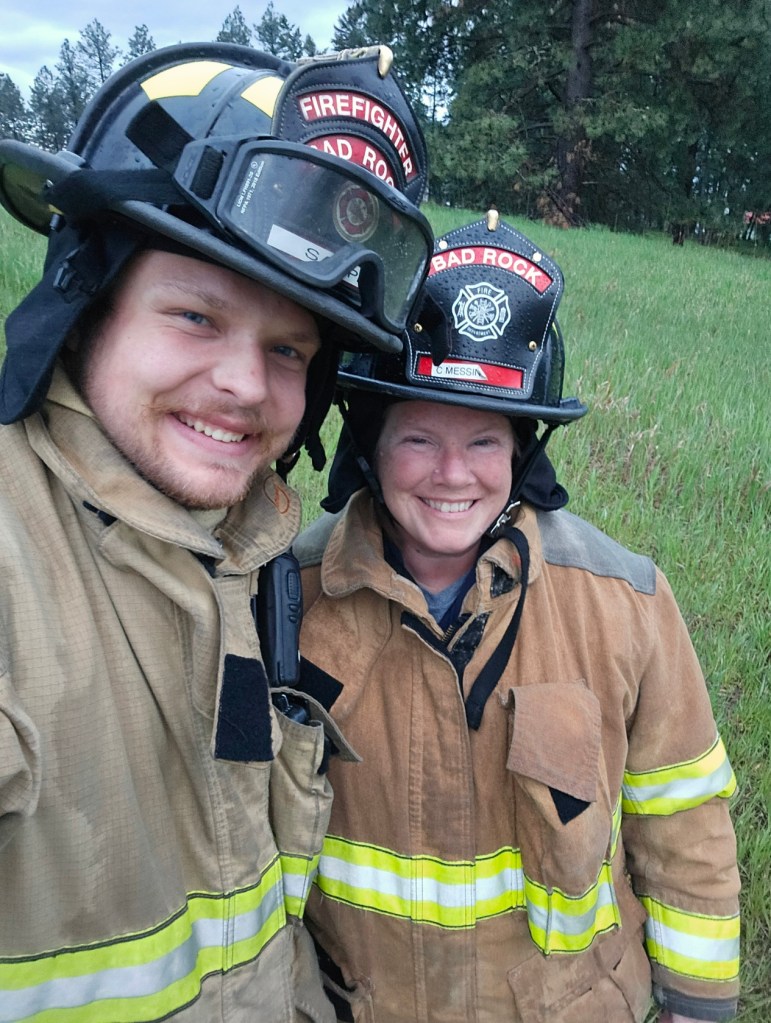
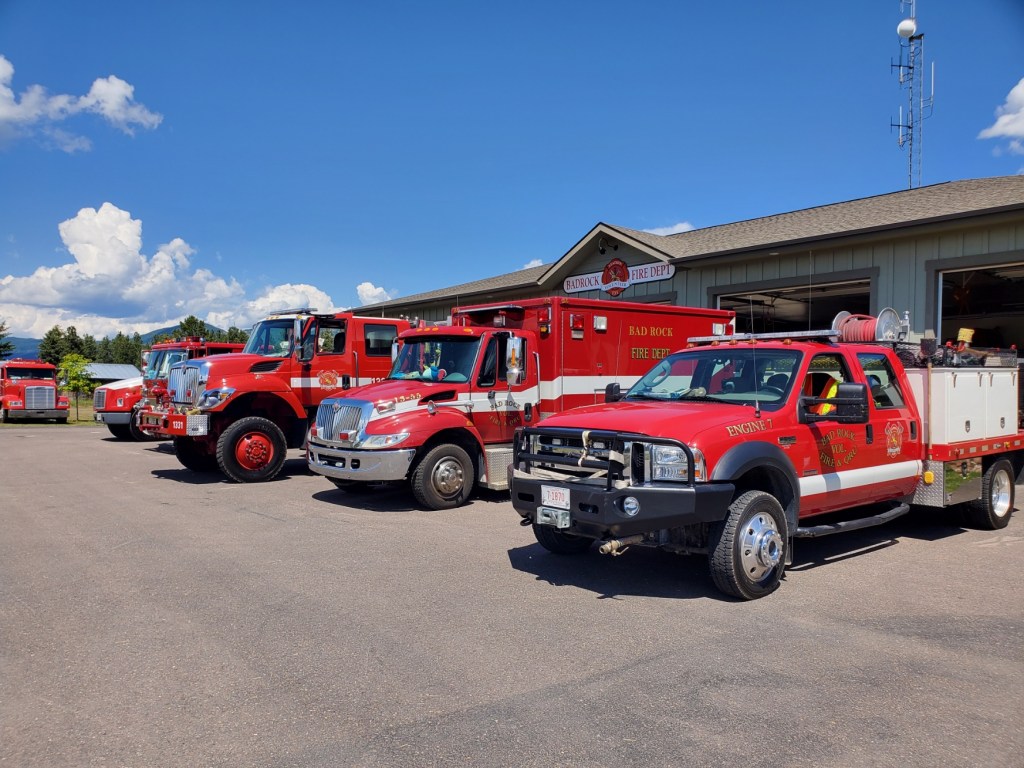
I have mentioned several times that when Rich and I moved to NW Montana, we decided to join the local volunteer fire department. The North Hall is a little less than a mile from our house and we went to their annual summer open house to meet them and check it out. We showed up and one young 20-something firefighter jokingly asked if we wanted an application. Honestly, as people with no firefighting experience and in our mid 50’s, we thought we would cook them meals on meeting nights and wash the trucks and file paperwork for them. Oh no. Within three weeks of starting to attend meetings, we were assigned bunker gear, lockers, and given pagers and radios and expected to answer calls. That was the beginning. We have been with Bad Rock Volunteer Fire Department and QRU (that is the EMS side) for almost a year and we love it. Are there hard calls? Yes. Actually, we have had several tough calls in the last week, and we’ll be meeting with county trained officials for a critical stress debriefing tonight. It is a great service we have in our county to help with the mental health of our first responders. In our year so far, Rich and I have been very active in responding for calls and volunteering for extra duties. I went through EMR and then EMT training. I now understand how our Joe talked about his firefighter brothers….as just that, a brotherhood. I would do just about anything for these guys (and gals). Rich describes our lives as 1/3 work, 1/3 play, and 1/3 fire department. We did this to honor our Joe, and when we found out our volunteer fire department was number 13 (his birthday), we knew it was meant to be. It gives me purpose and I didn’t realize how important that was to me…how much I had missed patient care and doing something that really matters. Rich and I do wildfire calls…although most of them have been unattended burn piles or hay fires…not the out-of-control wildfires that plague our state and our neighbors to the north in Canada. We answer calls for motor vehicle accidents, especially during the height of tourist season (which is now). We have had several gas odor calls. Some are false alarms, others we are faced with hissing exposed lines that make me a bit nervous. The gas company always responds to these calls as well, but they typically come from 30 minutes away, so we are first on scene to scope out the situation. Rich and I have learned to drive engines and wildland fire trucks and tenders (the tanker trucks that carry thousands of gallons of water). This was not in my comfort zone in the beginning. It is still not my favorite, but I can do it. To be quite honest, I have a hard time getting in and out of these trucks in my bunker gear. My knees don’t bend in all that extra material as well and being 5′ 2″, the first step is mid-thigh to waist level or higher, depending on the truck. Exiting, I just jump and hope for a soft landing. Being rural, we don’t really have fire hydrants…. or streetlights. When we have to fight a fire, we have to bring the water with us and then dump it in a soft pool we carry around and then go back and get more. Our engines draft water out of these pools, which if it is a hot fire, we can go through pretty quickly. We had a fire recently that was 130 of those huge 1200 lb round bales of hay. It was a 24-hour process and I think we had 5 fire departments helping us throughout that time. We weren’t there the entire 24 hours, but it was 24 hours before it was safely torn down, cooled down, and sprayed over. It is a lot of work! It is not just spraying water on hot spots; it is getting in there and walking in the mud and soot and digging and raking through the hay and dirt to make sure we expose any hot spots. Then there are the medical calls. A lot of people thought that EMT school would come so easy to me with my history of being a military nurse. Some of it did… but it is vastly different working in a hospital with doctors looking over your shoulder versus showing up at someone’s house on their worse day of their lives and trying to play 20 questions and figure out what is going on with them so we can treat them. Then 95% of the time, you never know how the outcome. Did the patient live? Did the patient get the correct treatment? That is a hard thing to deal with…. the not knowing how things turned out for the patient/family. However, I am learning slowly to let that go and not lay awake at night wondering about it. I do pray for them every night and know that God’s will will be done with those I work with. When I lose a patient, I light a candle for them at church that next Sunday and honor their lives in that small way. I am getting used to having a pager and a radio with me all the time. I have adjusted what I wear, thinking of whether or not I will get a call. When I go to bed at night, I always have clothes laid out for those middle-of-the-night calls, so I hopefully cut down my enroute time. I have given myself permission to wear my glasses to calls in the middle of the night rather than put in my contacts and that has sped up my call time as well. As I sit here and type this, I realize I am still in my glasses as we had a call at 06 – something this morning and when I got home, I just went to work around the house getting things done. Anyhow, as I listen to the Olympic judo competition while I type this, I wanted to share some photos we have taken recently. If you have a volunteer fire department near you, please consider contacting them and helping out in some capacity. These departments are on a shoestring budget, and you’ll be amazed at all they do with the equipment they have.
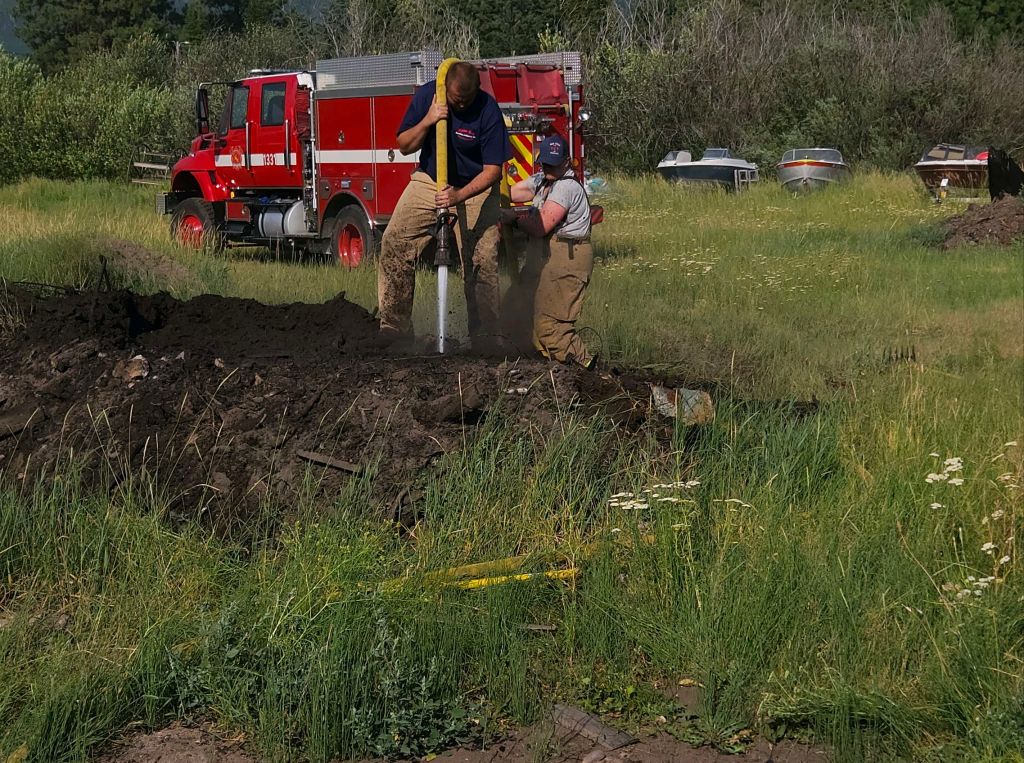
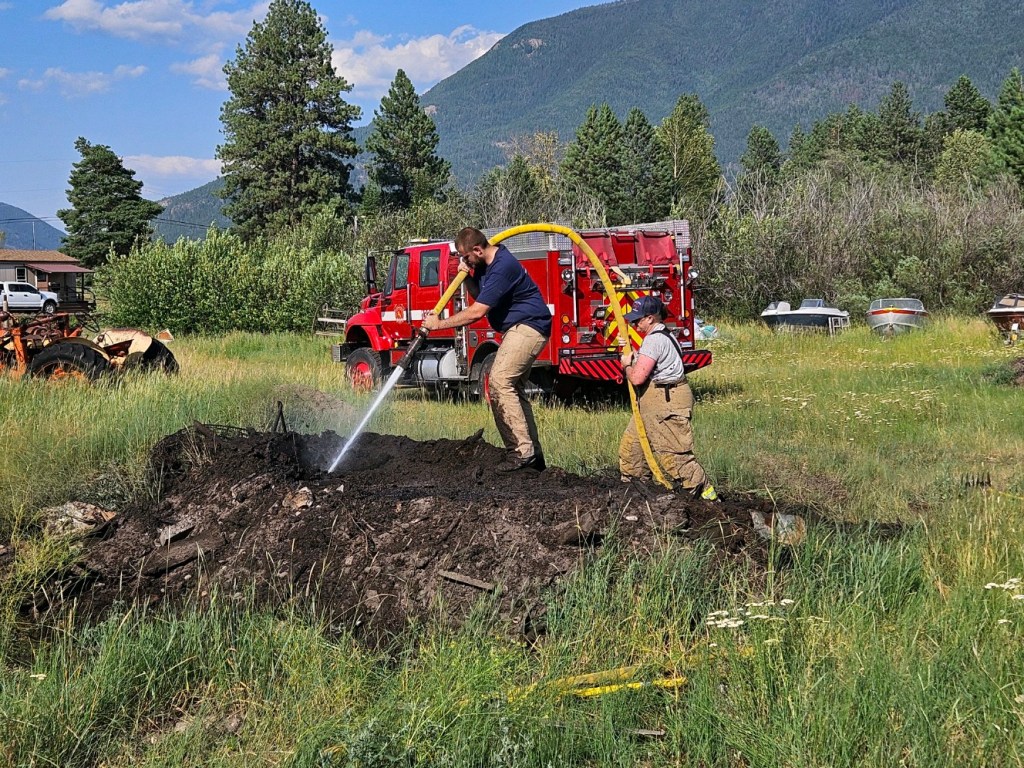
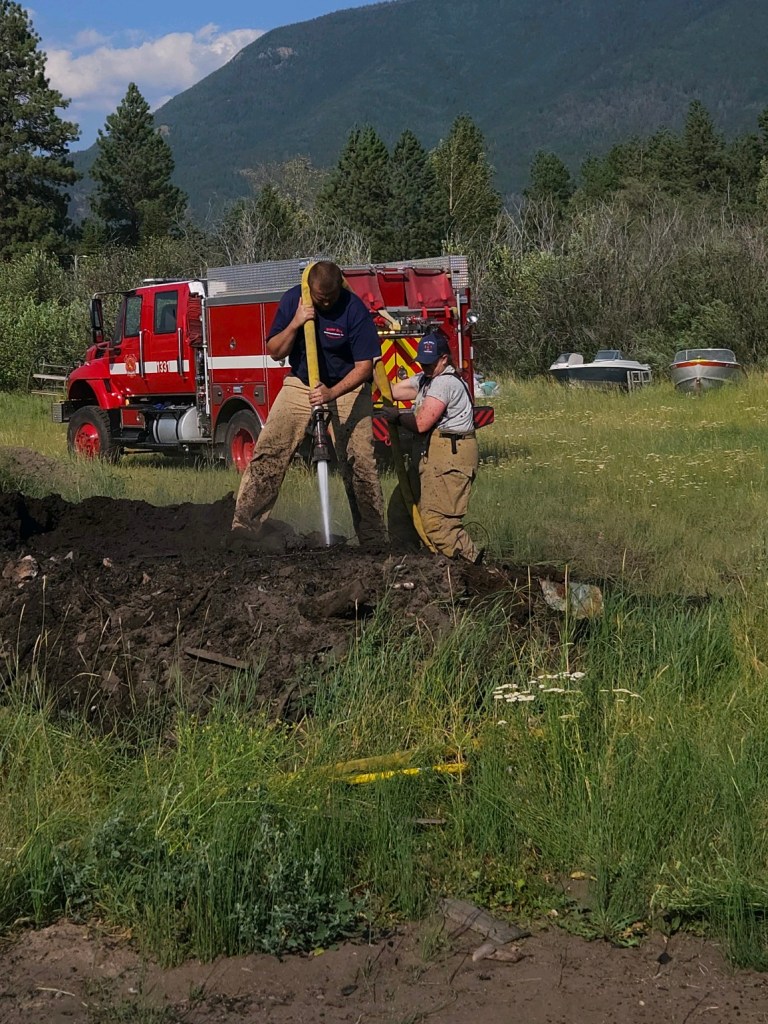
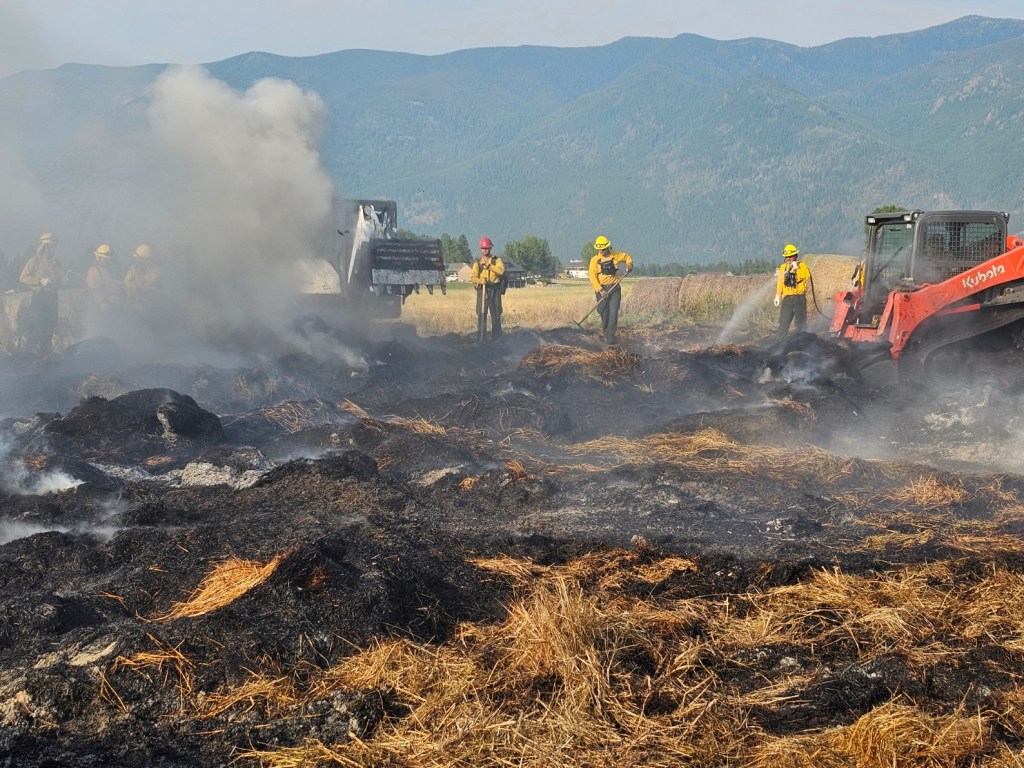
Shane and I attacking a burn pile that was started in March. The owner just piled dirt on it at the time and it reignited in late July. There were a couple of these piles and they had to be all torn down and flooded with water to make them safe in our hot and dry conditions right now. Normally, I would not be wearing bunker pants, but I was coming from a medical water rescue, and we always take our structure gear with us just in case. We came direct to this call. I was glad to have it because I was filthy by the time I left. Even my chief made a few comments.
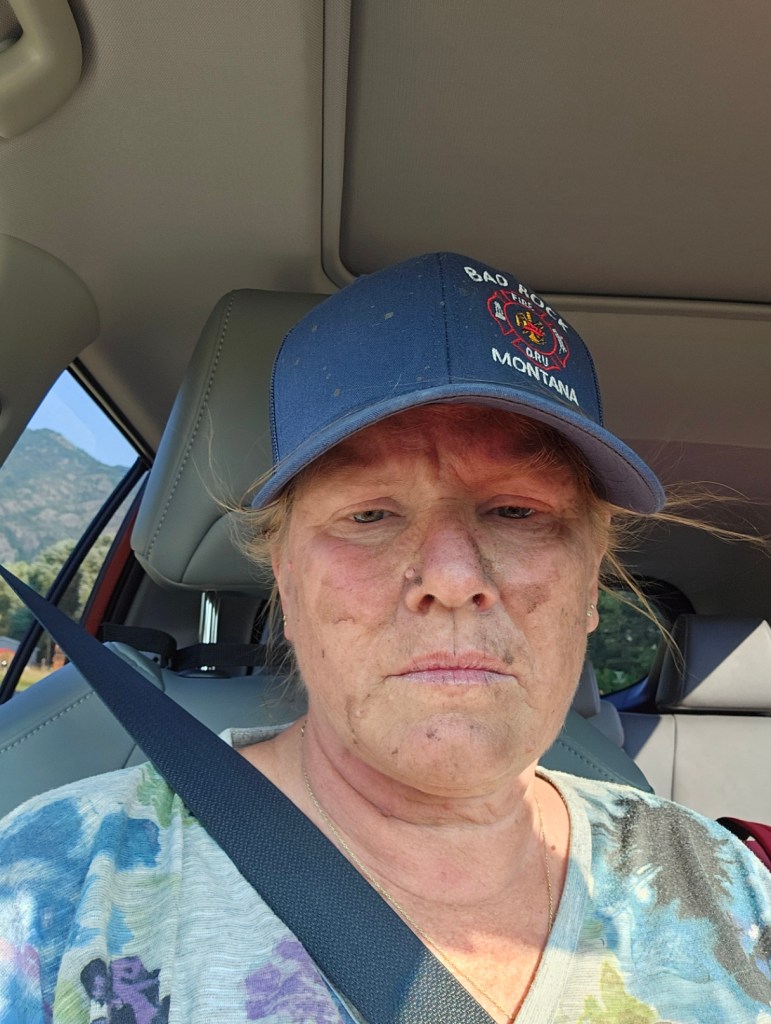
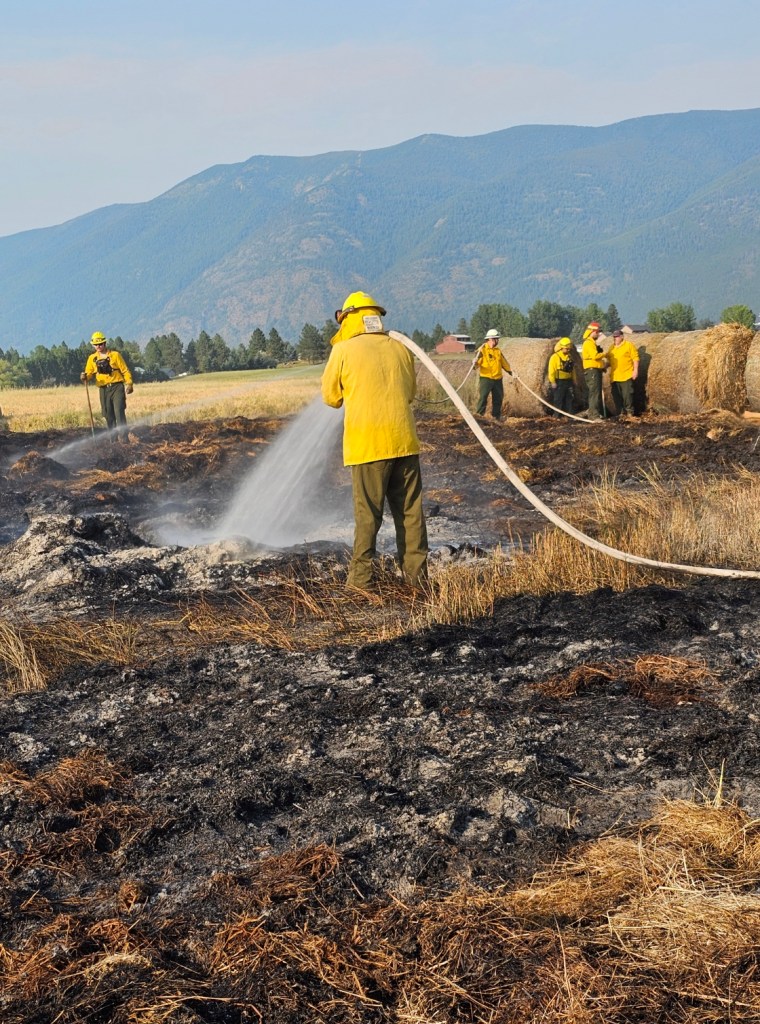
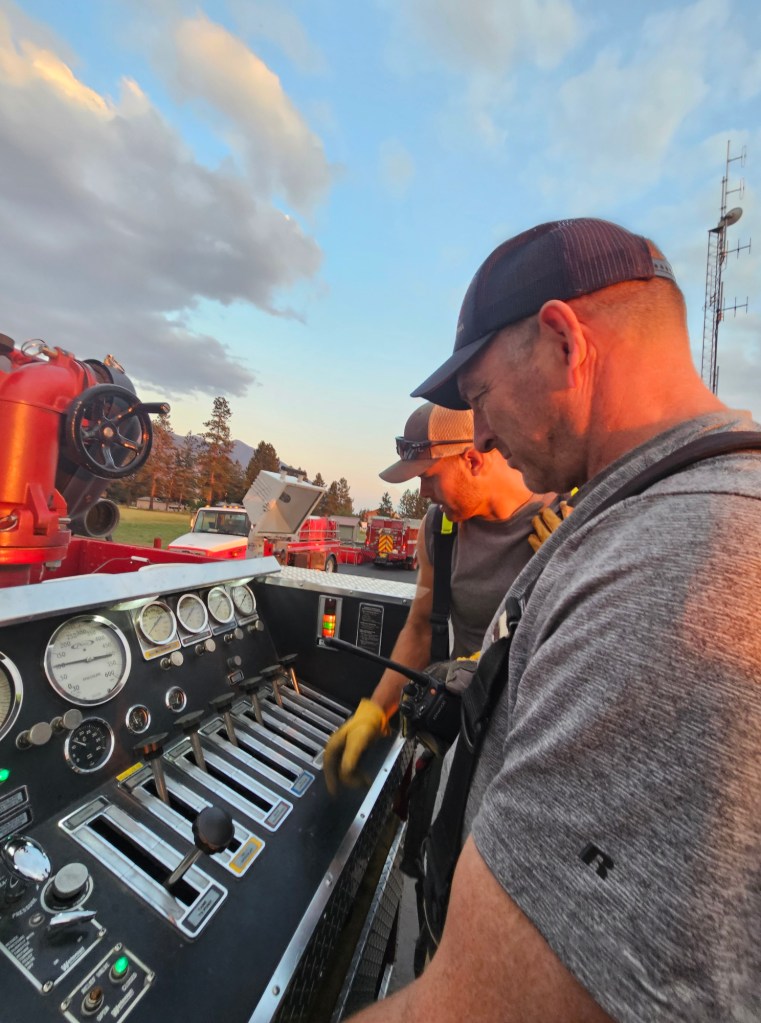
That is Rich on the hose above at the hay bale fire mop up and then at training learning the engineer aspect of pumping water off of our structure fire engine.
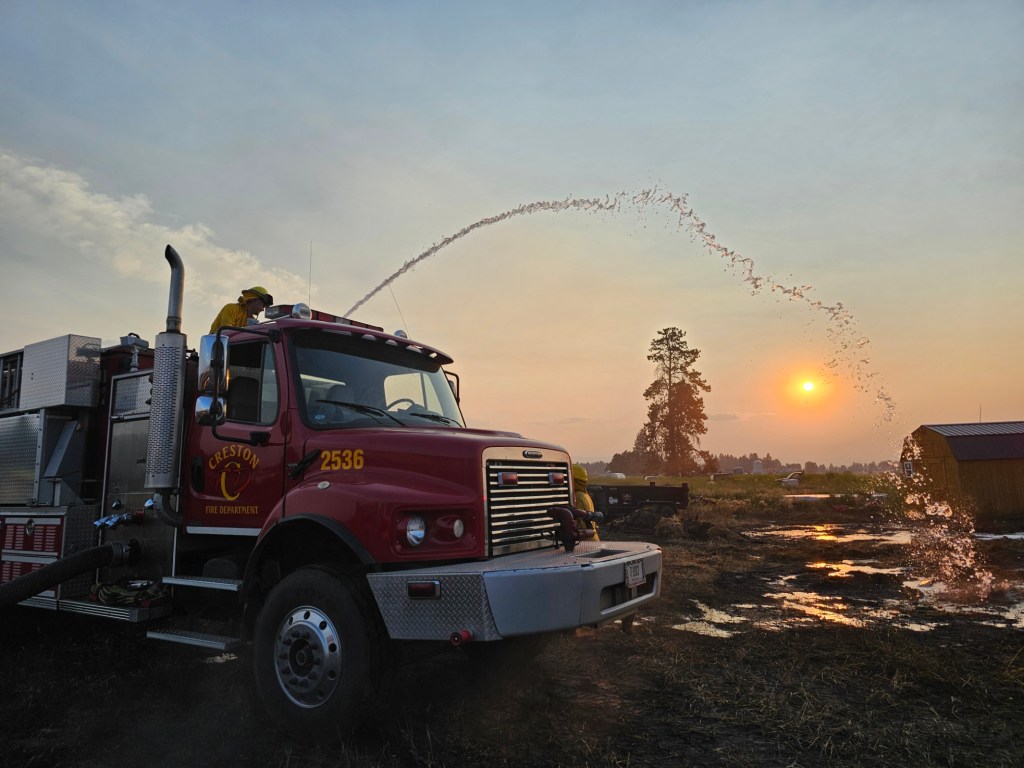
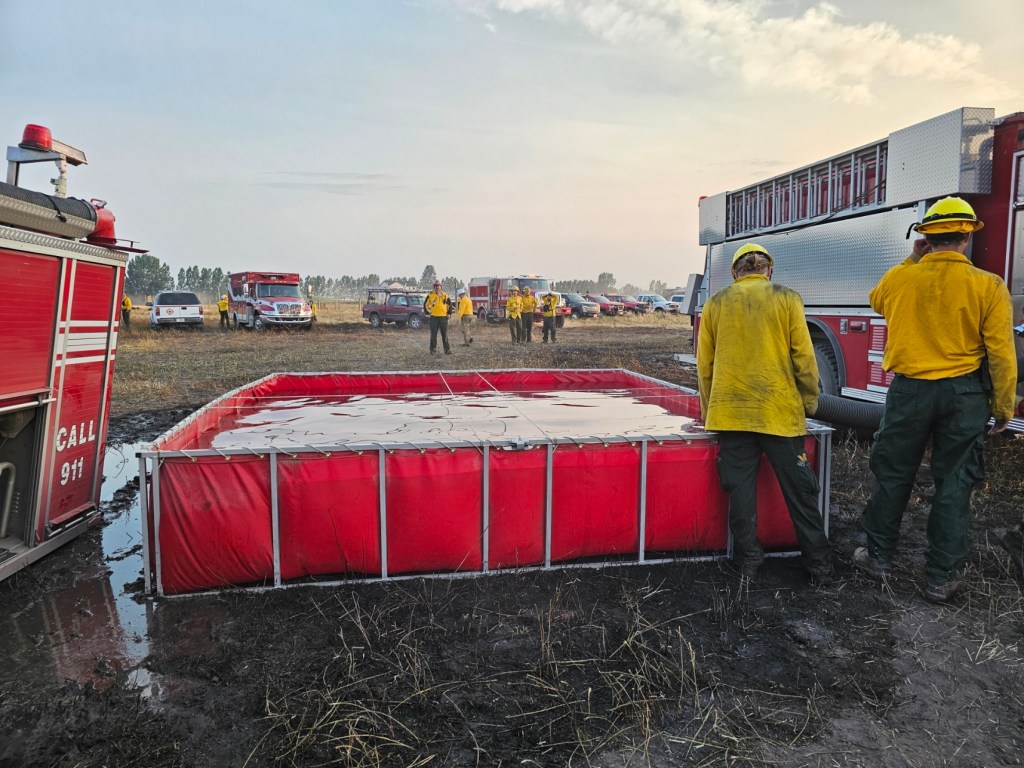
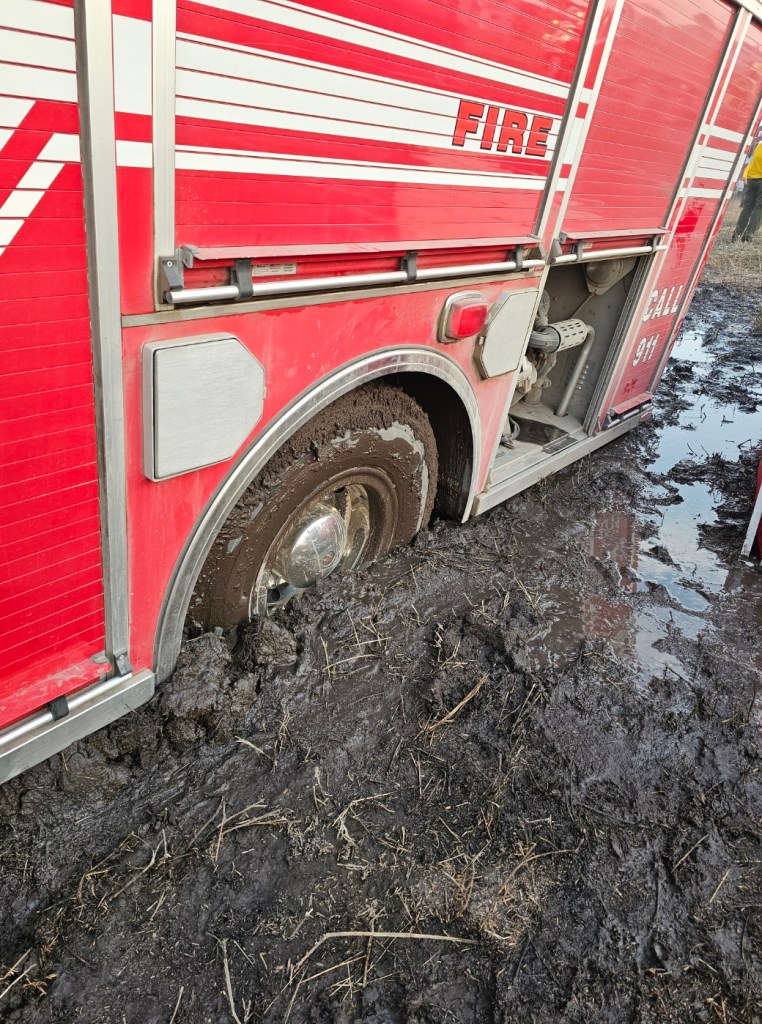
These are the pools of water we have to keep full so we can draft water through our engines. Notice the engine to the left….yep, it got stuck. We tried to push it out (we have done that before) but this time we needed help from a big rig tow truck .
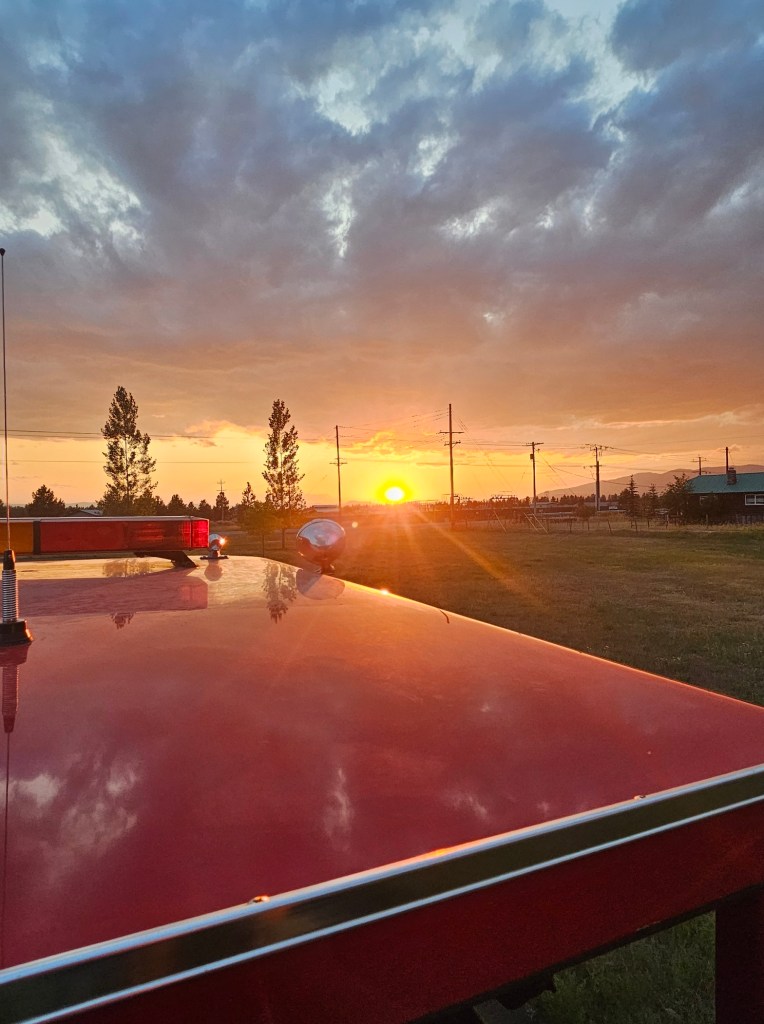
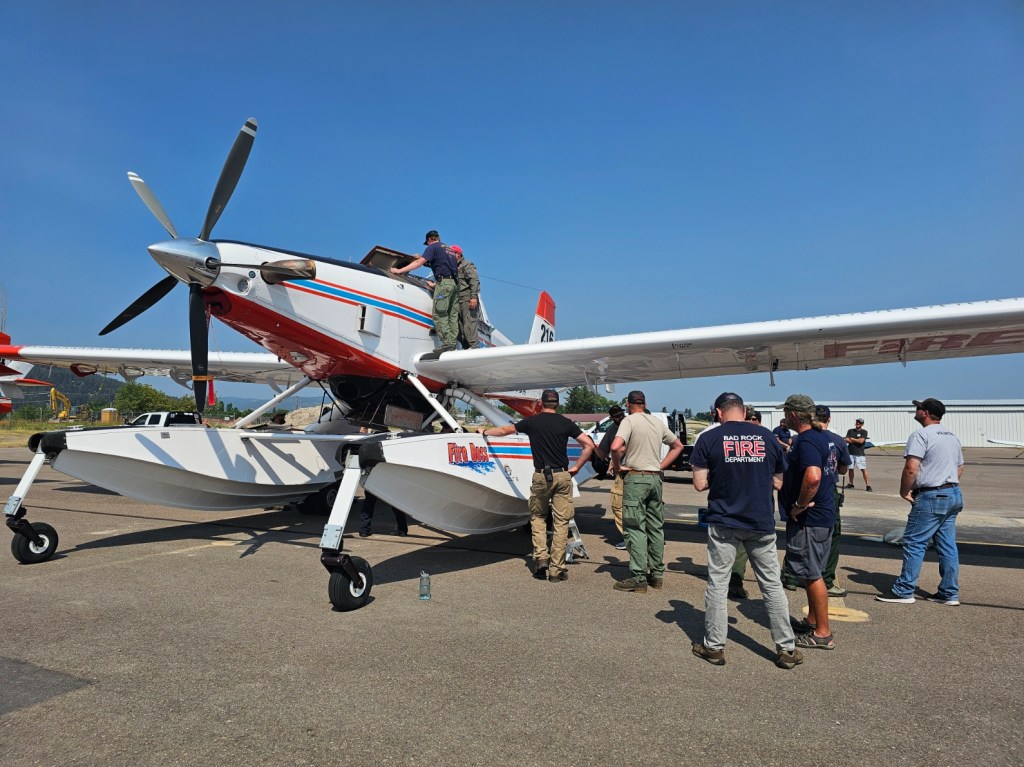
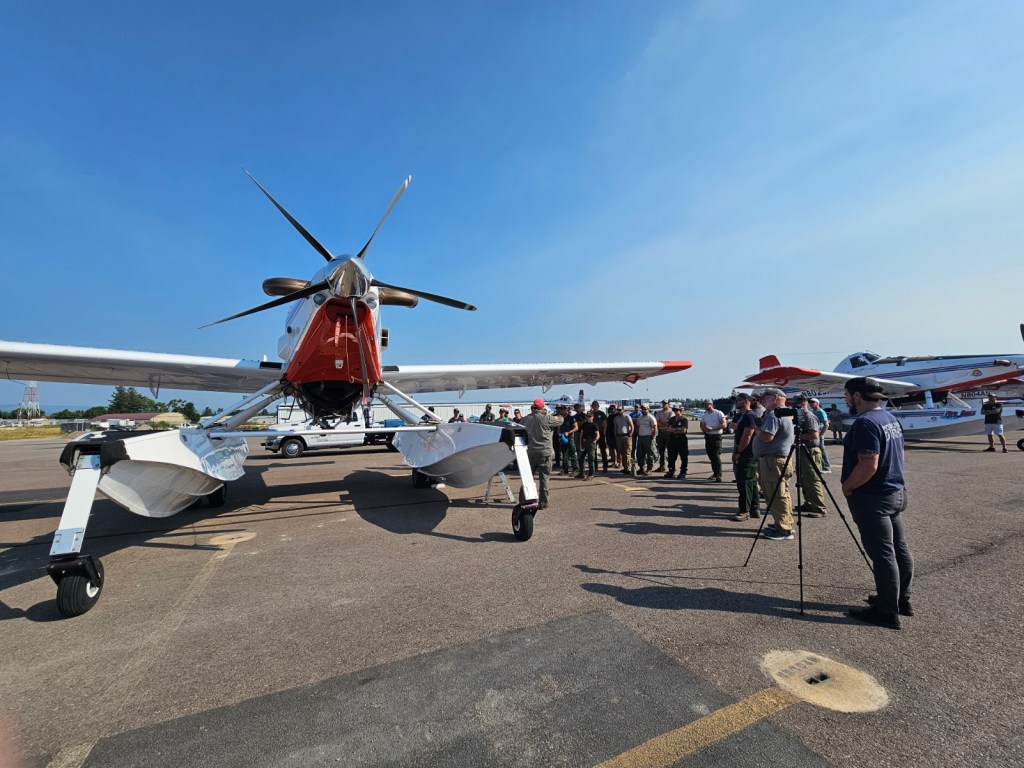
Rich and I try to attend as many trainings as possible. Sometimes there are opportunities to learn about different aspects of firefighting. Last weekend, we went out to the city airport and got some training on wildfire firefighting with mutual aid from the air and the air bosses. It was really informative, and I learned a lot.
 Messina Musings
You two are amazing-so smart, tough, and generous! It’s really something that you learned all that so quickly and how tough you are! I know Joe is smiling down. He would be anyway, but I’m sure it’s extra big at all of this.
LikeLike