The Sydney Bridge Climb

One of the really cool things we did while in Sydney, was to climb the Sydney Bridge. We started at about 6:30 pm and it took about 3 hours. We were all geared up in parachute outfits and harnesses as we were hooked onto the bridge the whole time. We climbed up to the top and then watched the sunset while on the bridge. We walked across the top of it and back down in the dark. We were not allowed to have anything loose on us…to include phones. They had cameras along the way to take our photos. We saw a rainbow over the Sydney Opera House just as we started out, which was pretty cool. Here are the photos from this once in a lifetime trip.

Sydney, Australia

We had a blast in Sydney. We got off our cruise ship on February 15th…my 55th birthday – spending it in my 55th country. We took an uber to the hotel in the center of the city, right on the edge of Thaitown and China Town. We dropped our bags and met our super-awesome guide and driver for an all day trip to the Blue Mountains. Melanie (Mel) was our guide and she is a Bondi Beach girl. She was a riot and we had a blast spending the day with her. We went into the mountains and had a lovely day. Our first stop was at Calmsley Hill City Farm where we got VIP passes to go in and pet their koala, Jonah. We had fun walking around the farm.

Here are the views from the Blue Mountains. We went to several locations: Wentworth Falls, the Three Sisters sandstones structures, the Megalong Valley (where we saw kangaroos in the wild), and breathtaking views across Grose Valley and Magalong Valley.

Here are some photos from walking around town near where we were staying. With only a day or two from Chinese New Year, there were a lot of decorations up.

The next day we spent the day on the Hop On Hop Off bus, traveling around the city of Sydney and Bondi Beach. We had a really good time seeing the fish market (the third largest in the world) and then spending time at the Rocks, looking at the Sydney Opera House and the Sydney Bridge (also called the coat hanger). We then went to Bondi Beach and spent time on the beach and around that area.

Melbourne, Australia

We finally made it to mainland Australia! We docked on the largest wooden pier in the southern hemisphere. It was built in 1854. There is a large population of Chinese in Melbourne and one of the largest Greek populations outside of Greece. There are over 100 countries represented in Melbourne, which is known as a melting pot. Melbourne is known for their food and coffee culture. The population is 5 million people – the whole country of New Zealand. Melbourne is likely to overtake Sydney in population soon. During the war days, the main drag was a runway for planes. Melbourne is known as the sporting capital. They had the Australian open tennis tournament there a week or two prior. Their tennis center holds 14,000 people. They have a football/cricket stadium that holds 100,000 people. Marble Park football stadium (soccer) holds 50,000 people. In March, they turn the roads into a speedway and race through the city. The Yarra River flows through Melbourne and there are lots of rowing clubs and sculls on along the Yarra River. . The Yarra valley is known for their wineries. There are over 80 wineries in the area. In 1910, the train station was built in Melbourne and is still in use today. From 1901 to 1927, Melbourne was the capital of Australia. The current capital is Canberra, a city between Melbourne and Sydney. Vegemite (I did try some) is not real good. The spray on kind on crackers was not bad. The paste…ugh. Vegemite was made after 1922 when they stopped importing marmite from UK. Vegemite is made from brewer’s yeast…the scum they scrape off the top. Evidently it is good thinly spread on toast. Meat pies, sausages, fish & chips, and pamajamas (schnitzel) are popular foods. Thai food is also very popular in Melbourne.

Again, we are not big city folks, and Melbourne is a big city. We headed up into into the Dandenong ranges – a cool temperature rain forest. Lots of Melbourner’s go there for day trips to relax. We went to Sherbrook Forest and was able to see the largest, tallest trees at 90-100 meters tall – a mountain ash. They used to be used for masts for ships because they grow so strong and straight. There were also a lot of fern trees. They only grow a cm a year, so these tall trees were old. There were a lot of birds flying around that were very vocal and colorful. Some of the birds can actually mimic mobile phone noises and other birds. There were crimson rosellas, kookaburras, cockatoos, Cara wings, wedge-tailed eagles….over 800 varieties of birds. Our guide, Chris, stated you should never start feeding cockatoos. If you stop, they will ruin your windows…eating the sills. Never start feeding them.

We stopped and had scones with cream and jam before leaving on a ride of the Puffin Billy Railway – Australia’s oldest operating steam railway and only surviving narrow gauge locomotive. We actually got to sit along the edge of the train with our legs hanging out. It was pretty cool!

Burnie, Tasmania, Australia

Our next stop was in Northern Tasmania in the port of Burnie. We were docked in a working port again with one of the biggest pile of woodchips I have ever seen…and I live in a lumber area. The woodchips are loaded on ships and sent to Indonesia. Indonesia sends it back as paper. They bussed us to the city where the mayor of the town jumped on each of the cruise ship busses and welcome us to her town. It was really kinda nice! 2/3 of the population of Tasmania lives in the northern part of the state. A lot of produce is grown here: cherries, carrots, potatoes, and poppies. In order to not have people stealing poppy plants, the poppy fields are mixed with another type of poppy that will make you very sick. All poppy fields are watched on closed circuit video now as well. Hay is exported north to Australia for feed. Blue berries are grown in pots in hothouses with raspberries between the blue berry plants to attract bees. Tasmania is very green until the 1st week of January and then turns yellow within a week. We took a bus up into the hills to Wings Reserve – the Wing family has been farming for 8 generations. They started a wildlife reserve and enjoyed saving animals. I was able to hold Warren, the 8-month-old Tasmanian devil. He was a sweety, but I did get a little nervous when his mouth wondered close to my arm holding him. My sister-in-law got to hold Stevie, the wombat baby. Then there was Penny, the baby Wallaby that was cute as a button as well. What an experience! We wondered around the Wings Animal Preserve for a couple of hours before heading back to Burnie and walking the beach for a bit.

Hobart, Tasmania (Australia)

Hobart was our first steps on Australian soil. Tasmania is an island south east of Australia, but is a state of Australia – one of six states. I think we all decided that this was our favorite stop of the entire trip. We really got around and made a lot of stops, so that is saying a lot. We had two stops in Tasmania – one in the south and one in the north. This was the southern stop. We had a long day guided tour on this stop and it did not disappoint! Our guide, Marbles (yes, that is what he goes by), was a wealth of information. First off, a lot of Aussies call Hobart, “Slow bart”. There is no hurry to be anywhere. At the docks near where we disembarked, there were old apple sheds and wool sheds. That used to be the two big exports from this area. From the 1800’s to 1950, Tasmania was known as the “Apple Isle.” It is now known as the holiday isle and is a place where Australians, New Zealanders, Europeans, and Americans like to come to visit. In 1803 on Nov 26th, Tasmania was colonized by the British to establish a penal colony. It wasn’t named Tasmania until 1856. The River Durwin (278 km up the middle of Tasmania) and Mt. Wellington control the weather within Tasmania. Everyone in Tasmania has a water or mountain view or both. On 5 Jan 1875, a big ship hit two pylons on the bridge in Hobart and knocked the bridge down. It was 9 p.m. on a Sunday and it killed 16 people. Citizens lived on the eastern side of the river. All the shops and schools were on the western side. People had to drive 50 km out of the way to get around the river. It was devasting for the area. Bob Bifford ran a ferry service for $0.20 a ride one way per person to help out. He had large garbage cans he would just have them put their 20 cent piece into. Smart man that he was, he got a liquor license and allowed people to drink on the ferry. The ferry ride was 12 minutes long. The record number of beers consumed on a ferry ride was 10 10 oz bottles of beer. Bob was a high school dropout but he was resourceful. He already had a garage full of trashcans full of 20 cent coins. He decided to charge 80 cents per beer. People would give him a dollar and he would hand them back a 20 cent coin to help get rid of them. Tasmanians are known as being loyal and resilient and he was a prime example of this. He now develops electric boats…expensive catamarans. His first all electric catamaran he sold to Argentina for $30 million.

In 1642, Abel Tasmin discovered Tasmania. in 1798, Australia and Tasmania was circumnavigated. The first white settlement was placed in swampland, but quickly moved to Hobart. In 1836, Carles Darwin came to Tasmania and declared it to be “the Noah’s ark of the world.” There are zinc works in the area that are worth billions to the Tasmanian economy. A lot of the dairy products go to China but also to the Cadbury chocolate factory in Hobart.

Our first stop was at Bonorong Reserve. Bonorong has 400 volunteers statewide who save animals injured or abandoned. Bonorong is an Aboriginal word for sanctuary. There were kangaroos hopping around everywhere for you to feed and to scratch their chest (they love that because they can’t do it on their own). The back foot of the kangaroo has a long nail that looks like it could disembowel you if they tried hard enough. Wombats with their steel plates in their behinds behind their fur to protect them from predators. Tasmanian devils that look like cute overgrown rodents. They have the strongest jaw strength per pound of any animal in the world. They lost over 70% of the Tasmanian devils in the last 10 years due to a contagious deadly facial tumor disease. They isolated healthy Tasmanian devils to try to build up the population again. Tasmanian devils are marsupials and give birth to 40 young at a time – all about the size of a grain of rice. They only have 4 teats though, so only the four strongest young, able to latch on, are able to survive and grow. The rest are eaten by mom. Tasmanian devils are not predators. They are scavengers. They are the Dyson deluxe of the Tasmanian animal world. They have a great sense of smell and are nocturnal. They eat …. the bones, the teeth, the fur, everything. Many think of the Kookaburra bird when they think of Australia, but they are not native to Australia. They are meat eaters and will eat baby koalas. The three most deadly snakes in the world are found in Australia. In Tasmania, there is also an ant that can be deadly. This was not comforting. There is also the echidna, which looks like a porcupine/anteater cross with a pouch.

Tasmania is known for having the cleanest air in the world. Prevailing winds come from the west and the nearest land mass to the west of Tasmania is 17,800 km away in Chile. It does also have the highest incidence of melanoma due to the sunny conditions. There is a papermill in Hobart that produces 12 million tons of paper (Boyer). The Boyer paper mill have plantations of of pine trees. They have a special kind of tree with branches and leaves that have increased oil to make magazine paper. The logs are then sent away as timber. New Norfolk is a town nearby that used to house the mental institution. They call the town the “New Norfolk Nutters”. It is also known as Australia’s tidiest town. There is a pub there called the Bush Inn and it is the oldest pub in Australia. The River Durwin is freshwater starting at the bridge near the port. It is fed by Lake Sinclair, and is the deepest river in the southern hemisphere. It is 18 m across but 186 m deep. It feeds the River Durwin for 250 km and there are many dm systems for irrigation along the way. The water is so clear and clean, you can drink it. Apples and sheep are the primary agricultural products. If Tasmania was a country, it would be the 25th richest country in the world per capita. the DBP is $50,000 per person. In the 1980’s the liberal government put dams on the river system, allowing for hydroelectric power and it stopped flooding. River Durwin has 30 dams and even though the river looks like it flows at a leisurely pace, it flows at 92 cm/sec. Tasmania has some of the cleanest energy in the world. Zinc and aluminum plants stay here due to the abundance of electricity needed to make their products. There are also salmon ponds with the oldest known hatchery in the southern hemisphere. In the 1850’s, trout and salmon eggs were transported from Europe to Tasmania in bee hive combs to establish hatcheries. Seafood is #6 on the GDP. In the 1970’s farm salmon in pens became popular and now are sold to over 22 countries. The area around Hobart, Tasmania is also the hops capital of the world. They have cold winter nights and good irrigation, which is perfect for growing hops. They were brought here from Germany and just flourished. One crop I was really surprised about was poppy plants. Tasmania supplies 50% of the world’s legalized opioids. The only other place that produces more is Afghanistan and much of that is illegal.

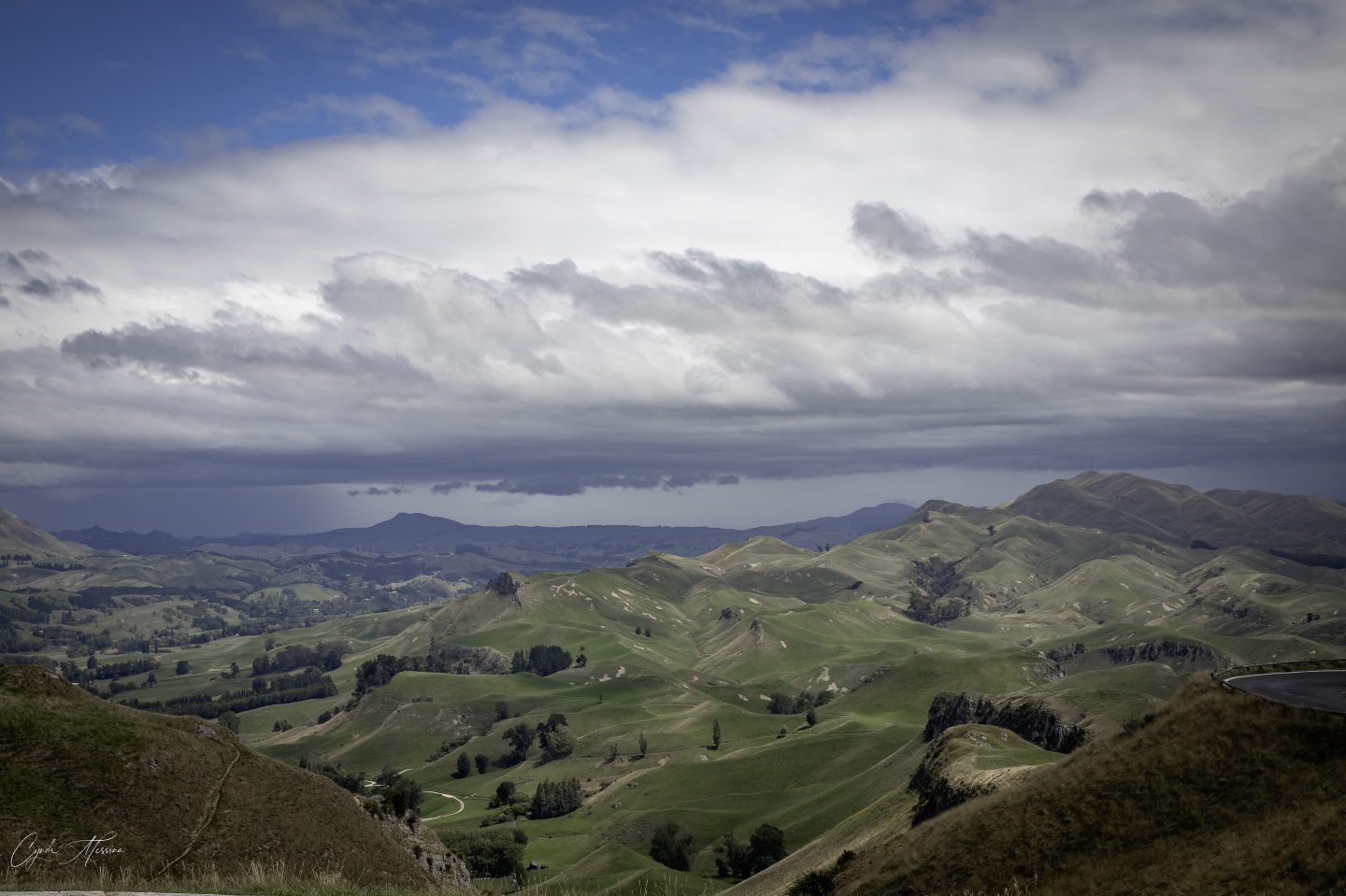
Our next stop was at Bushy Park and Russell Falls. Mount Field National Park is one of Tasmania’s oldest national parks. It is a cool temperate rain forest – one of the only in the world. We hiked into the national park and were only given an hour to explore. We felt we could have spent even longer exploring the area. Berries and cherries are grown in this region. There is a golf ball sized cherry that the Chinese like to serve during Chinese New Year. It grows perfectly in this region. They are sold for a dollar a piece. Japan likes a specific strawberry that is red on top and white on the bottom. They grow well here due to the colder nights, which make berries sweeter.

Marbles talked extensively about “the sins of our fathers” in our day with him. The Tasmanian tiger once roamed Tasmania as a native animal for over 6 million years. in 1803 white men arrived in Tasmania and within 150 years, the Tasmanian tiger was extinct. The white people also killed off the indigenous people. The last full blooded Aboriginal person died in 1936. Some died through conflict, but the main killer was the diseases that the white men brought with them that they had no way to fight off. Their immune system was very poor. The white people brought the common cold, measles and the chicken pox. They killed off 75% of the indigenous people through disease – the remaining 25% through conflict. The “Sins of the Father” is a concept drilled into kids at an early age. Australians are big into conservation. Tasmanians are easy going people. They tend to turn down prosperity and big companies in order to save natural Tasmania. Tasmania is considered the “battery of Australia” due to all its electricity. There is almost 15 hours of sunlight a day, so solar cells on houses are common. They sell the extra electricity to the state. Even though it is cooler in this area, solar power doesn’t get affected by heat but only by sunlight, which is in great abundance. Bushfires are the biggest threat – especially with the northern winds. In Australia, when you turn 67, you go on age pension. It used to be 65, but they moved the age up a few years ago.

The next place we stopped was really fun: Curringa Family Farms. Tim is the man in charge right now of the working sheep farm and hundreds of acres of other crops. He is the 6th generation on this farm. His son Jacques, is now working the farm as well as the 7th generation. We watched a sheep shearing demonstration and a sheep herding demonstration with their Smithfield/border collie mix dogs. Some of their crops are: pyrethrin (crops that are used to make insecticides) onions, poppies, carrots, cabbages. They have 100 hives that come yearly from a professional pollenating service. They breed vegetables and then sell the seeds. They handpick 1 million seeds for their onions and export them globally. Tim’s wife, Jane, opened farm stay cottages on the farm in 1984 and has won a lot of awards. They shear their sheep in Dec and they are able to do the whole herd in 3 days, with 4 shearers working all day. Each shearer is about to shear 200 sheep each day…so 800 total a day. Most of their sheep are not grown for wool but for meat. They still need to be sheared and the wool gets used as stuffing in pillows and coats. They are in an area called fire storm alley. The area is very fire prone and is a high risk area. If you want to read more about this farm, the website is Curringafarm.com. Tim greeted us on the bus and talked to us about his farm and what he does. He manned the huge grill and made steaks for all of us, which were great. We had a really nice time spending time on his farm.

Fiordland National Park, New Zealand

I don’t’ have a ton of information for this page because we literally just cruised through Dusky Sound, Milford Sound, and Doubtful Sound. The towering cliff faces around you are breathtaking and eerily quiet. We had somewhat of a rainy day going through the area, which the haunting mist brought it’s own beauty. Because of the rainy weather, we were able to see a lot of waterfalls that would normally have been dry. The water is almost brown….the top 10 feet of it is freshwater and below is seawater. The area gets 7 meters of rain a year. Think on that a second. That is like 23 FEET of rain. Dolphins and whales are often seen in this area and the jungle portion is filled with thousands of species of birds. Speaking of birds, I wanted to show you what we saw in the dining room every night. The person checking us in and seating us had a bunch of little tiny ducks…. interspersed was a little kiwi. Made me smile every time.

(Port Chalmers) Dunedin, New Zealand

This is also one of the stops that we didn’t get a group tour on. It is considered “Little Scotland, New Zealand” and we thought we would just walk around. Divine intervention occurred. We found out we would not be allowed to walk from the port to the town. First off, it is a working port and no one was allowed to walk around. Secondly, the cruise line had a bus that would transport you back and forth, but it was for $35 a person. We kind of had a problem with this. They were charging us for a ride to town when we had no other options. We decided to call an Uber. It was going to be less expensive and we decided that we wanted to see the Larnach Castle, which is definitely a drive and not a walk from the city centre. Dennis was our Uber driver. He was fabulous. He told us about himself and his family and about the area. By the time we got to the castle grounds, it was decided that we would hire Dennis for the day. He said he would take it off the books (only the first charge was through Uber) and the rest was him as a guide in his car. He took us to all the fun places we were interested in. He dropped us off in the city centre to wander around and grab lunch and then he picked us back up, took us to a few other spots and dropped us back off again. I think we decided it ended up being $45 per person for the day….and we saw so much. Divine intervention. This was on Feb 6th, which is a national holiday…so we did well to see the things we did. Note to those who might care: if you eat at a restaurant on a holiday, they charge you an extra 15% for eating there and them keeping it open on a holiday. (Not like you have a lot of choice!)

Our first stop was Larnach Castle. There is a fee to walk the grounds and another fee to tour the castle. Having seen many castles in Europe, we weren’t so interested in the tour of the inside of the castle. We did go inside for a sweet treat and coffee in their coffee shop. That was pretty good. We saw tables filled with scones and cream for the tour bus people going through the castle. I had seen photos of the grounds and they were amazing. The castle is up on a hill and so the views are amazing. The gardens are also very beautiful.

Dennis took us looking for sea lions. We went to one beach and found a single sea lion but then hit the jackpot when he took us to Allan’s Beach. It was amazing to walk along the beach and see all the sealions laying around and flapping sand on their backs. We even had to go around one who had managed to wiggle itself onto the sandy path through the dunes and settled itself by the sea lion sign (which was kinda funny). This was the first mammals we had seen since coming to New Zealand, so we were pretty excited! The sea lions in this area have a lifespan of 18-23 years. The Dunedin area is considered the wildlife capital of New Zealand as there are a lot of seals, sea lions, albatrosses, and penguins. The hills around us held sheep and horses and it was truly like being in Scotland – we even found some thistle!

At the mouth of the harbor, they have these statues called “the molars”. They look just like they are named. I found it oddly fascinating.

Dennis dropped us off in Dunedin to walk around and have some lunch. I once again tried a local ginger beer. The railroad station is something to looks at! We also walked to St. Paul’s Cathedral and took a peek in there.

Dennis took us on a ride through some old cemeteries and the aviary and gardens. We hit Signal Hill for some great views of the port from higher up and then went to Baldwin Street, which is in the Guinness world record book for the steepest in the world with a 30 % incline. Dennis told us that Dunedin (which is on the Southern Island of New Zealand, has the 2nd highest population behind Christchurch. He said that there was a university in the city which was the #1 employer of the city, with dairy farming and timber farming rounding out the top three. He was also able to tell us a bit more about politics in New Zealand. (You never really want to ask…. but if they offer, it is interesting to learn about.) The parties on the left (who are mainly liberal) are the labor party, the green party and the Māori party. The more conservative parties on the right are the New Zealand 1st party, the National party, and the ACT New Zealand party.

Timaru, New Zealand

We did not do any kind of group tour in Timaru. Although they had buses to take us to the city centre, we were comfortable walking from the port. I will warn you that there are several sets of stairs you have to go up to get there though! We walked along the path along the rocks by the shore. Evidently there are tiny Little Blue Penguins (or fairy penguins – the world’s smallest penguin at only 40 cm tall) who nest amongst those rocks along Caroline Bay. They are out in the water searching for food during the day, so if you see one, you are very lucky. We didn’t see any. We walked around town and visited St Mary’s Anglican Church. We lit a candle for our Joe while we were in there. We walked around shops and the open-air market filled with handicrafts. We had some pretty good Asian food where a local we met recommended. They had a left-over spiced ginger beer from Christmas time that I had to try. It was pretty good!

We were heading to the beach to see walk to the lighthouse when we saw a big crowd along the beach. Then between people, we saw horses on the beach. Curiosity piqued, we headed that direction. Evidently they were having their first ever polo match on the hard packed sand of the beach! I had never seen polo before. It was pretty interesting to watch. There was a lot of people there….mostly locals. After the polo matches were over, they then had a horse jumping contest. It was the most bizarre thing, but we stayed for all of it and loved it! What a special treat to stumble upon!

Wellington, New Zealand

This was the only stop on our trip that Rich and I went one direction and Rich’s brother and sister-in-law went a different direction. Obviously, I will be showing you what Rich and I saw. I will just mention that my in-laws went on a day long tour of the Lord of the Rings/Hobbiton scenes, which were filmed in the area. The locals call it “Welly World” and it is on the East side of the city. Weta Group is a movie industry in New Zealand. They not only filmed Lord of the Rings, but also Avatar. James Cameron, who directed Avatar have dual citizenship with Canada and New Zealand as he is there often for filming. Weta was named after a large insect native to New Zealand. We took a tour of the Wellington area for the day. However, one of the places we stopped was the Weta Workshop gift store, where we had a few photo ops….If you are an artist, it looked like a very cool place to work.

Our driver and guide, Kelvin, had a lot to tell us about New Zealand and about Wellington. New Zealand is about the same size as Japan in land area. The population of New Zealand is 5-5 1/2 million people. The population of Japan is 17 million people. There is not a lot of flat land in New Zealand….lots of hills. Wellington is made up of four cities . All the trees in the area are evergreen. Grassfed cattle is the biggest export from the area and a lot of dairy is exported as well. New Zealand is the first country with free trade agreement with China. There is a section of 600 acres up in the far hills of Wellington called Zoolandia. There is a fence around it and citizens take turns, two weeks at a time, to make sure the section of the fence assigned to them stays intact and clean. This Zoolandia is to keep the mammals out such as stoats, rats, and possums, and allow the native flightless and flying birds to procreate in a safe area. It took 2 years to develop this “predator free” fence. They cleaned up the area after putting the fence up, which took 6 months. Then the scientists reintroduced rare birds again. Kaka is one of the rare birds that is making a comeback. Most citizens have rat traps on their properties. Kelvin said 10 years ago he was catching a rat every other day. He hasn’t caught one in 7 years now. The country is aiming for no predators in the country by 2050. It is a tall order, but the citizens of the country are all on board. Kelvin stated that there are more Samoans who live in Auckland than actually live in Samoa. He told us that Australia is better at cricket but New Zealand is better at rugby. We stopped briefly along the coastline to stretch our legs and also at a higher distance, stopped to take photos of the coastline.

About 80% of the flora/fauna found in New Zealand is unique to the country. Many of the roofs are made of metal. That is so they are more earthquake proof. We stopped at a local diner for lunch and I ended up having fish and chips, which was the special. The fish was warehou, which is a local fresh caught fish and was so good. I asked several times for ginger ale, but was given ginger beer (non alcoholic). I have to say I really like the ginger beer in New Zealand and Australia. As with most of their products, they have catchy names and then a funny little paragraph on the back.

Wellington is known as “Windy Wellington” due to the stiff breezes that are forever present. Often flights inbound to Wellington are diverted to Christchurch on the Southern Island, due to high winds. It is the capital of New Zealand and is on the southernmost part of the North Island. It is the 2nd largest city in New Zealand with a population of 430,000. Wellington because the capital in 1865. There is a cable car ride to the top (which we took) and walked for a good half hour or so through the beautiful botanical gardens back down, ending in the rose garden. The cable car has been there and running since 1902. Did that make me nervous? Maybe.

One of the really nice places we stopped that we would highly recommend, especially if you are military, is the national war memorials (or ANZAC – which stands for Australia and New Zealand Army Corps). The one in Wellington is amazing. They actually celebrate ANZAC day, similar to our Veteran’s or Memorial Days on April 25th each year. Nearly every town has some kind of ANZAC memorial. The National War Memorial in Wellington is located in Pukeahu National War Memorial Park. It was dedicated in 1932 to honor the WWI fallen heroes and has a 50 meter high bell tower and a tomb of the unknown soldier. In WWI, New Zealand lost a generation. Over a century later, they still remember and honor them. At the park, they have memorials from several different countries represented there. The Australian memorial consists of 15 red sandstone columns along with interspersed gum trees. There is a stain glass tree for the British memorial, and if you stand in just the right spot, you can see a WWI British soldier saluting through the branches. It represents an intertwined Royal Oak and a Pohutukawa tree. The Turkish memorial is of two hats cast in bronze, one from New Zealand and one from a Turkish soldier along with a quote from Ataturk to the grieving mothers of the ANZAC soldiers. The hat on the left is from New Zealand (called the lemon squeezer) and the hat on the right is Turkish. The country of Turkey and New Zealand are close. Turkey has a big commemoration on April 25th on New Zealand’s behalf. The U.S. memorial is a granite tablet inscribed with a 1943 ANZAC day radio address from the U.S. Secretary of the Navy, commemorating WWII bonds. It looks as it the words are part of ripples on an ocean. The Belgian memorial is a steel sculpture of a laurel wreath, representing friendship. There is a sculpture similar to this one in East Flanders, Belgium. There are 8 countries that have their own memorial areas in the park, but they were the ones that I photographed. What was somewhat hard to take in was that there were a bunch of older teen boys skateboarding through this area. It seemed to many of us to be disrespectful, but our driver Kelvin stated it was just accepted at this point. There was a lone statue off to the side which represented the Māori mothers who stayed home and lost their menfolk – they lost their souls. It spoke volumes. The Māori were the most decorated warriors in WWII.

With Wellington being the capital, we stopped at their house of parliament. There are four buildings in total that have been used as government buildings throughout the years. You can obviously tell the one they call the beehive. New Zealand has led the world in women’s rights. Women have been able to vote since the 1890’s. It was the first western country to allow women to vote. Kate Sheppherd led the women’s suffrage movement and her face is on the New Zealand $10 bill. In contrast, the last westernized country to allow women to vote happened in 1973….Switzerland. The NZ government in a nutshell: it is an elected democracy with a monarchy. King Charles III of the UK is the king of the country (both NZ and Australia). They have one house – parliament, like our congress. When you vote, you vote for 2 things: your local representative and the MMP (mixed member proportionate) – or the party you would like to rule. The prime minister is the head of the biggest voted in party at that time. The ruling party must have 60% of the parliament. You cannot take away any members, only add. Their voting cycle is every 3 years. The only interesting part is if you are of Māori bloodlines. You have to be at least 1/16 Māori to vote on the Māori role in parliament. Māori is 17% of the New Zealand population and they have 18 parliamentary members. What was crazy was there was no police presence or guards anywhere. Kelvin stated there are usually only armed police in airports. The government is federal and city – there are no provincial or state governments.

In 1943, U.S. Marines were shipped to Wellington for a year to learn about beach landings and jungle warfare. It a local Anglican church, St. Paul’s, there is a U.S. Marine flag and a 48 striped U.S. flag hanging from the rafters. The church is old and so very beautiful.

Happy 79th Birthday, Dad!

Today is my dad’s 79th birthday. He was born Walter Carl Neitzke, II in Carson City, Michigan. He is the second child of 5 in his family. His siblings try to come once or twice a year now to visit him, which is deeply appreciated. His dad was a career Navy man and my dad grew up all over the country. In high school, they were living in Hawaii and my dad was having a rough time with the locals at school. My great grandparents back in Michigan were farming and needed help, so he moved to live there with him. He told me once that showing up to school in their rural Michigan location with flowered shirts on from Hawaii made him stick out like a sore thumb. It wasn’t long after he arrived back in Michigan that his grandfather had a fatal heart attack. My dad was tasked to drive them to the nearest hospital – with his grandfather dying in the backseat, with his grandmother holding him. He didn’t tell me about that story until I was much older…when the dementia made him like to talk about times long gone. He continued to live with his grandmother and he worked at his Uncle’s hardware store, Thomas Hardware, in Breckenridge, Michigan. He played tenor saxophone in the high school band and when marching, played the bass drum (the big one on your front like the energizer bunny plays). Evidently there was a short cornet player that marched in front of my dad and he would run into the back of her – on purpose or because he couldn’t see her over his drum, he never told me. She was a year older than him and they became friends. This was my mom, Karen Ancel. She was dating someone else at the time, but when that broke off, she called my dad and the rest is history. They have been married for 58 years this September.

My dad went to college on an ROTC scholarship, being the runner up for the West Point appointment the year he graduated. He studied finance at Lake Superior State College in Sault Sainte Marie in the upper peninsula of Michigan. He married my mom and moved her up there before he graduated. He graduated in 1969 and was commissioned into the U.S. Army as a combat engineer. My parents packed up their things and after some military schooling to include jump school and ranger school (which makes my dad a total bad ass according to my son, Joe, who was also in the army) they moved to West Germany. They came home a few years later with the token cuckoo clock and a baby – me. My dad dropped my mom and me off in Michigan and went to Vietnam for a short time. He caught the end of the war…and was sent there to help organize and get people out. He rarely talked about that time, and I wished I had asked more questions. He went to Ft. Belvoir, VA, where my sister, Pam, was born. Then we moved to Fort Bragg, NC, living in Fayetteville, where my brother, Craig, was born. We then moved to Bloomington, Indiana so my dad could get his master’s degree in finance. When he graduated, we moved back to Fort Bragg, NC. My dad continued to do well in his Army career and was selected for Command and General Staff College in Ft. Leavenworth, KS. We were there about 10 months before my dad took a remote job in South Korea. He was there for a year while we lived in Breckenridge, Michigan…and I went to the same junior high/high school he had attended…and marched in the same marching band, playing the alto saxophone. I am pretty sure I wore the same gold wool marching sweaters they wore 2 decades prior. When he was done with his overseas assignment, we went to live in Alexandria, VA, where my dad could commute with thousands of other military folks to the Pentagon. We were there three years and then moved to Fort Polk, Louisiana, where my dad took command of the 7th Engineer Battalion. I am not sure if anyone appreciated my dad’s assignment there more than him. After living in the DC area, Louisiana seemed so backwards. As always, he helped us see something good in every assignment we lived through….a lesson I continued on when I went into the military and married a military man. They then went back to northern Virginia so my dad could again work at the Pentagon. I moved away to college. Pam graduated and moved away as well. My parents and Craig, now in high school, moved to Buffalo, NY for my dad to be in charge of the Corps of Engineers District at Niagara Falls. My brother graduated and went to college. My parents moved again to Fort Monroe, VA, where my dad ended his military career at 29.5 years. They were going to send him back to the Pentagon and he just didn’t have the patience for the traffic anymore. They retired to rural Michigan, where they had met, and built a beautiful home out in the countryside. They lived there for several years until my dad started having eye and some cognitive issues. They decided to move to where their youngest grandkids were, in Houston, Texas. My dad started seeing physicians in the big city and it was discovered he had had at least one but maybe several TIAs (mini strokes). It had affected his vision and possibly his cognitive skills.

My mom kept my dad at home with her until it was so taxing that it was affecting her health. In late January of 2023, my dad entered memory care at a facility about 1.5 miles from their house. I was there to help transition him there, and the first lonely night for my mom at home without him. It broke my heart to know this was how it was going to be from now on. Fast forward three years and a month and we are at today: my dad’s 79th birthday. He has no idea who anyone is. He doesn’t know his kids, the workers who care for him, or his wife. My mom goes there for lunch and dinner 6 days a week to feed him. He has forgotten how to feed himself and doesn’t really chew. His food is pureed and looks very unappetizing, but he continues to open his mouth like a baby bird when my mom asks him to. His is wheelchair bound and has forgotten how to walk…how to help people with his own care. He hasn’t forgotten his sweet tooth though, and enjoys a good desert, even if it is pureed. He will get cake and ice cream today and he will be happy. He won’t understand that it is his birthday, but he will enjoy the sweets. I am headed to Houston to see my mom on her birthday in April, so I am looking forward to holding this man’s hand and hopefully letting him feel the love come through. This post was kind of long but the future is never guaranteed…I don’t know if he will see 80…I don’t know if I will be around for him to see 80 if he does. So, happy birthday, Dad. I love you and can’t wait to see you in about 6 weeks!