
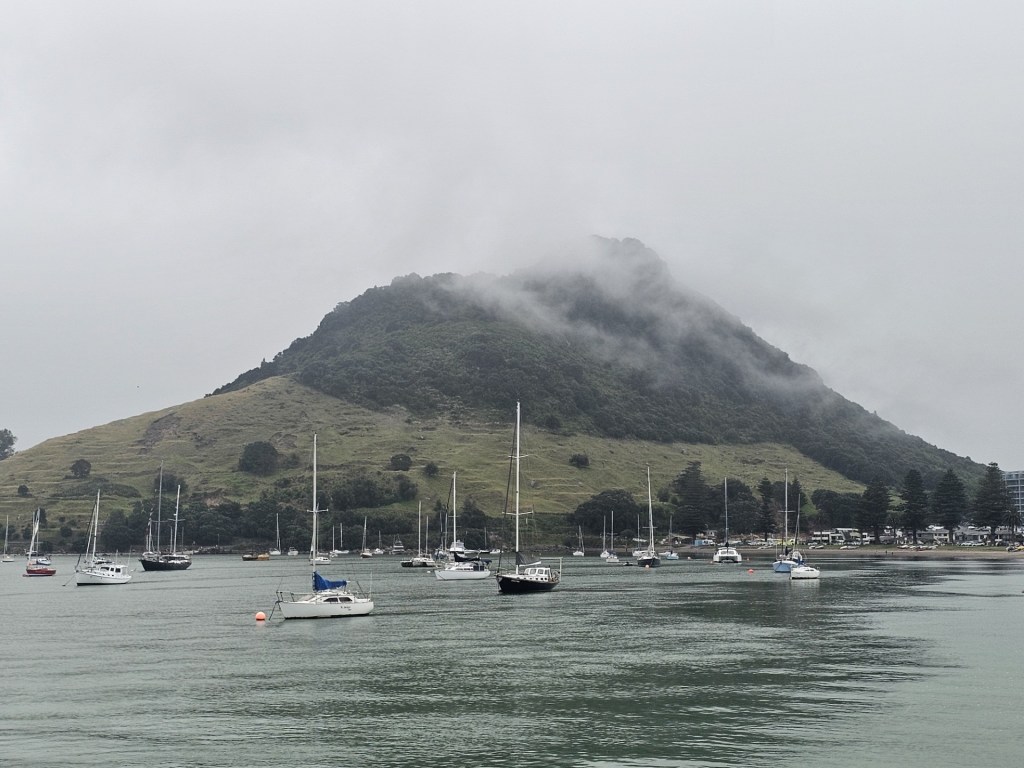
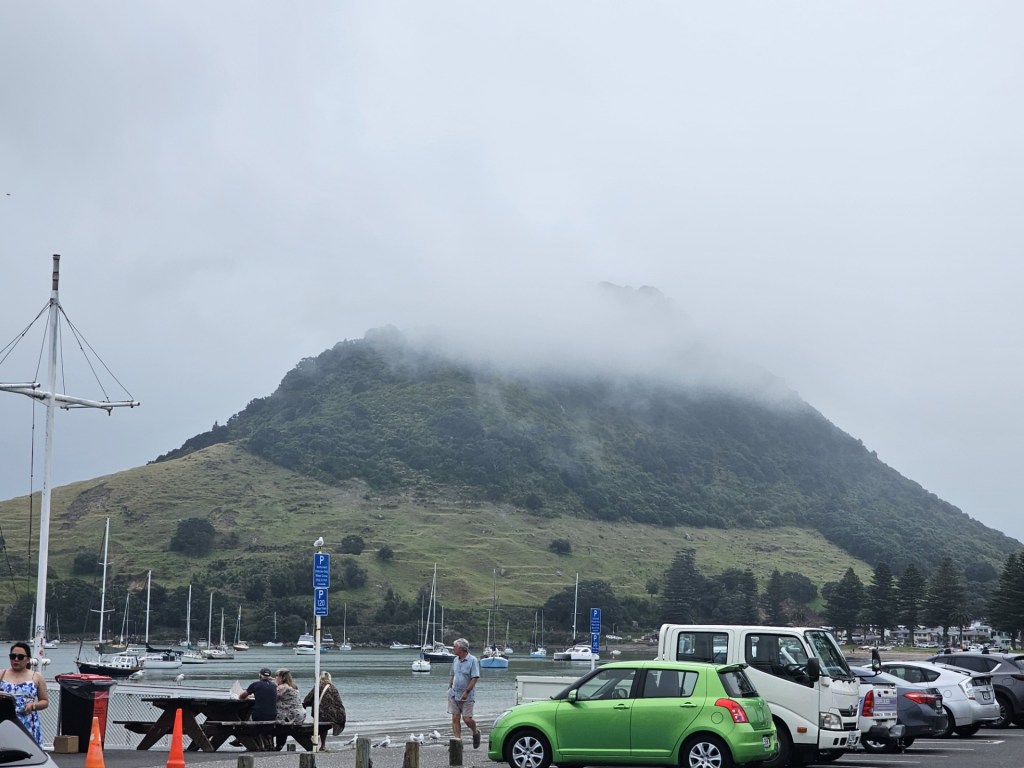
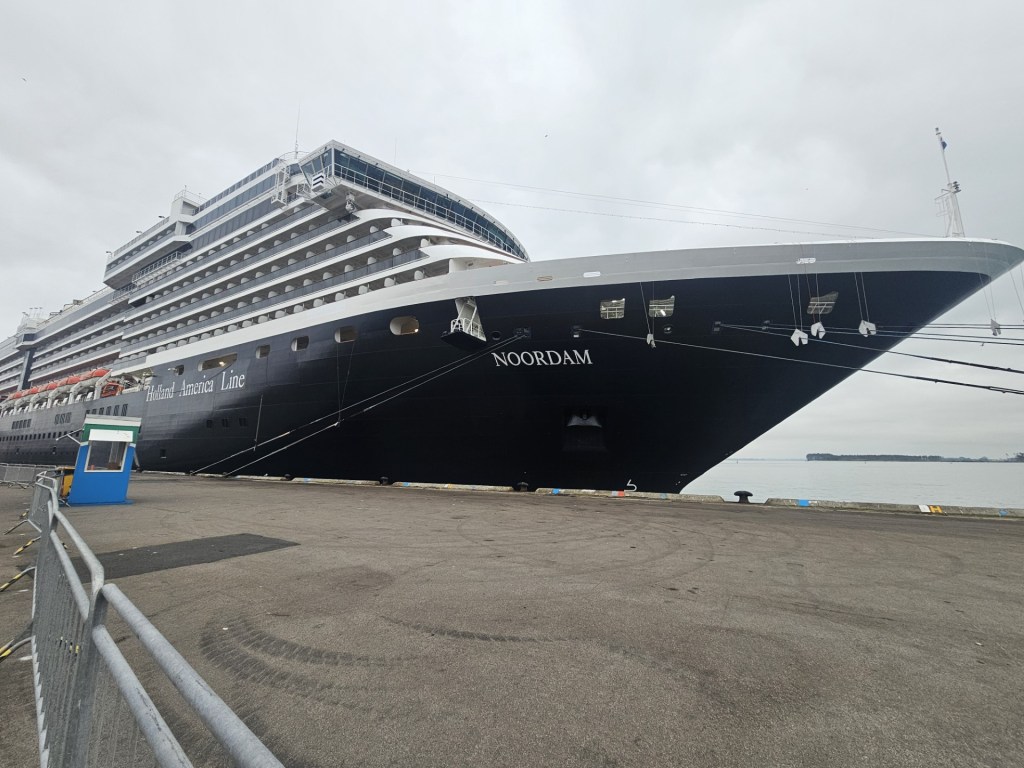
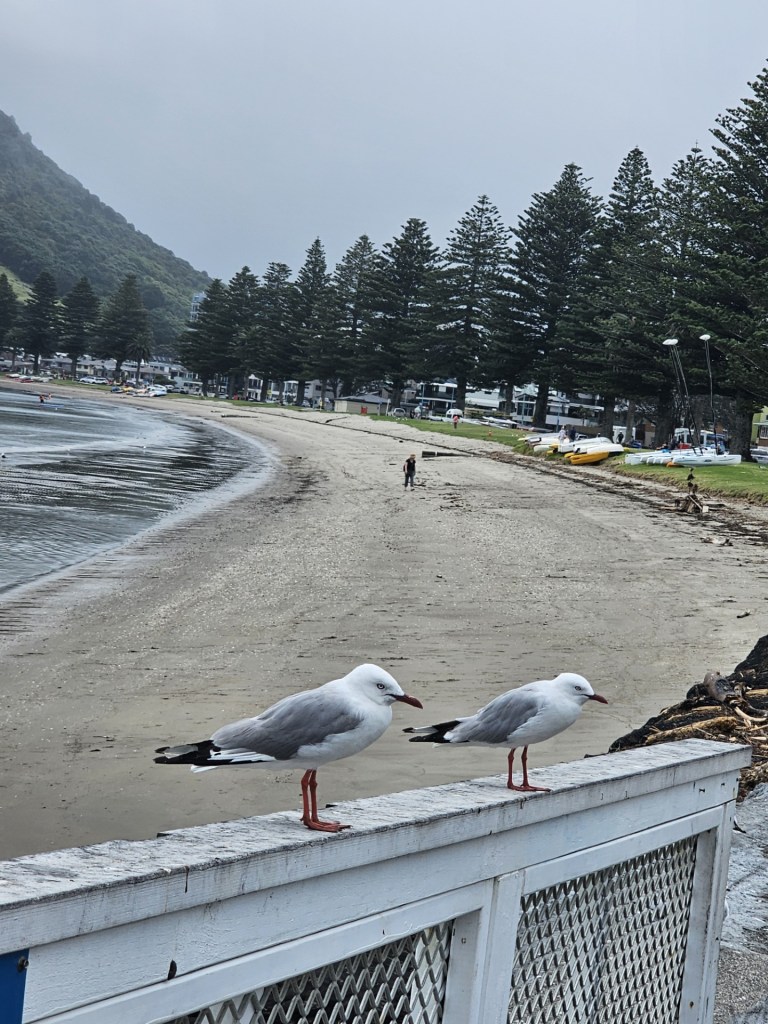
Our first stop was not far from Auckland. Our ship headed south following the eastern coast of the North Island. We got into port on a very overcast day. There had been torrential rain for the two weeks prior to us arriving. There is a hill near the port called Mount Maunganui. During the last several years, we would have been able to hike up that hill. However, the week prior, there had been a landslide (or a landslip as the Kiwis call it). There was a free camping area at the base of the hill and the landslide buried many vehicles, killing 6 people. This kind of tragedy if few and far between in this beautiful country, and it was obvious the city was very much in mourning. All national flags were at half-staff. There were police tape all around the area and there was just a somber mood to the town. Our driver picked us up in a van and the 12 of us or so spent about 7 hours seeing the area with our driver and guide, Richie. He was a retired principal and so he had a lot to share with us on our journey.
Tauranga (Rotorua) doesn’t get too hot. The hottest days are about 84 degrees and the cooler days in the lower 50’s. They get about 1.2 meters of rain a year. This area is also known for the 2nd highest number of sunshiny days in New Zealand. It is a lush, green area with a lot of golf courses. They have good roads. The speed limit on toll roads is about 68 mph and regular roads have a speed limit of 62 mph. There is a coastal strip between the beach and the toll road where homes (expensive ones) are located. Crops that are grown in this area are Maize (corn for feed for animals – they are harvested in April, dried, then fed to the animals.) 99% of the animals in New Zealand are grass fed and therefore are more desirable for their meat than other animals fed grains. There is a lot of dairy farming in NZ – it is their 2nd biggest export – dairy products. They have very large black and white Friesan cows which are larger and create better milk on grass alone. There are also jersey cows which are lighter in color and smaller. The milk dried into milk powder and sent to China. NZ has a good relationship with China because they export a lot of their products to China. The cows will calf in July and the mom will be milked 2x/day until Mar/April. Usually the milking times will be 4 a.m. and then 2 p.m. It will take 2-3 hours to milk the whole herd. The cows are then let out to eat fresh grass. The average size herd 15 years ago would have been 350 head. Now it is around 1000 cows. The dairy farmers use halter technology on the collar of the cows to track milk production, health, and to set up virtual fencing, which can be done from a cell phone.
Most New Zealanders (Kiwis) want land so they can have a proper vegetable garden in their yard. They are not happy with new builders who put the houses too close together. Plus, Kiwis believe their kids should be out in the fresh air playing and they need space to run.
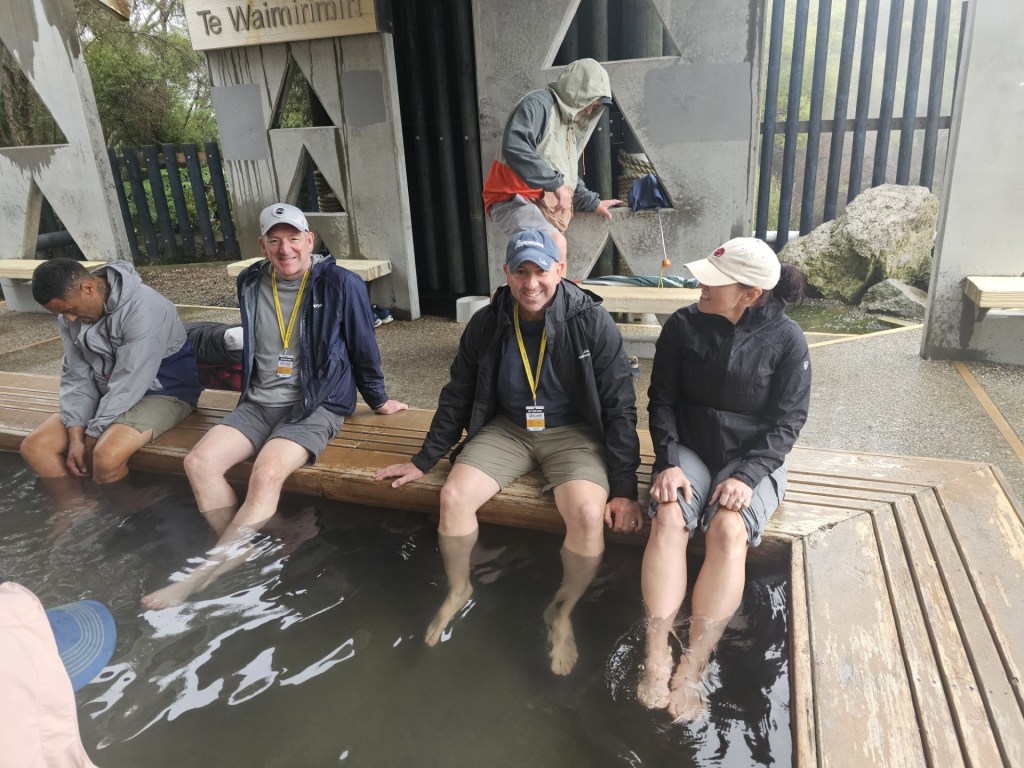
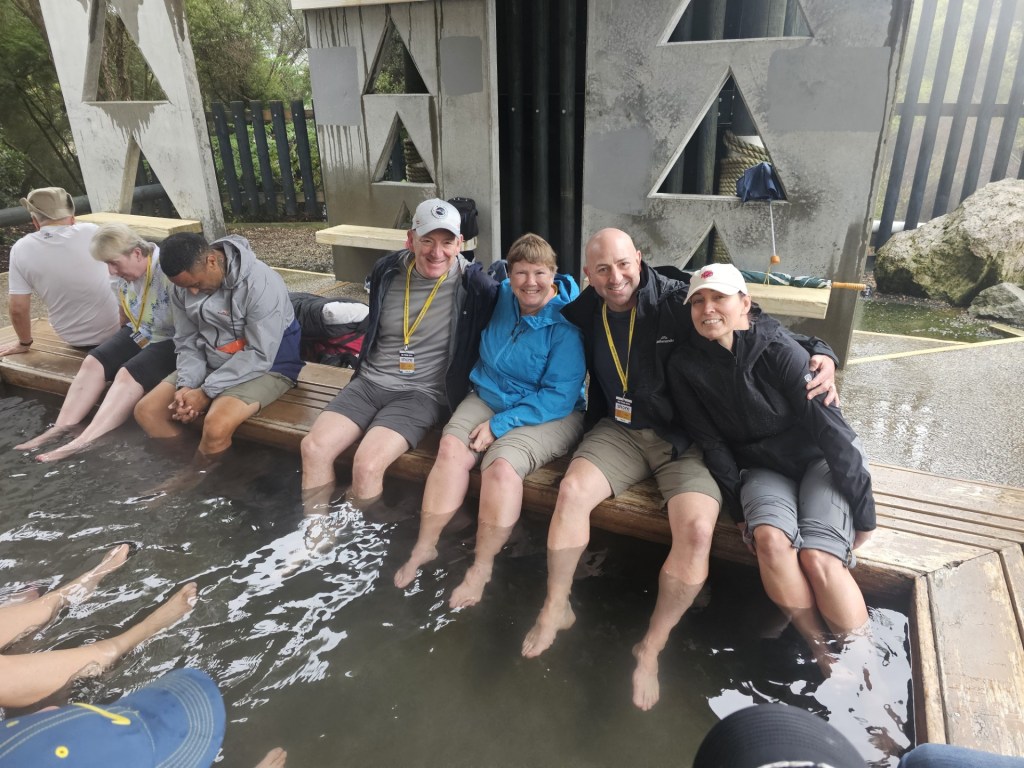
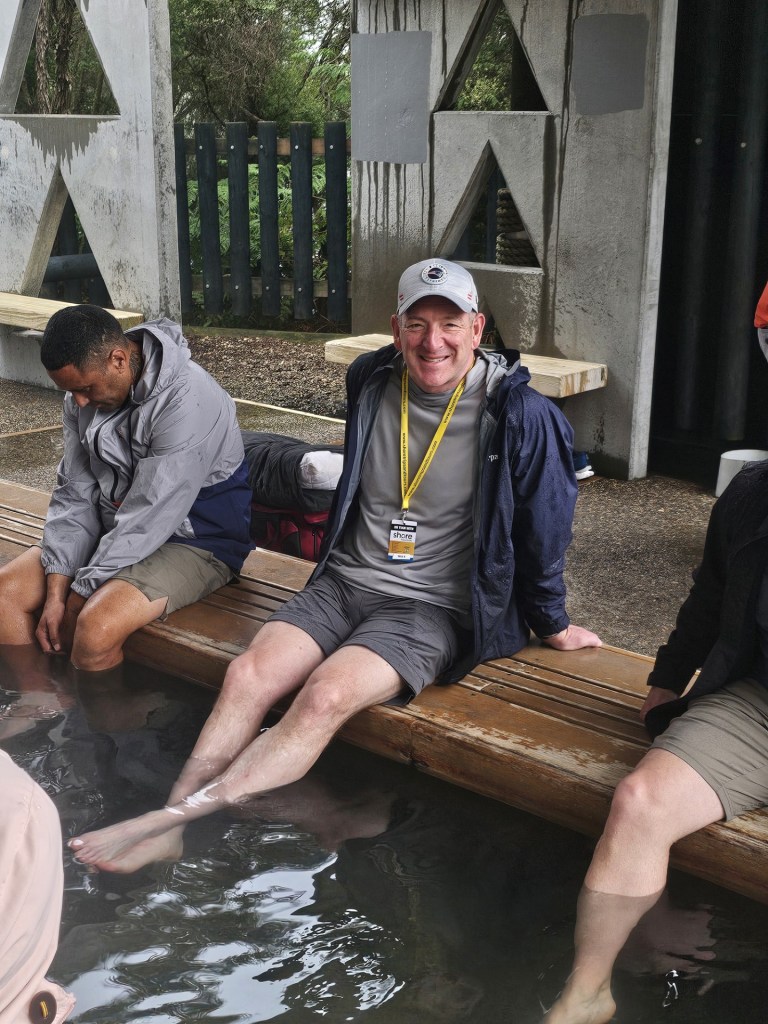
Our first stop of the day was at Kuirau Park. This area of Rotorua is where there is a lot of geothermal activity – lots of boiling mud pits and steaming lakes. There is a public park where you can walk around on a board walk amongst the steam and even a place for you to sit down and put your feet and calves into the warm water. I sat pretty close to an inlet pipe which was allowing the natural hot water into the foot pool. I am pretty sensitive on my hands and feet due to chemotherapy in the past. It was pretty hot for me! Rich traded spots with me and it was much better. He felt it was pretty hot too. We sat for about 10-15 minutes and I was amazed at how good my feet and lower legs felt the rest of the day. We then also stopped at another geothermal park called Sulphur Point on the edge of Lake Rotorua. Rotorua is known for its sulphur smell. Tauranga is the port we docked in and Rotorua is the nearby city. Lake Rotorua is a caldera filled with water. The volcano erupted 250,000 years ago. There are 10 lakes in this area caused by volcanoes. There are currently only 2 active volcanoes in all of New Zealand. The last eruption was on White Island in 2019 and 21 people were killed. There are lots of earthquakes in New Zealand. The South Island, especially, has some major fault lines running through it. There are an average of 14-15,000 earthquakes per year in New Zealand. Most are not even noticed. During COVID, New Zealand had one of the lowest mortality rates in the world. They closed their borders for a year. This was horrible on their economy because they deal mostly in tourism.
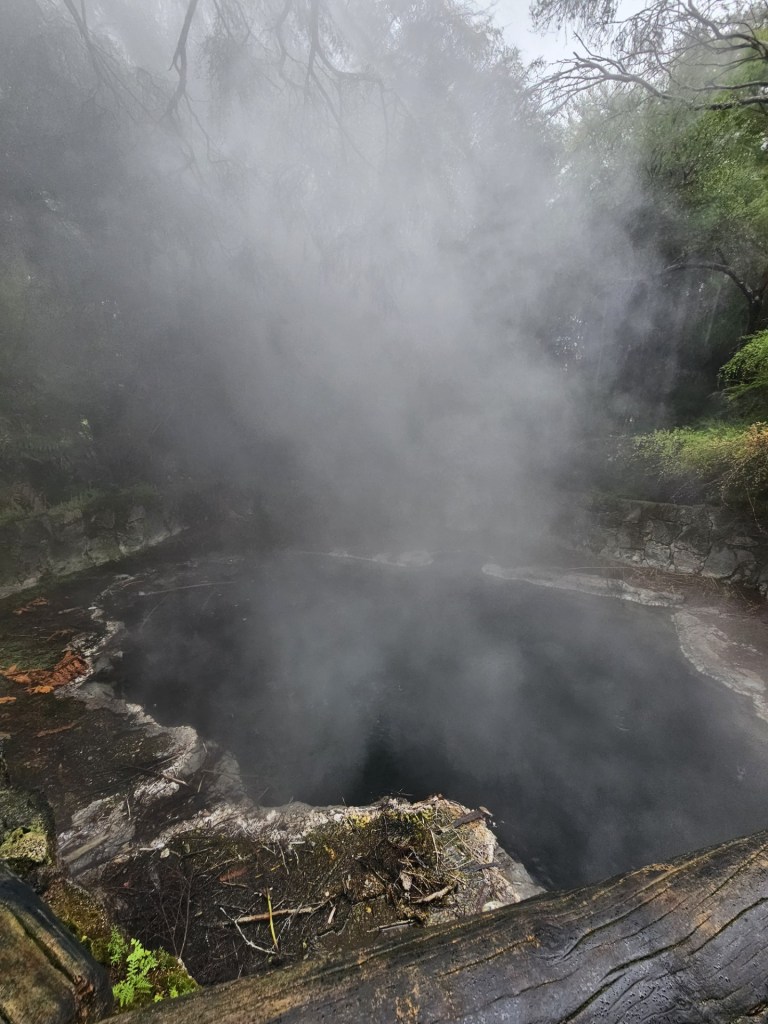
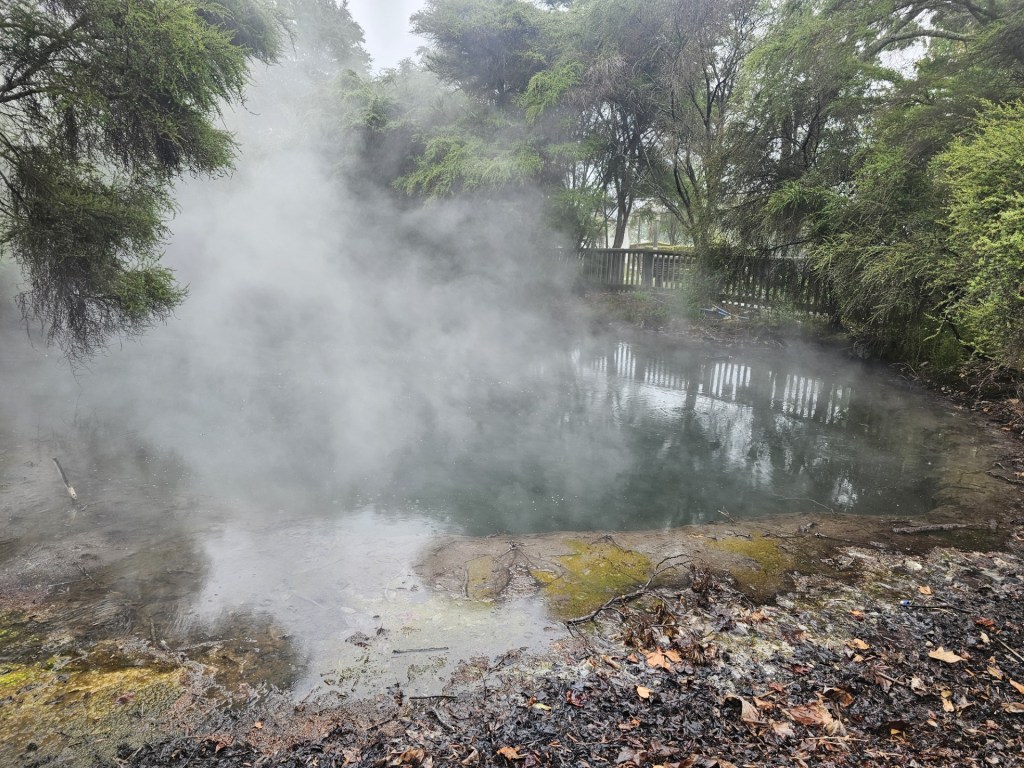
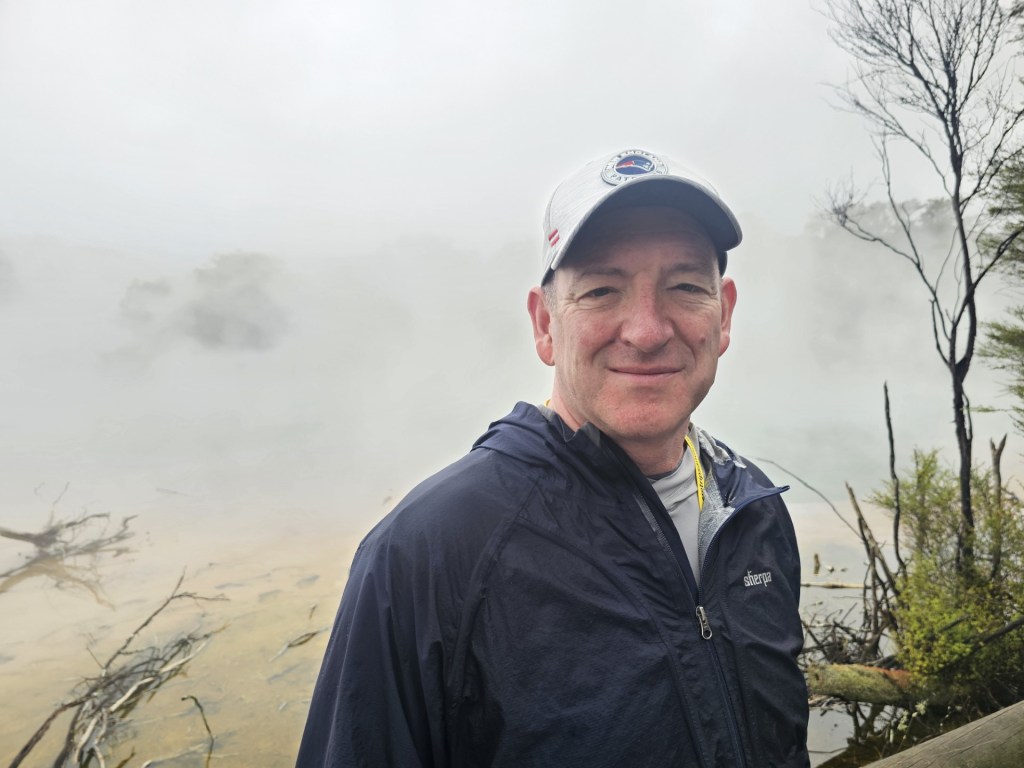
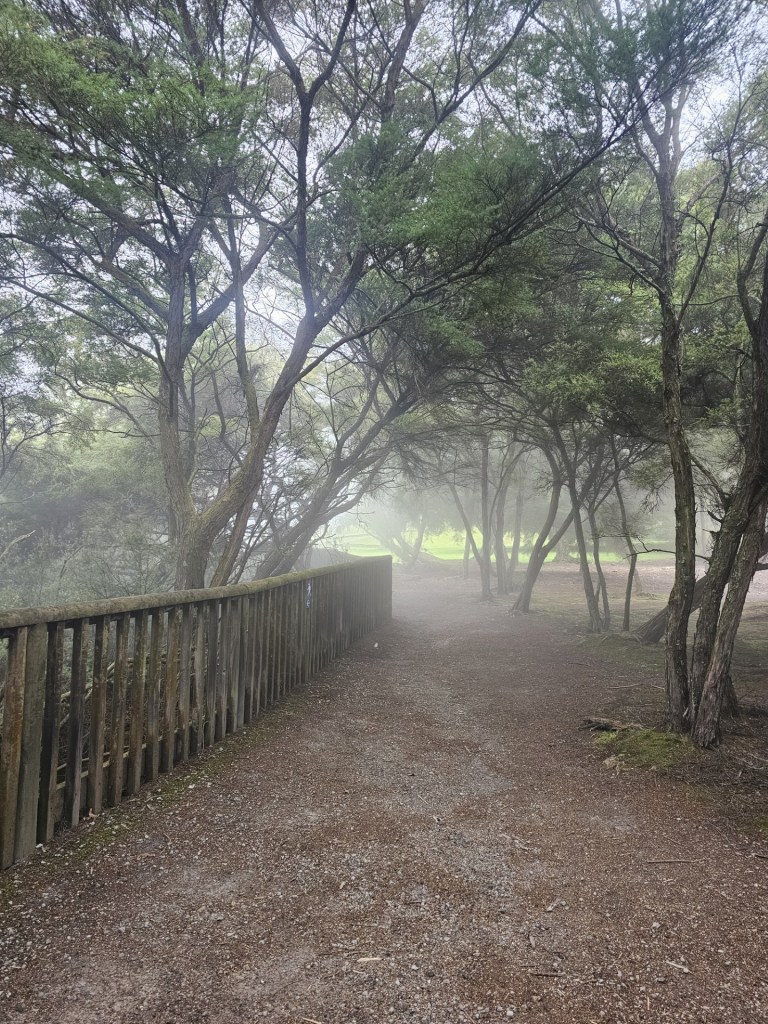
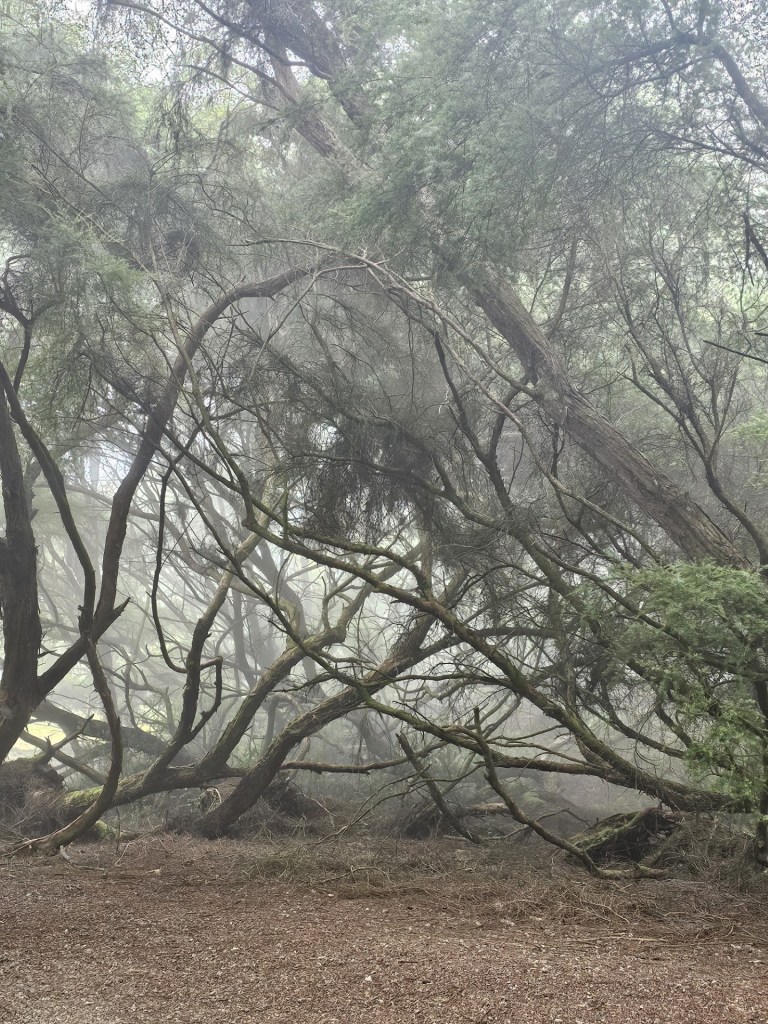
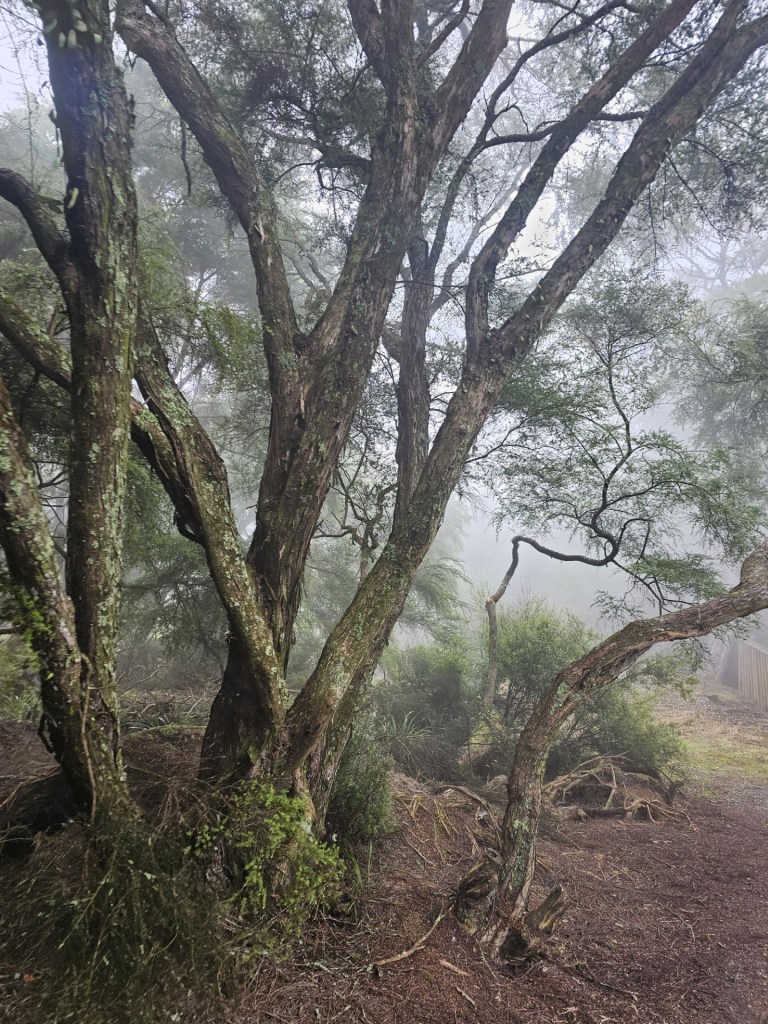
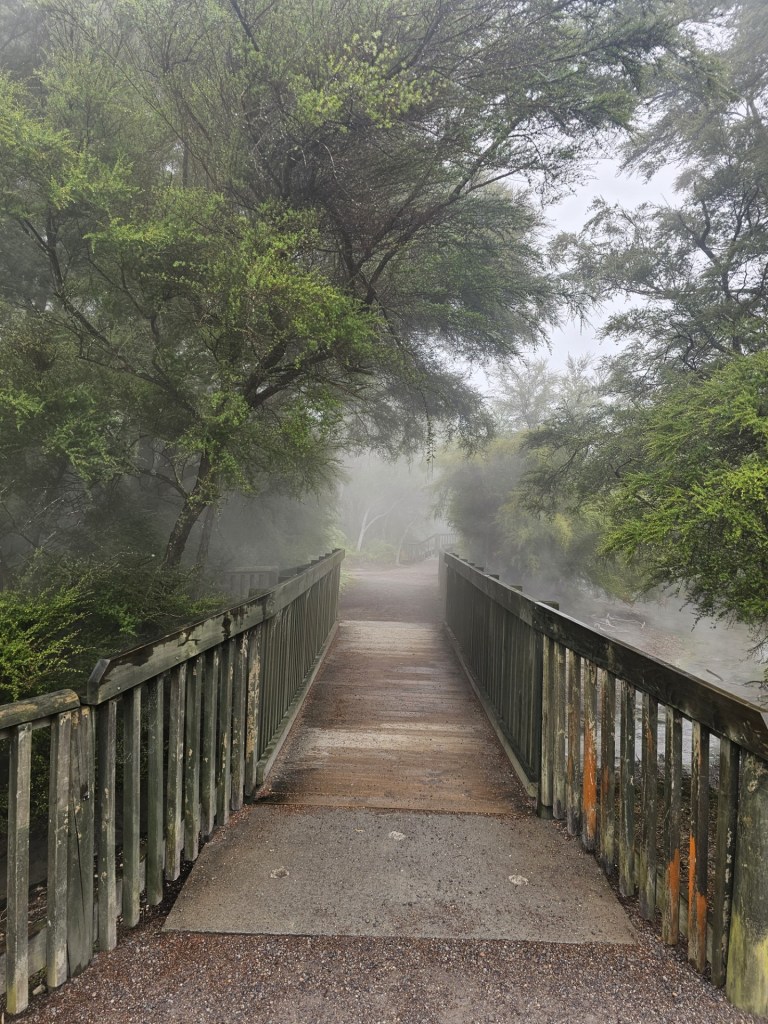
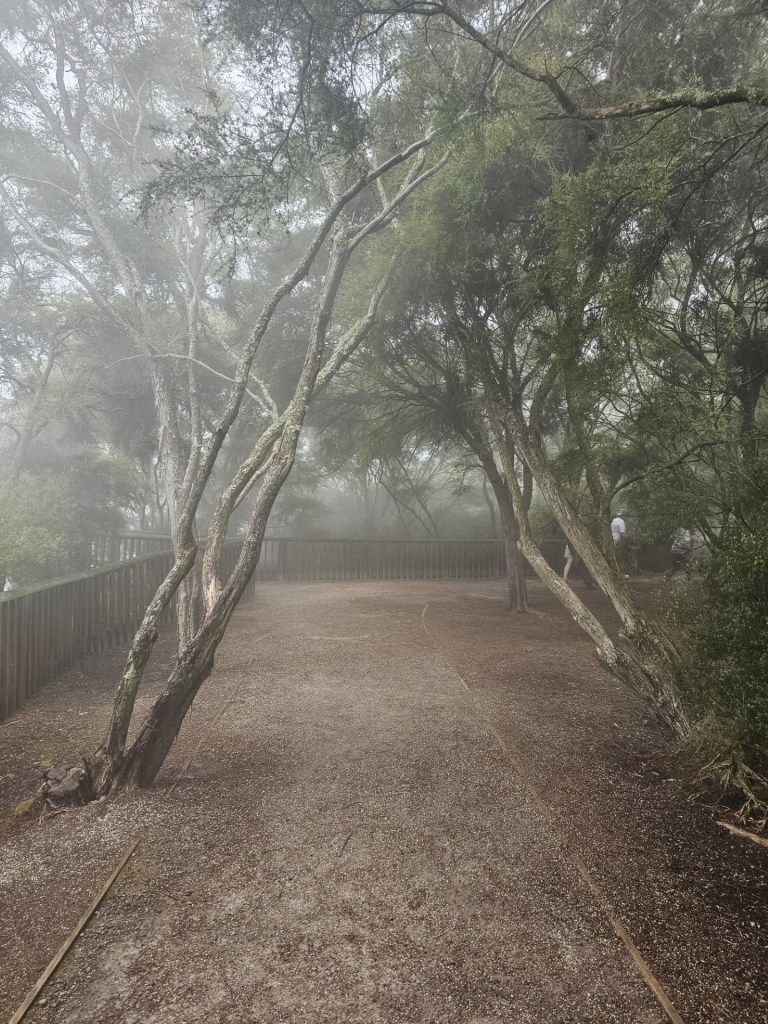
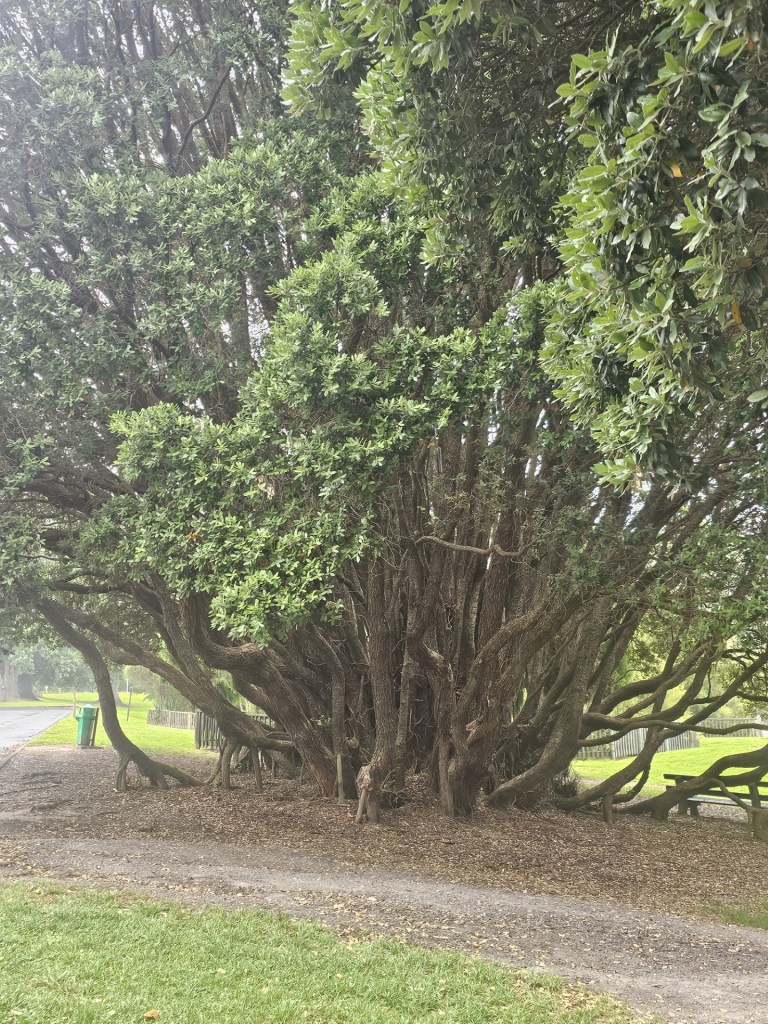
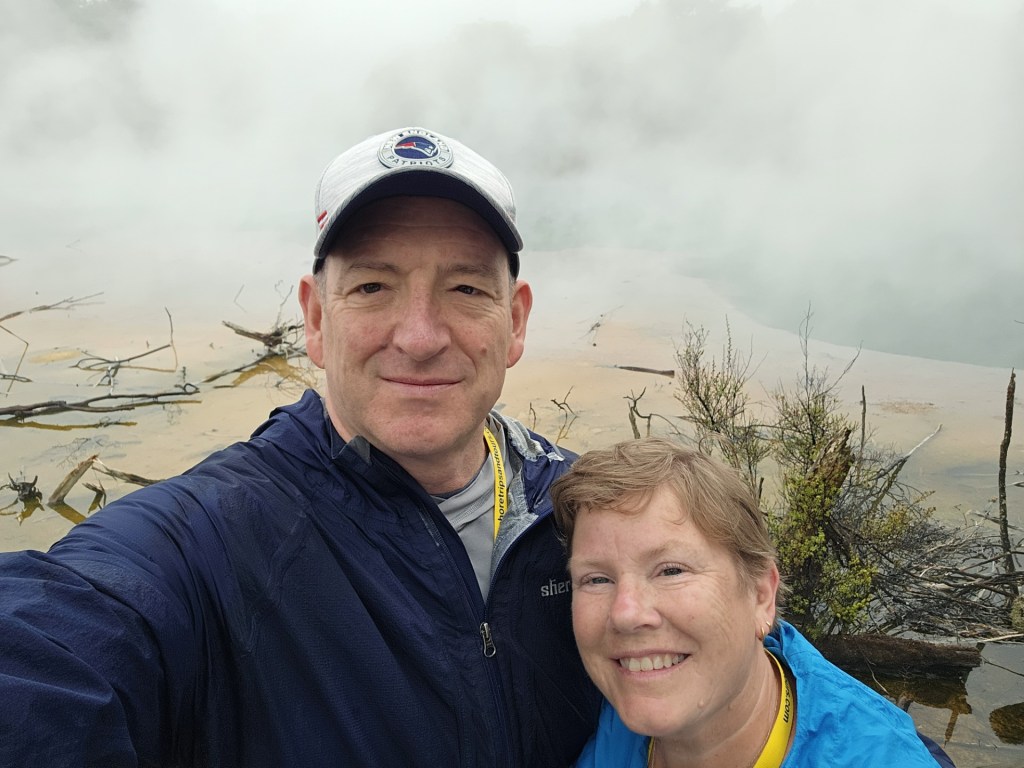
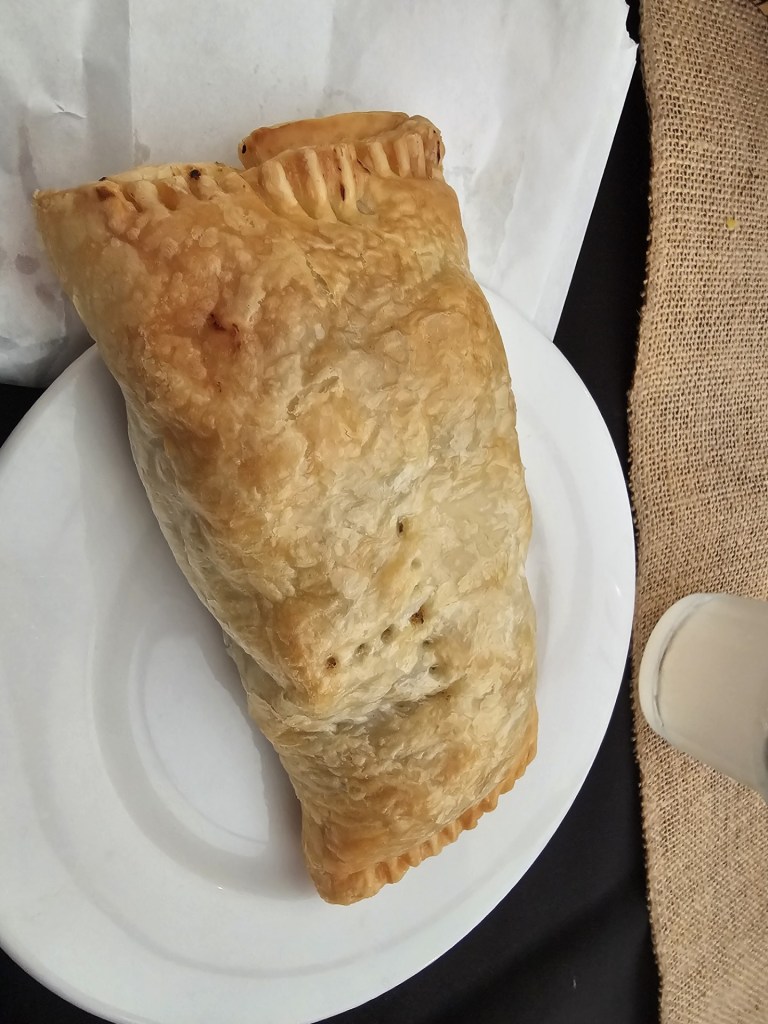
The Māori arrived by small boats in 1300 A.D. They came here to be next to the warm waters and learned to steam their food over the edge of the steaming vents. They also dug holes in the ground and built a fire, put stones on it and baskets of food over the fire – called Hangi. We stopped at Māori tribal area (the one with the incredibly long name) and all had hangi meat pies for lunch. Meat pies are to New Zealand as to what hamburgers and hot dogs are the U.S. Everyone sells meat pies. About 75 million meat pies are sold in New Zealand every year.
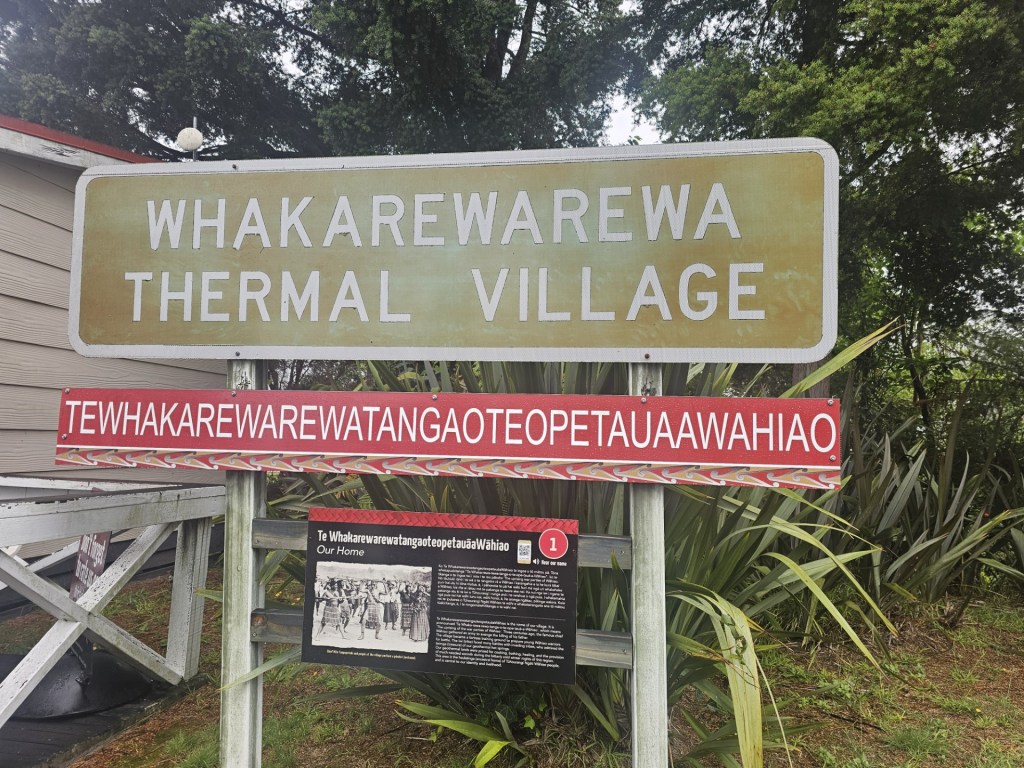
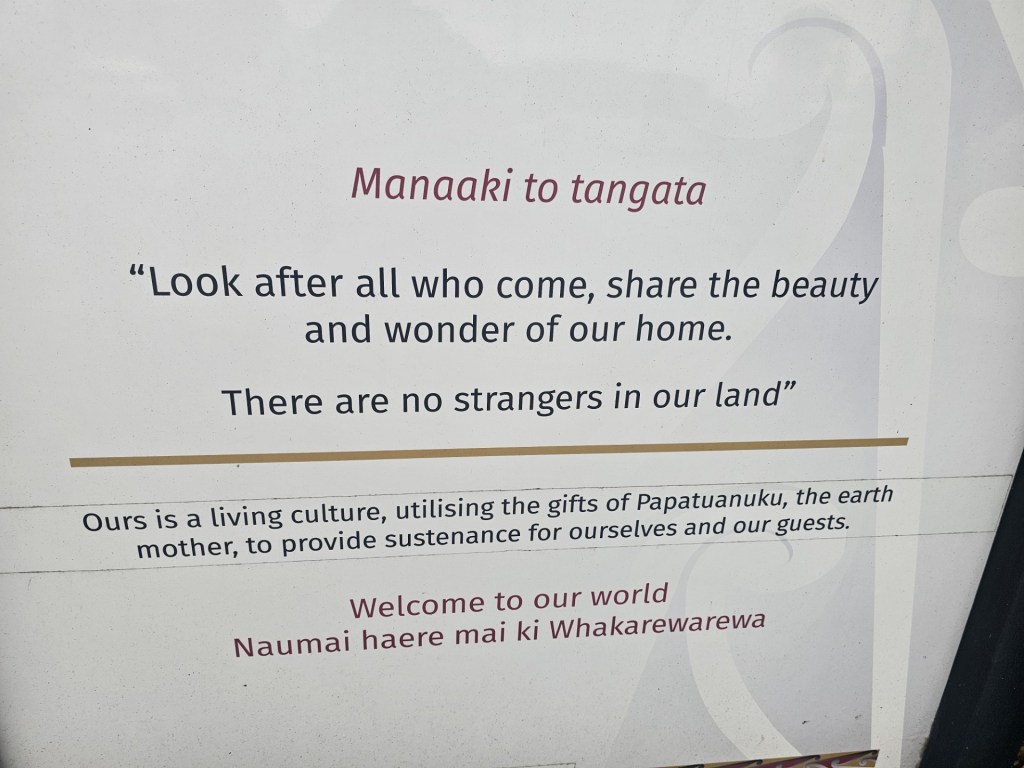
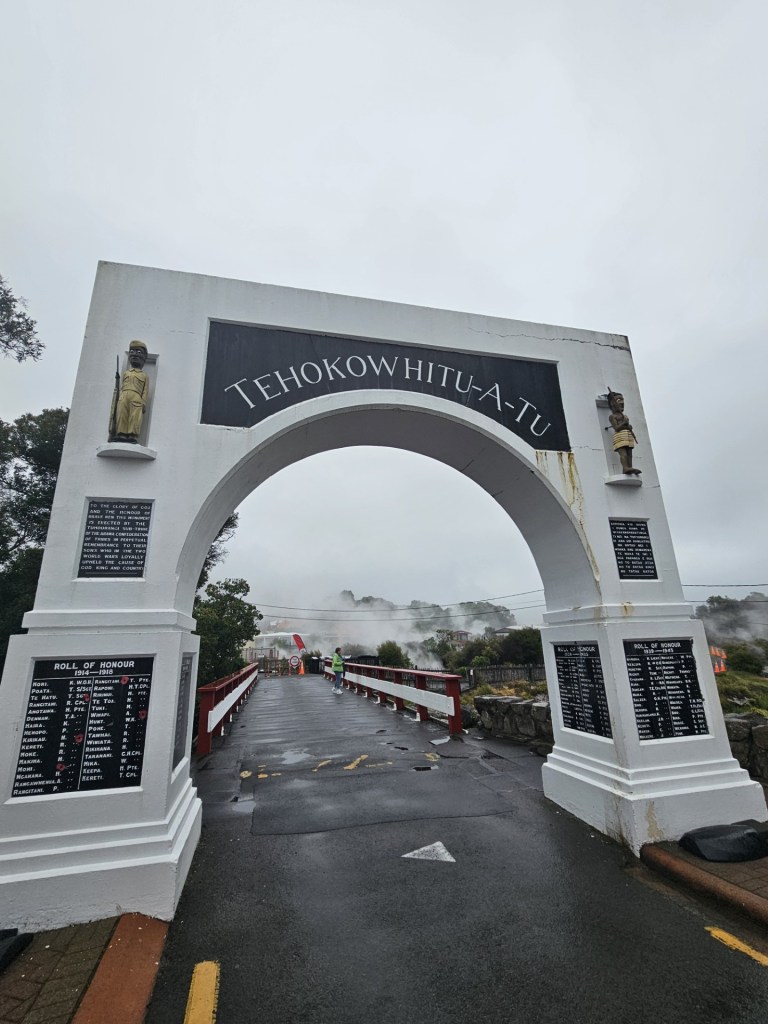
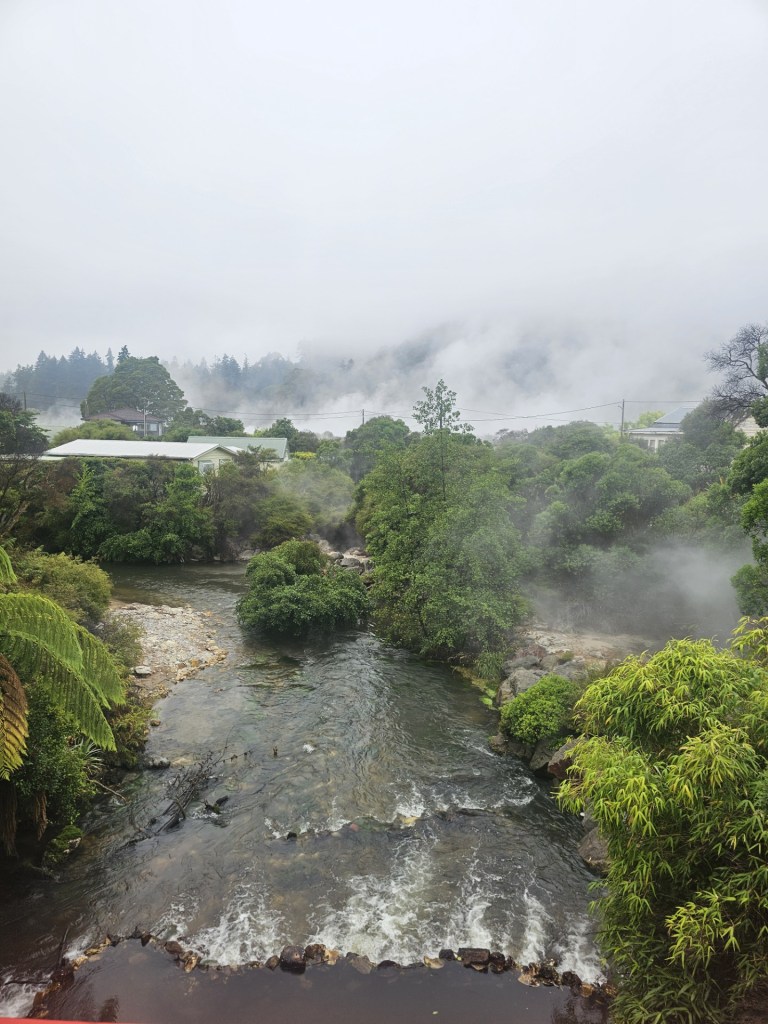


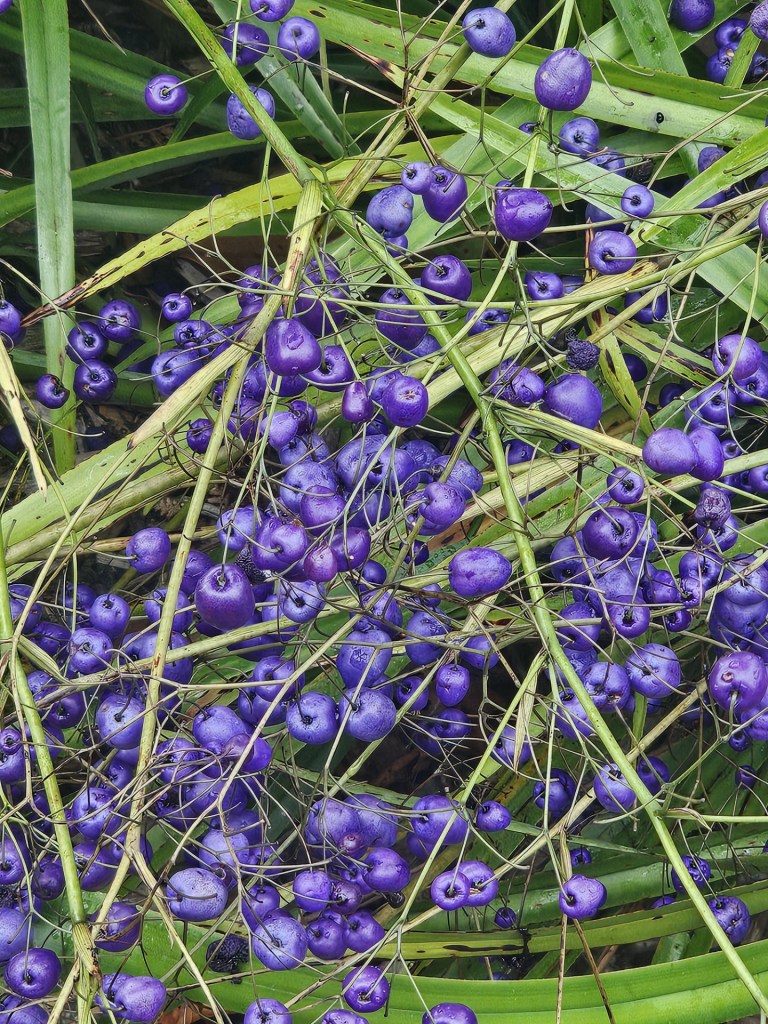
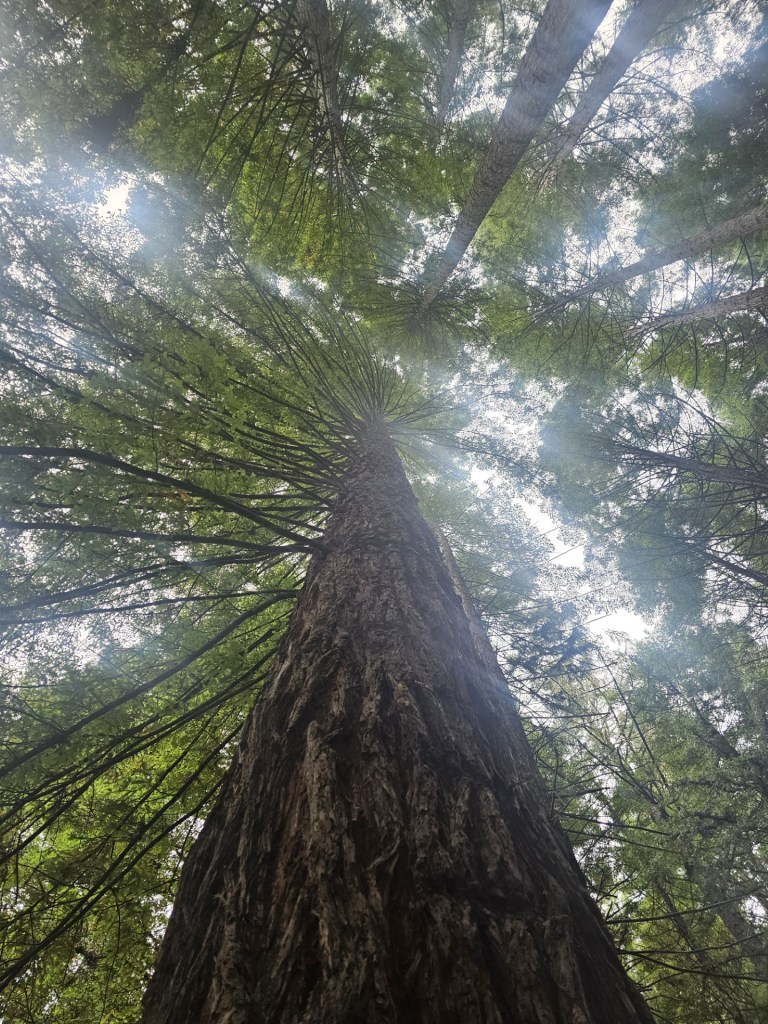
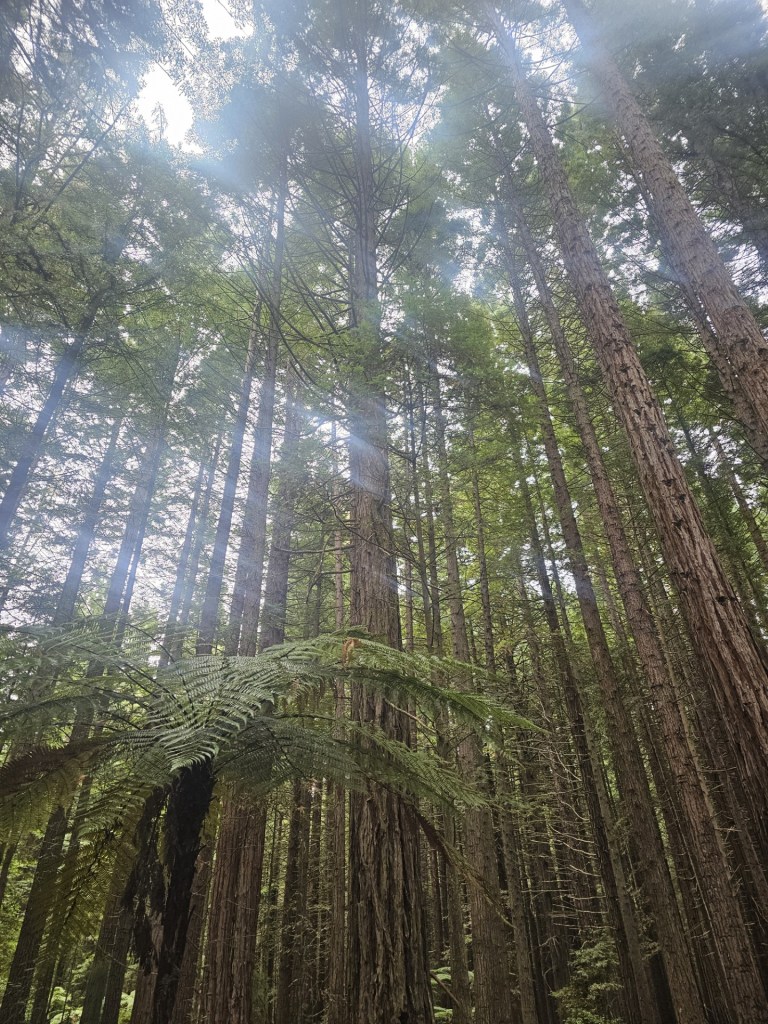
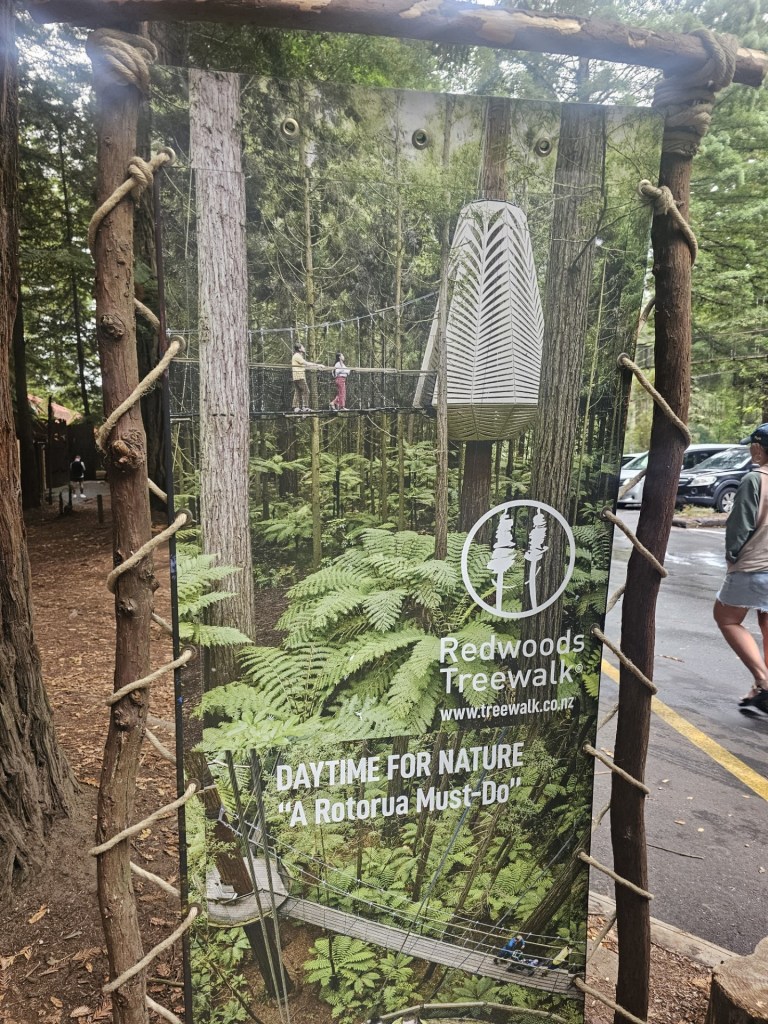
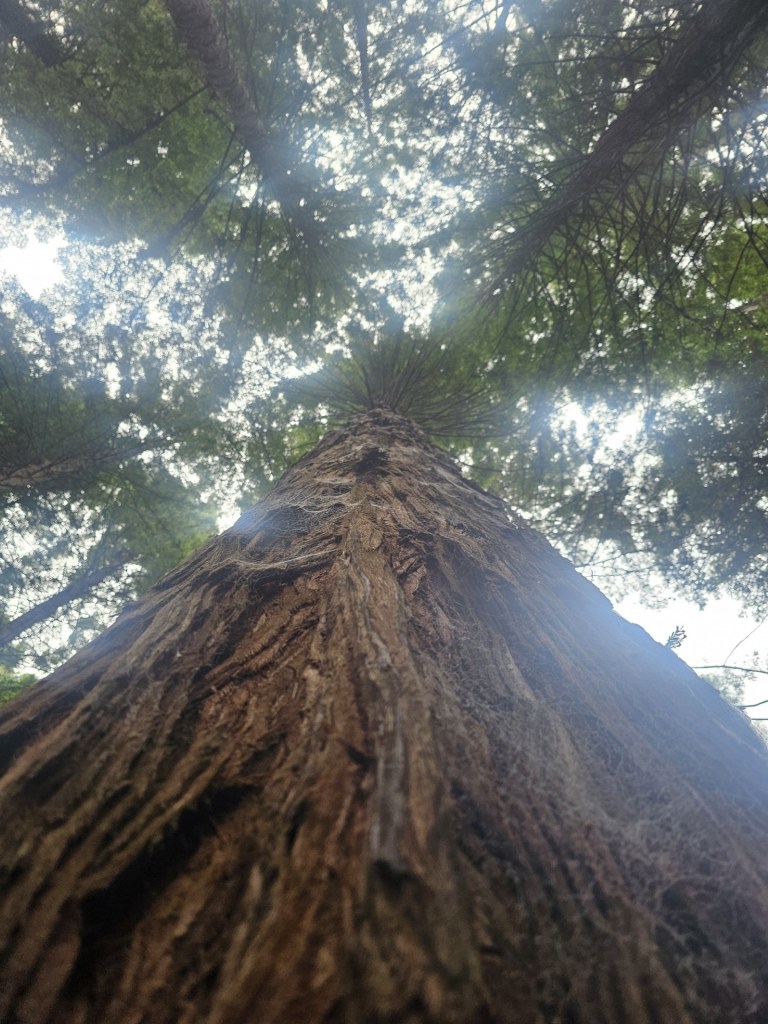
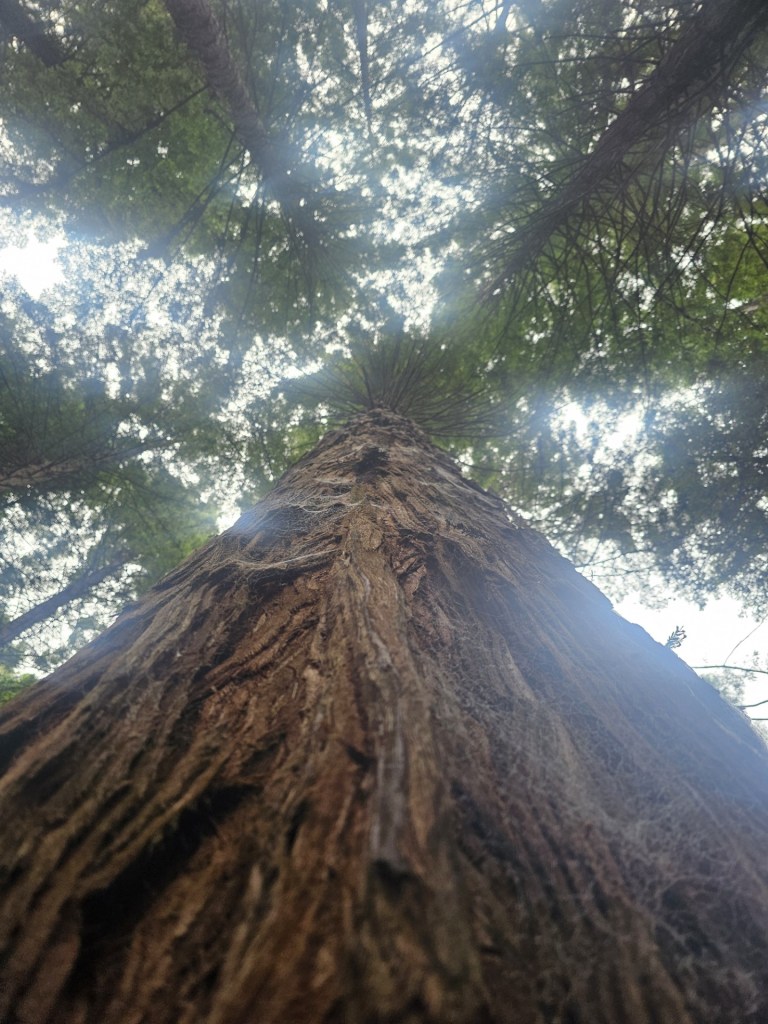
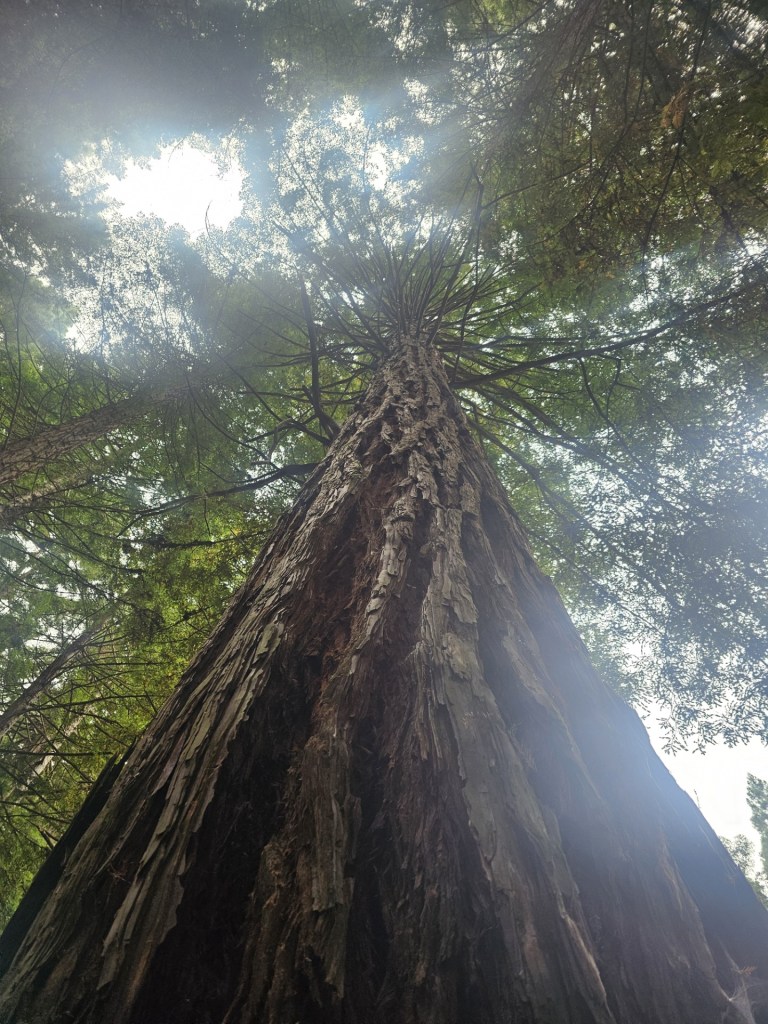
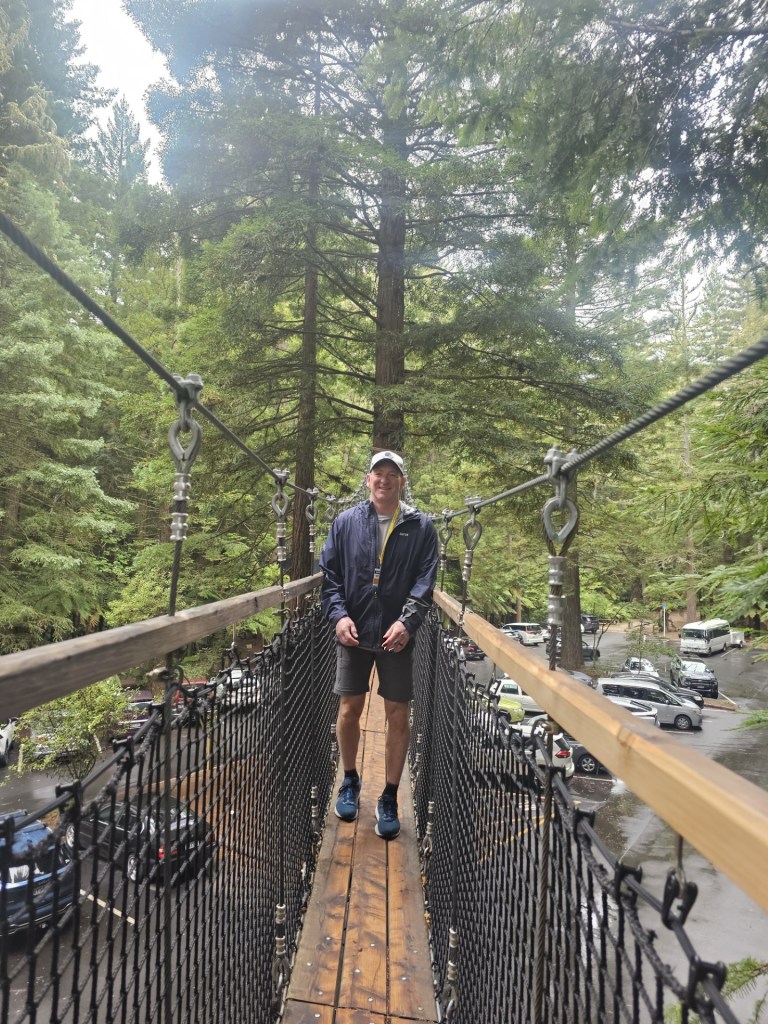
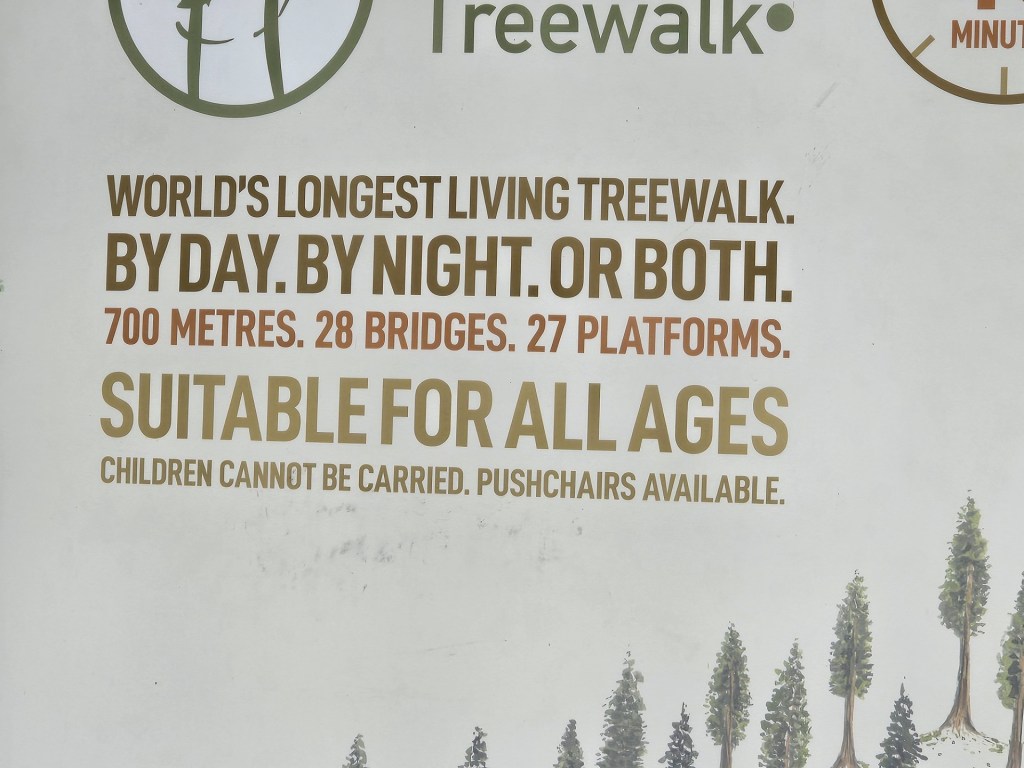
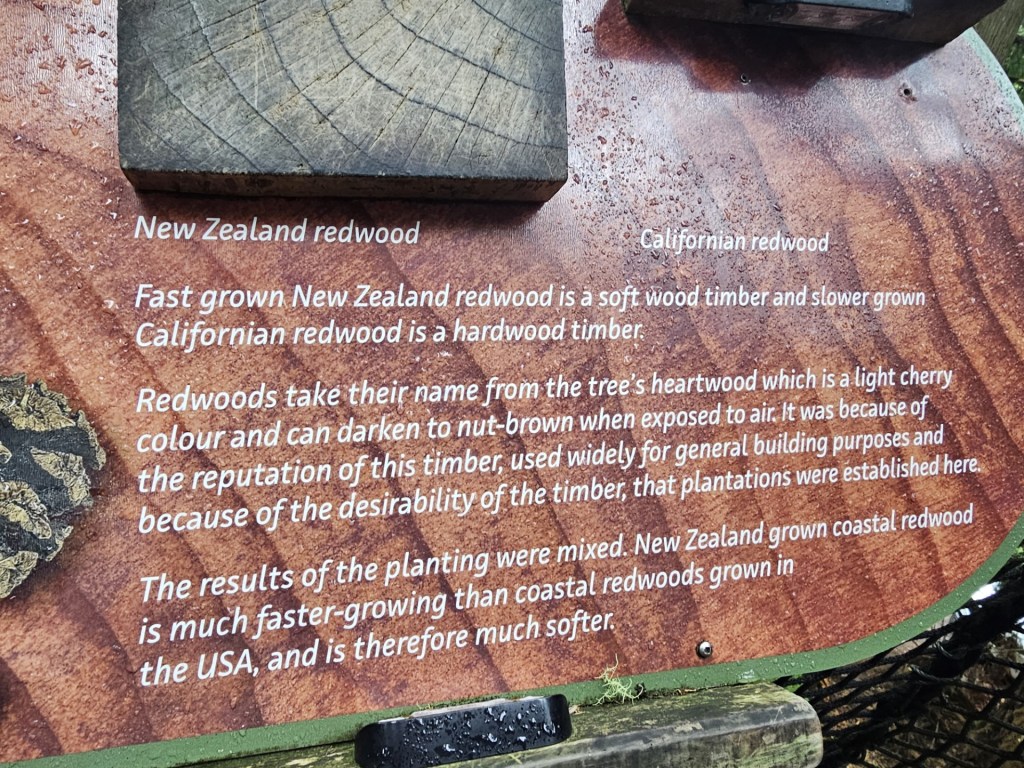
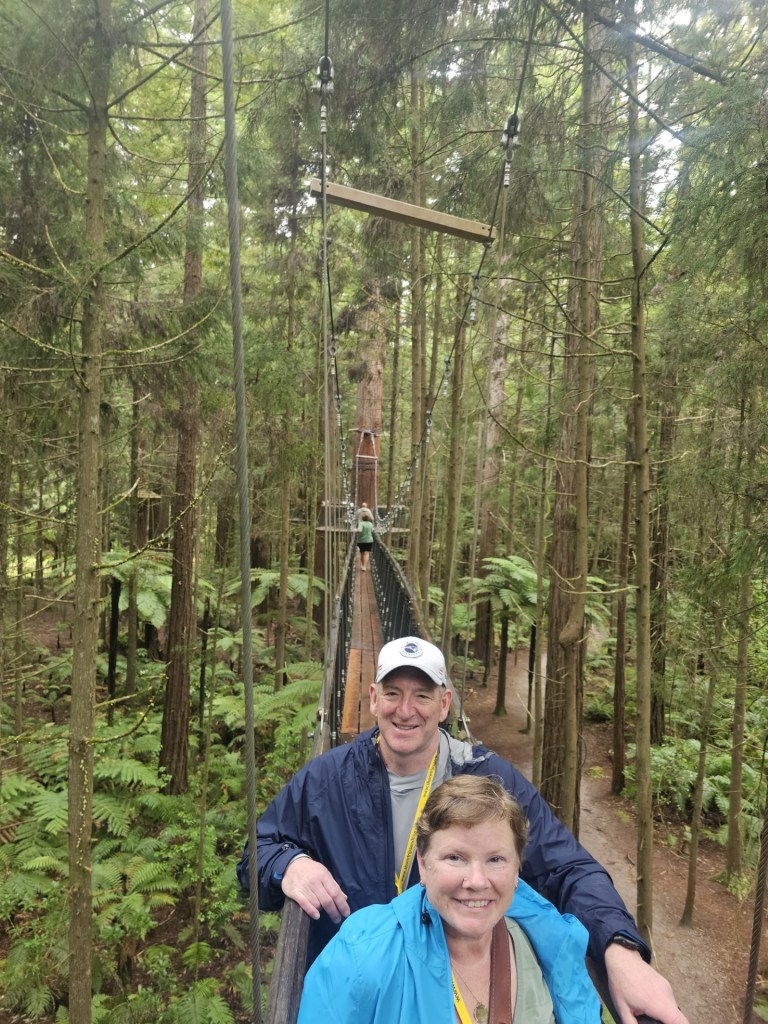
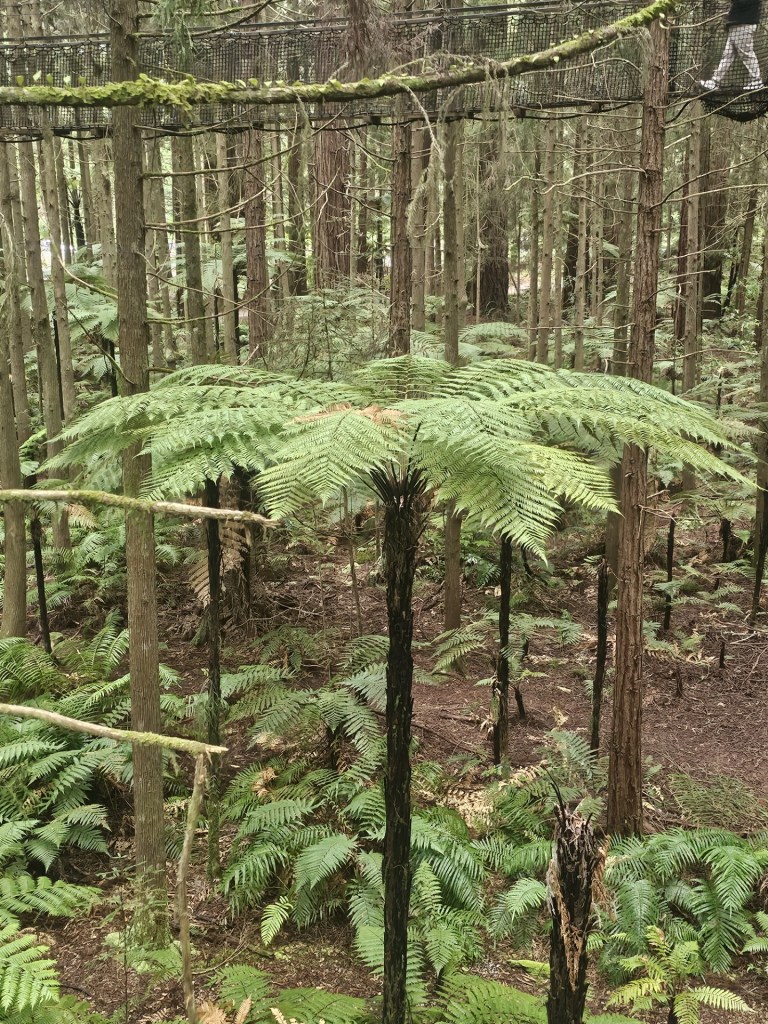
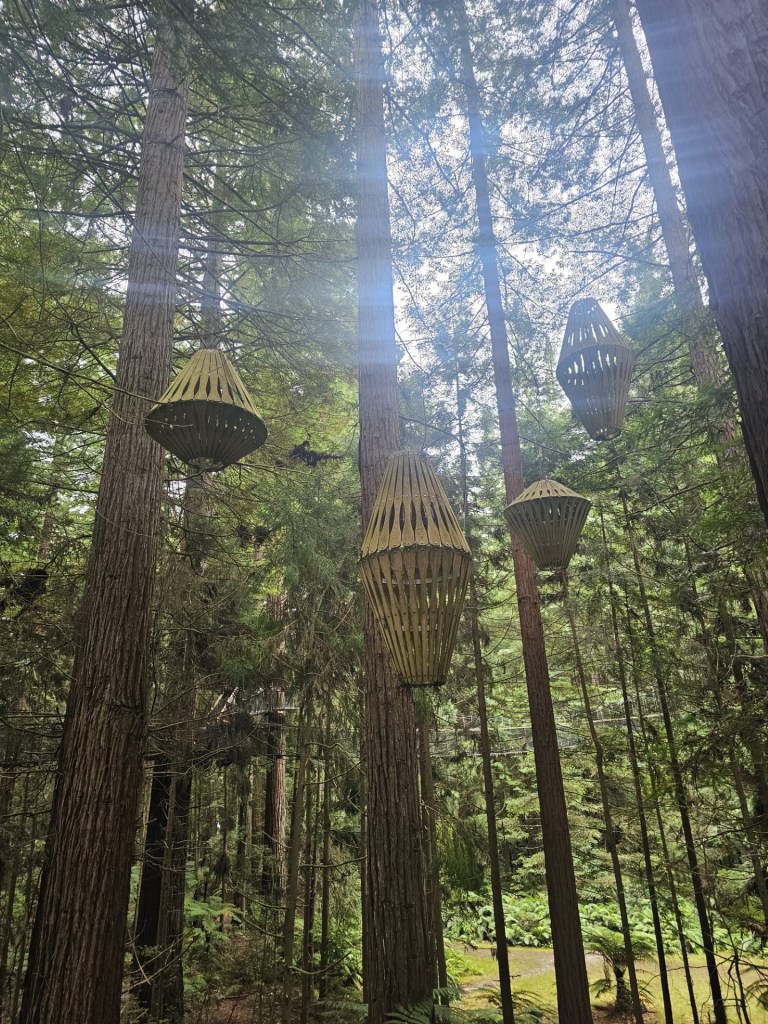
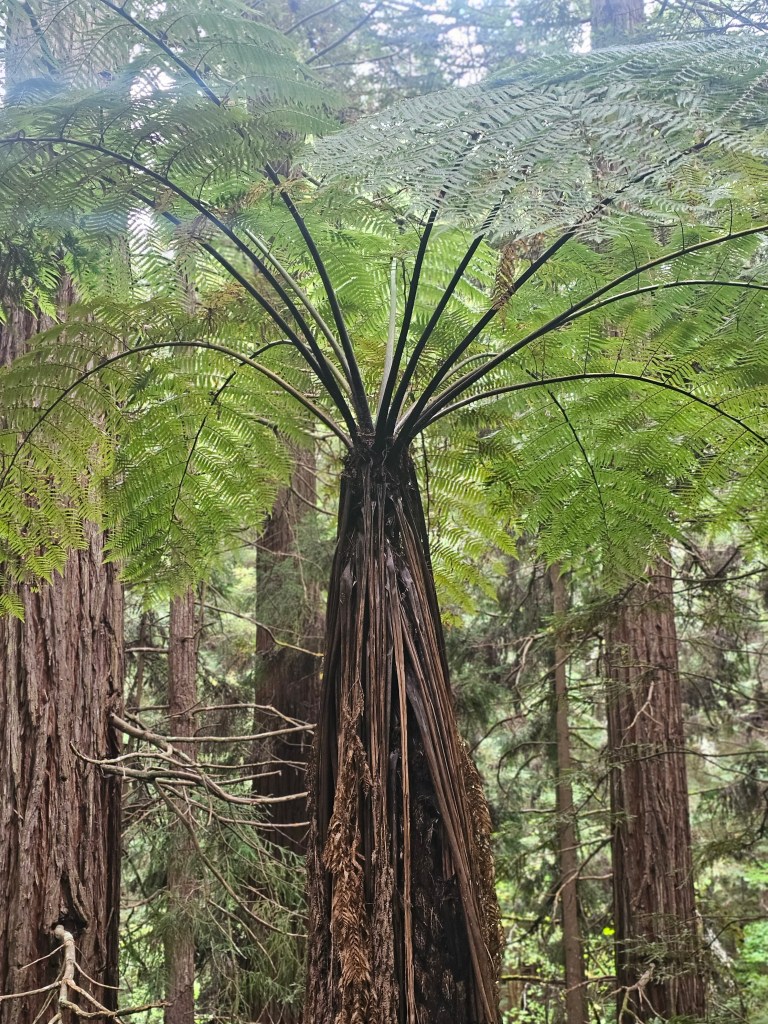
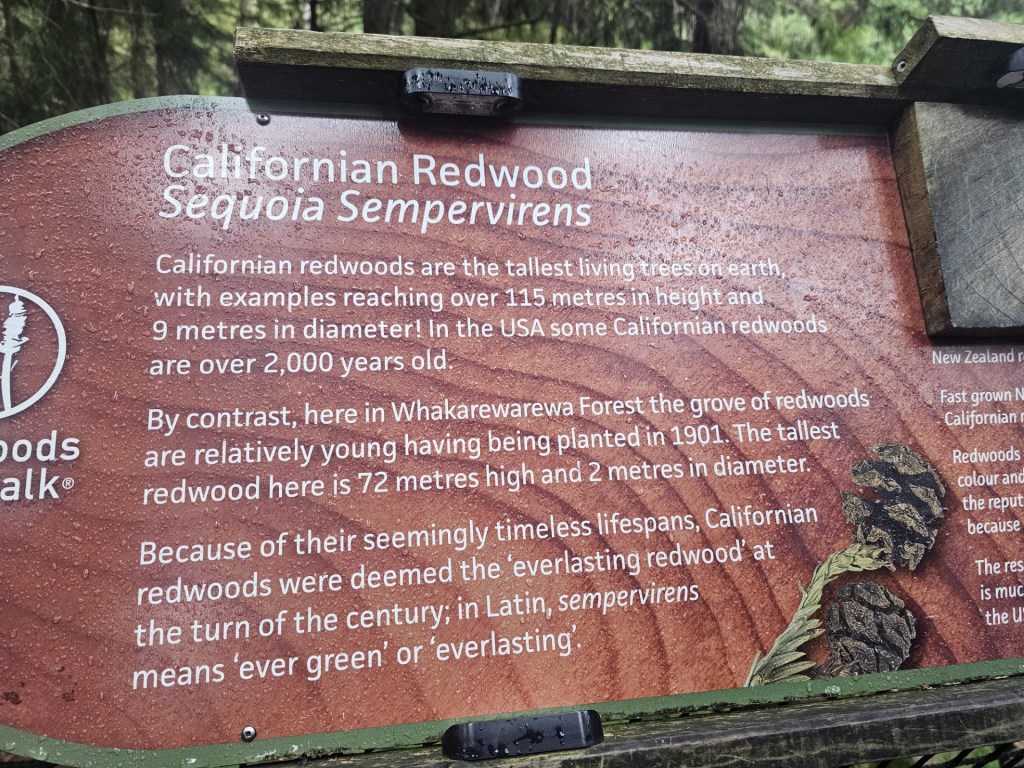
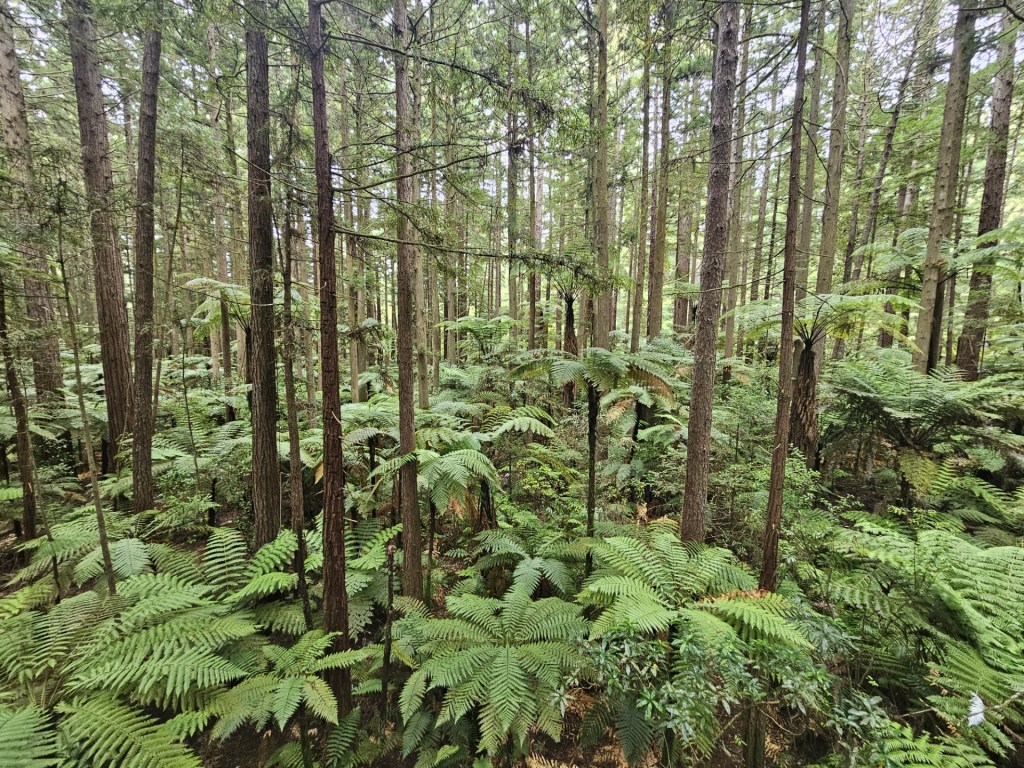
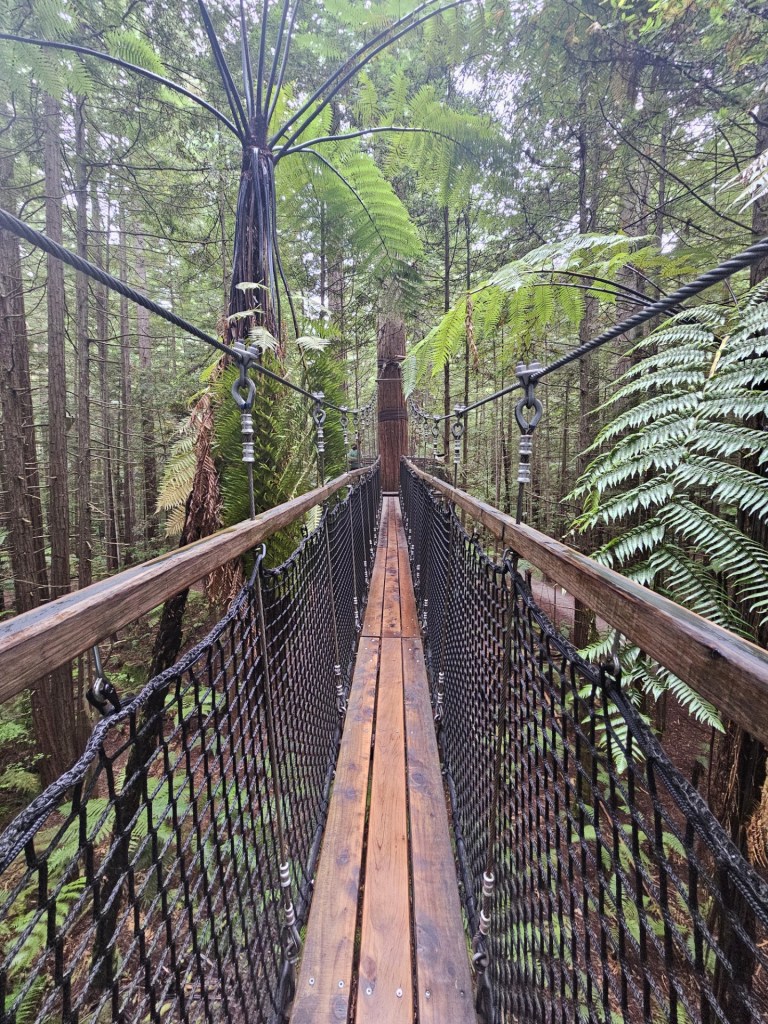
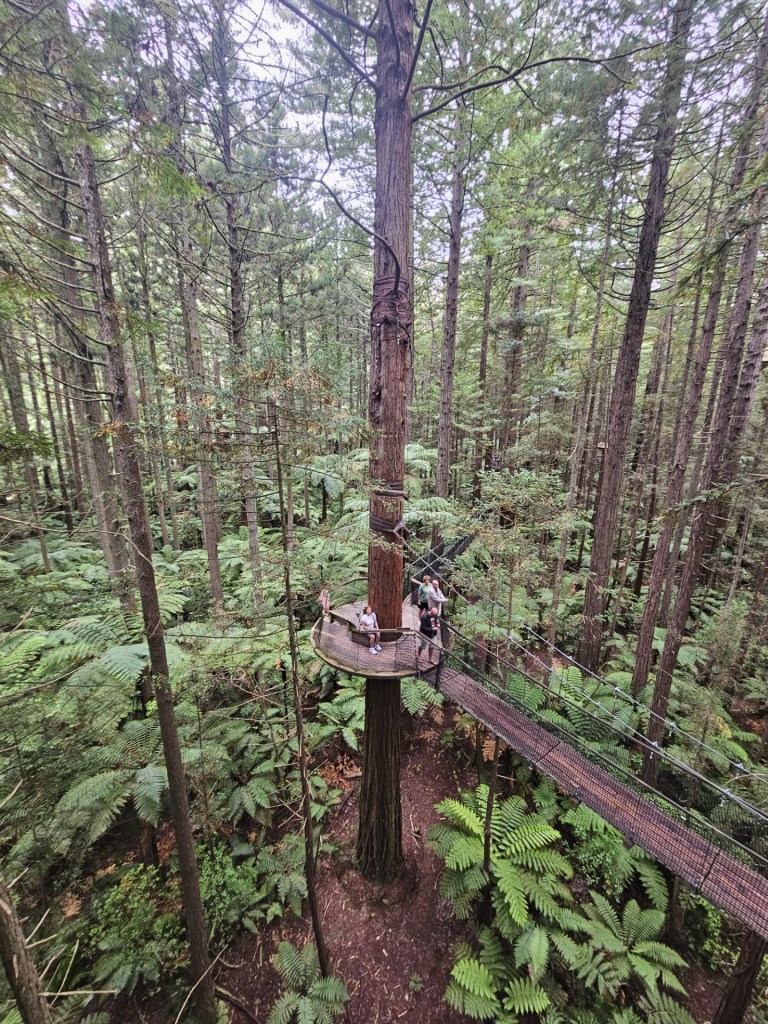
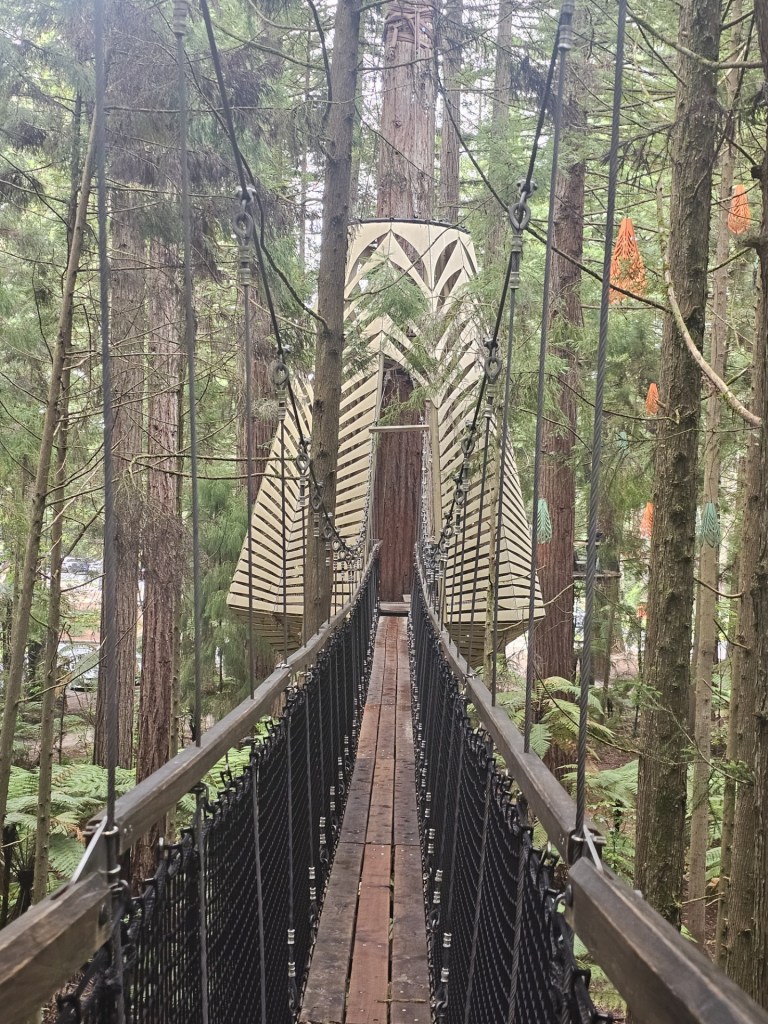
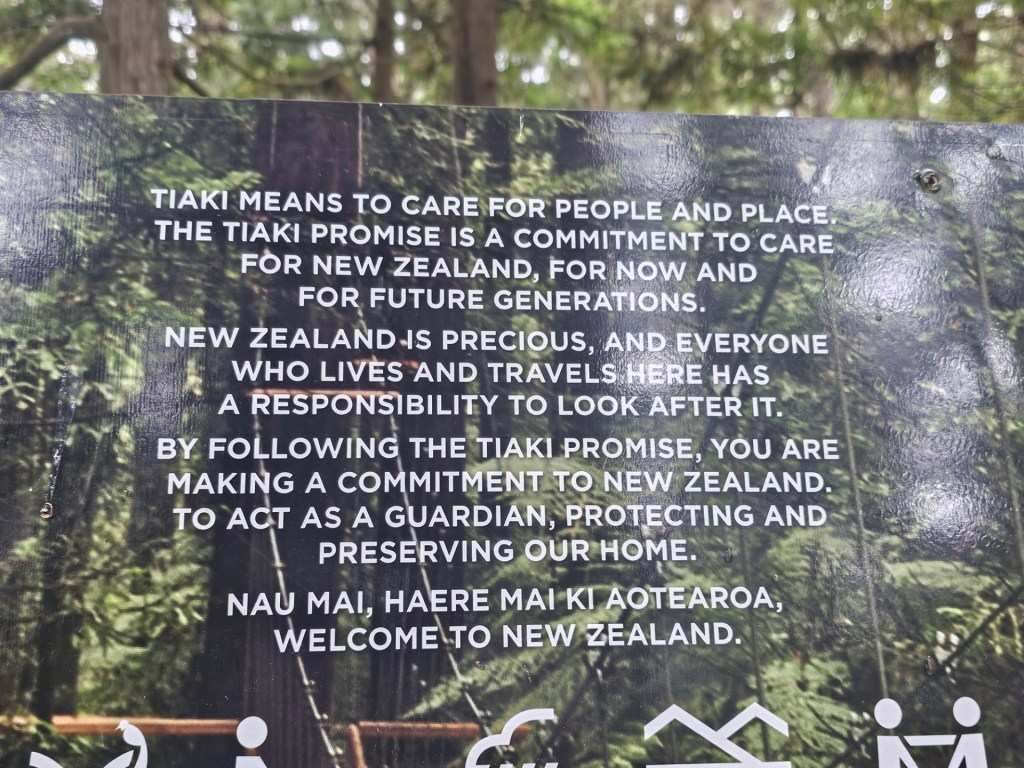
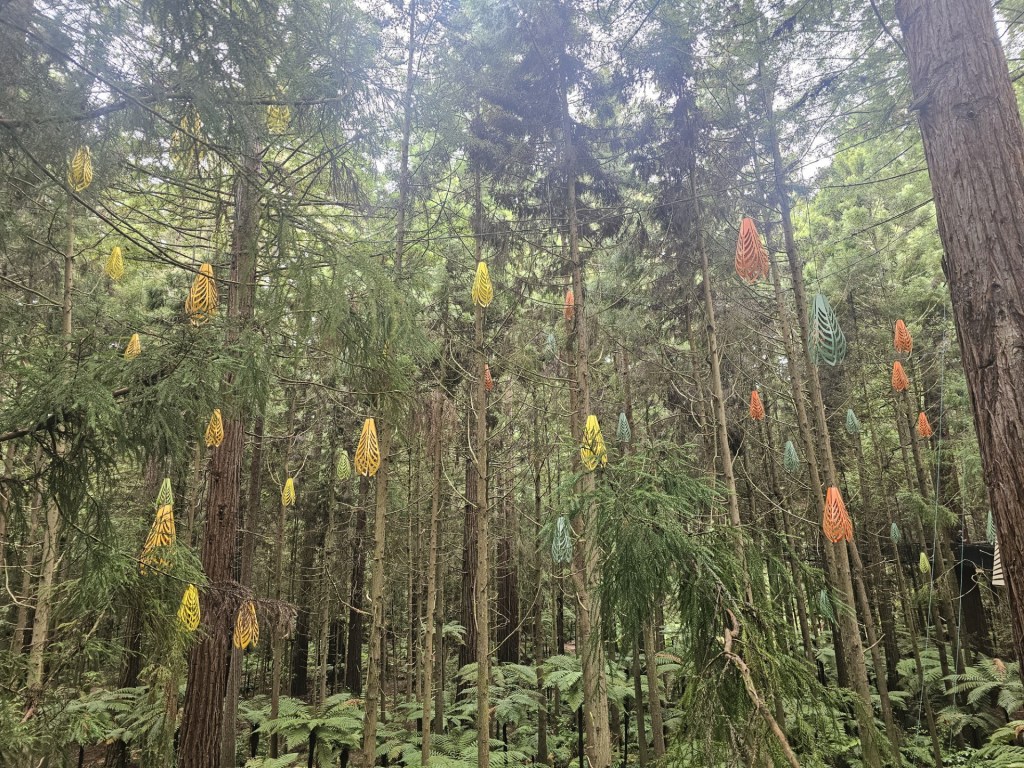
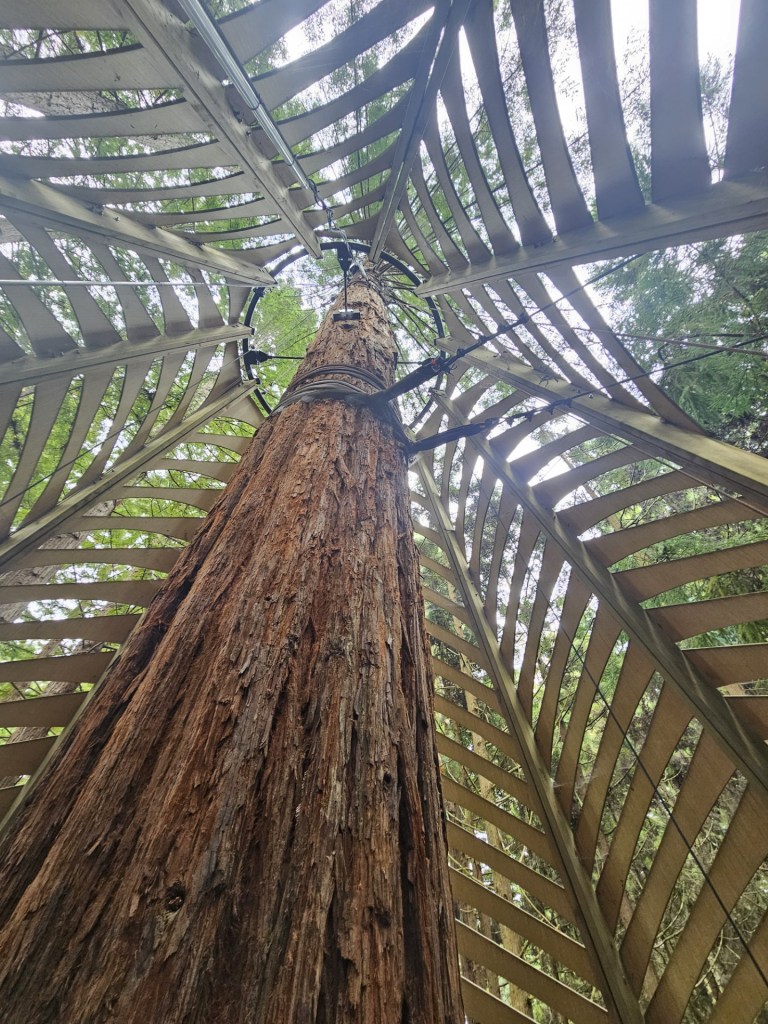
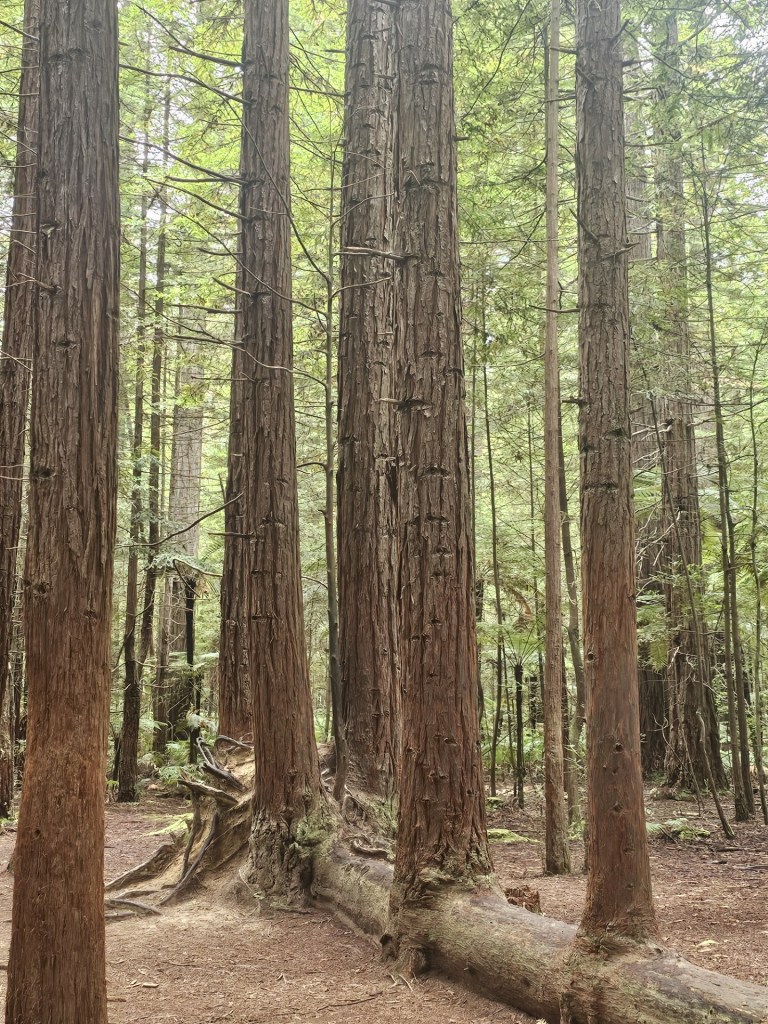
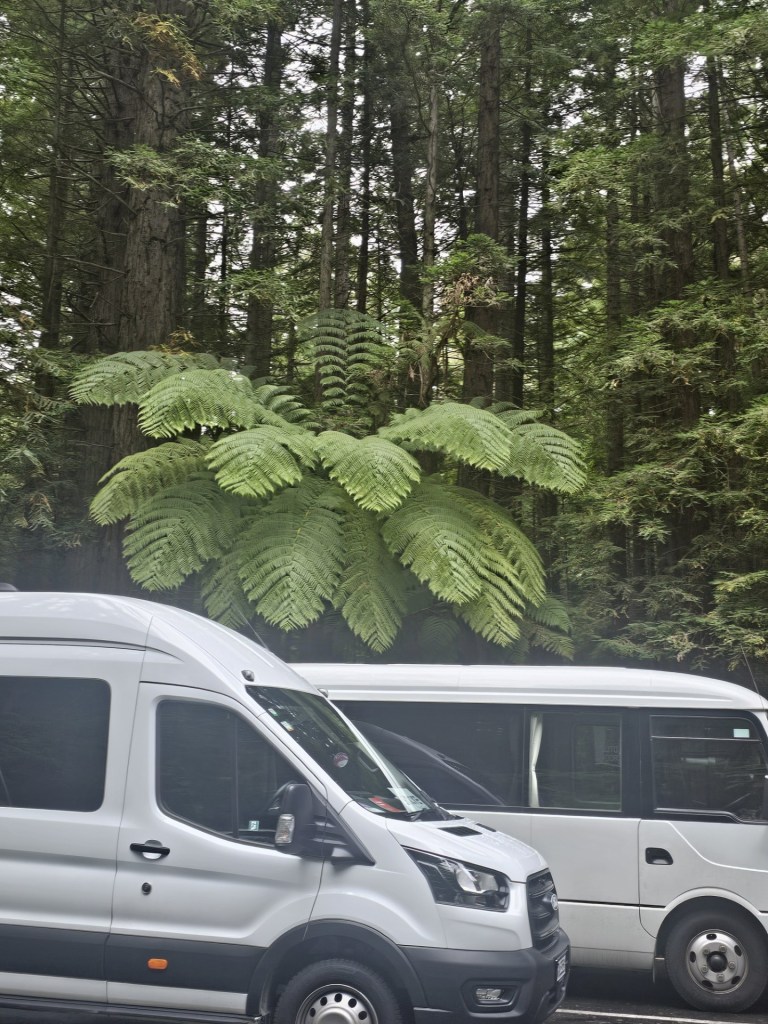
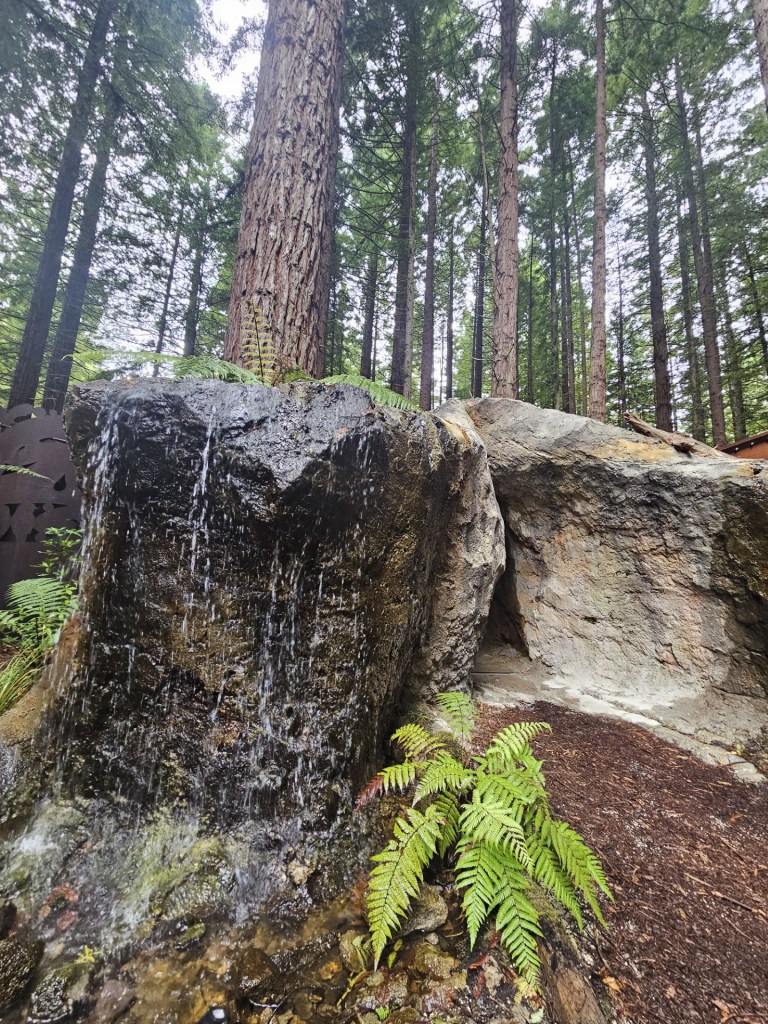
After lunch, we went to the Redwoods – the Whakarewarewa Forest. They have amazing redwood trees (from America) that have grown into giants. They were planted 70 years ago on 3.5 thousand hectares. They have walk ways higher up into the trees so you can see the fern trees from the top and enjoy being high in the air. It was a lot of fun walking the course! There was also an area where caves were set aside and you could go inside and see the famous glow worms. (which are really larvae). It was so interesting!

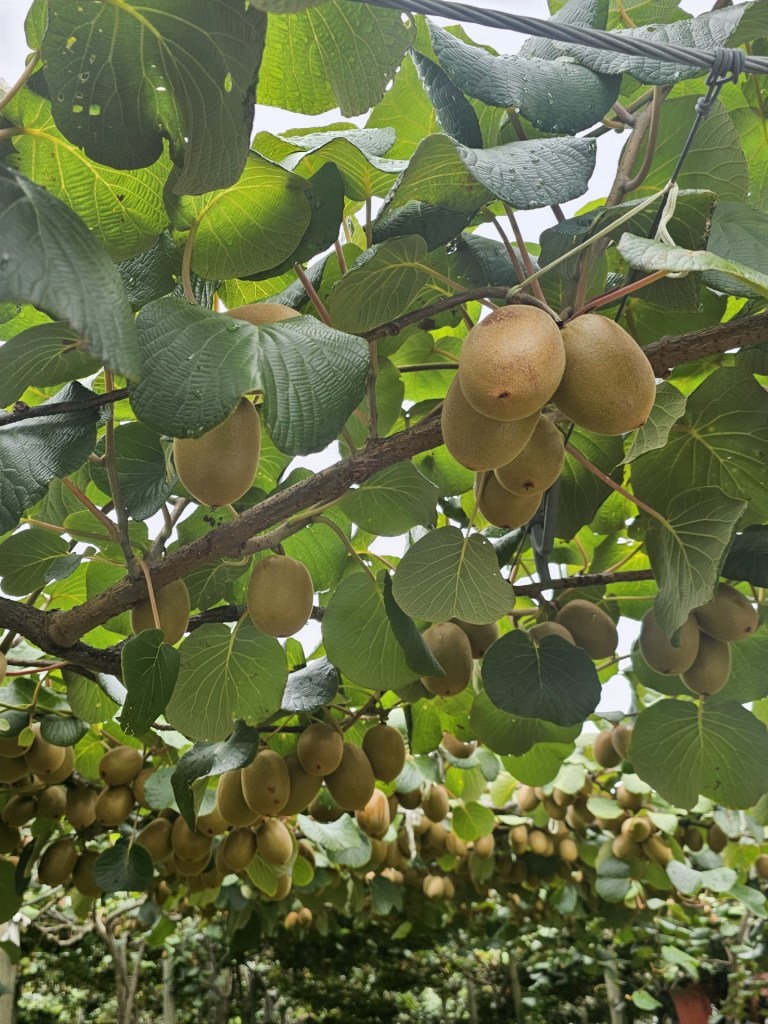
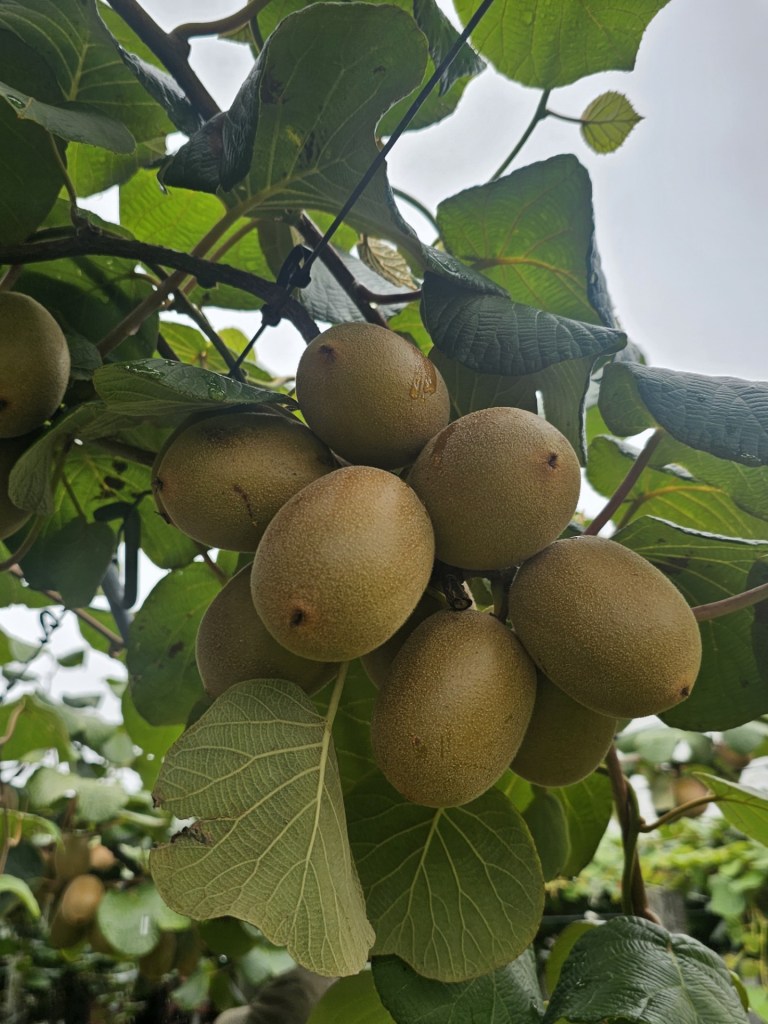
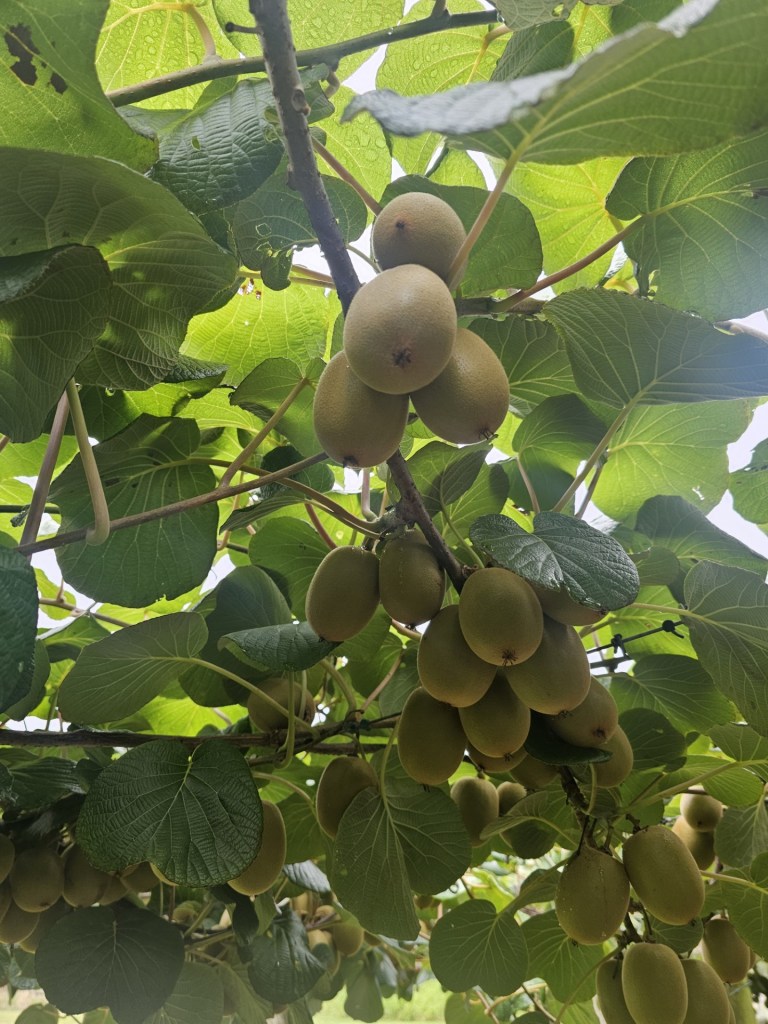
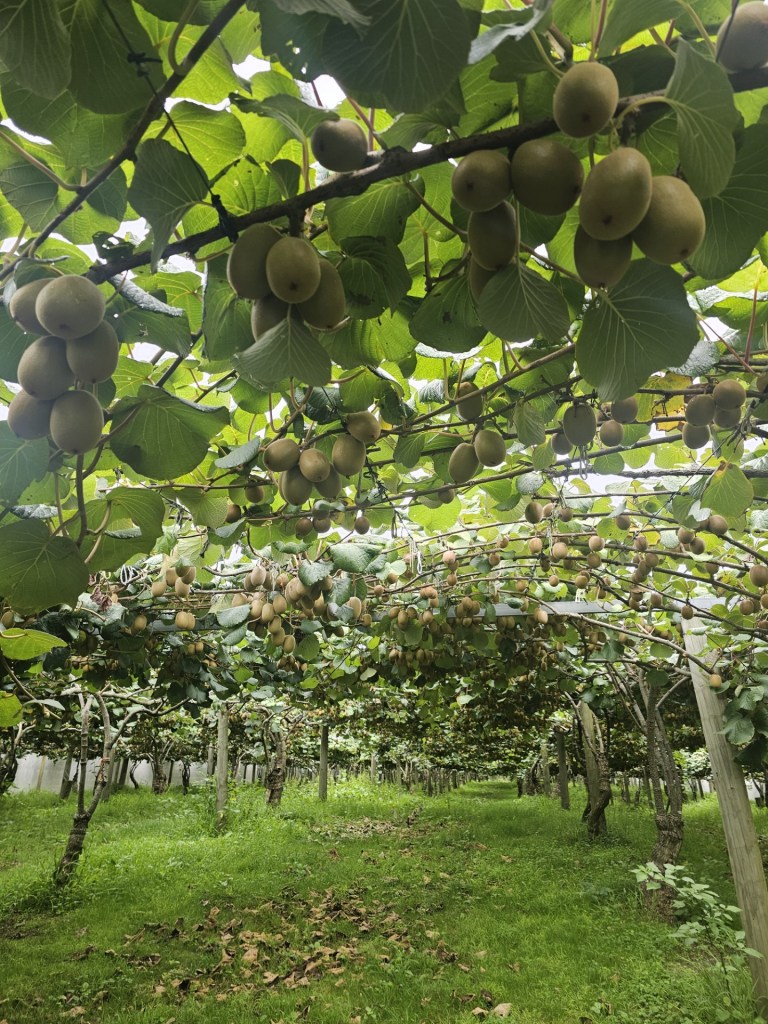
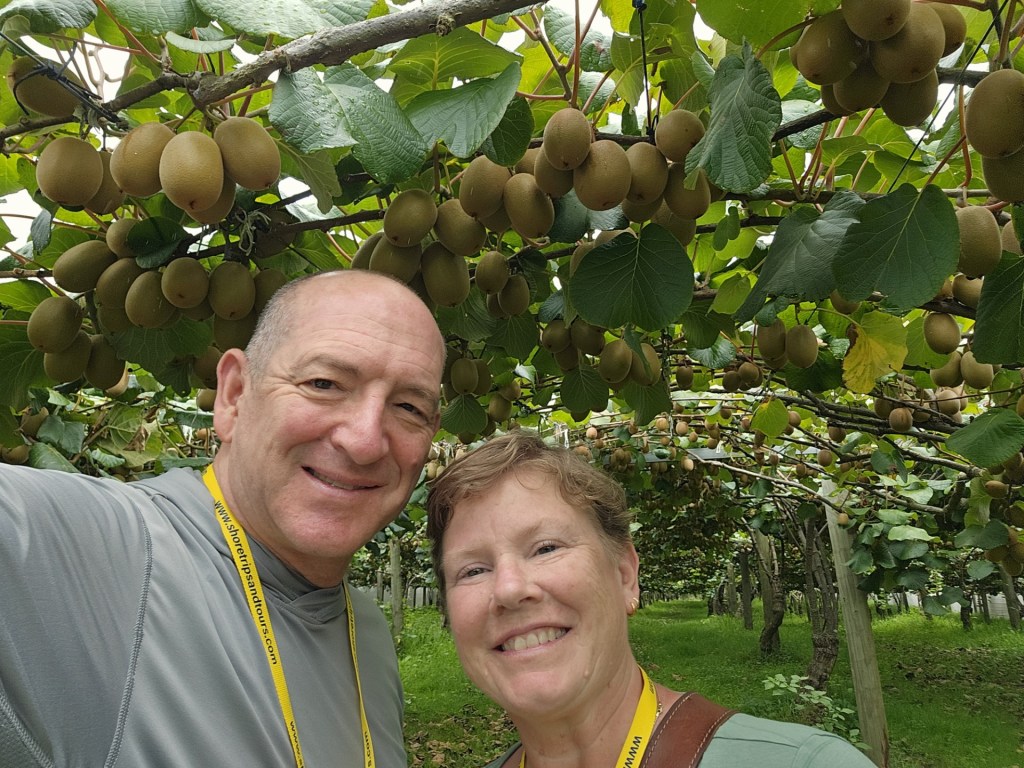
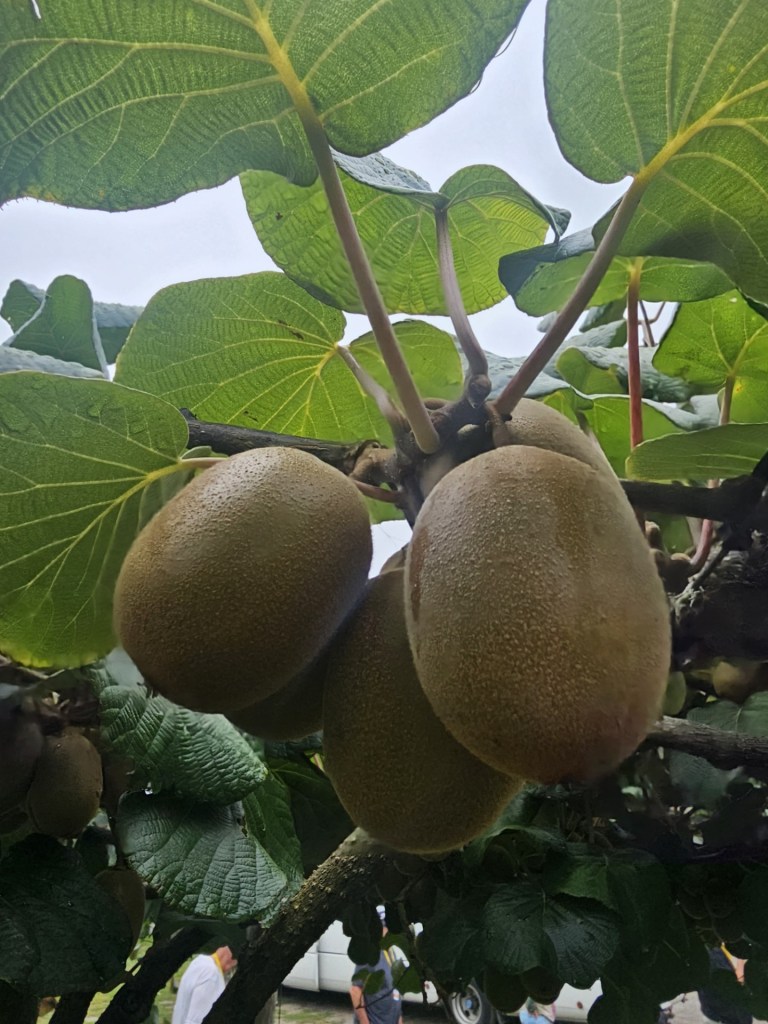
We happened to be traveling through the world capitol of Kiwi Fruit – the town of Te Puke and the area around it. The region produces 85% of New Zealand’s kiwi fruit crop. There were huge hedges about 12 feet tall in large squares. They are windbreaks for the kiwi plants. I always thought they grew on a tree…they do not! they grow on a vine. It was fascinating learning about the whole process. Kiwis were brought to New Zealand from China via Shanghai. The Chinese called them gooseberries. There are over 60 varieties of kiwis but they fall into general catagories such as red, gold, and green kiwis. The red ones will rarely be seen in the U.S. because they rot very quickly and therefore are kept locally. The only time the kiwi fruit is ever touched by human hands is when they are being picked. The gold kiwis are harvested in Mar and April. The green kiwis are harvested in May and June. A quick kiwi secret (both Kiwi people and kiwi fruit). If you want to tenderize a steak, slice kiwi fruit and place it all over the piece of meat. Put in the refrigerator for 1-2 hours. Will tenderize cheaper pieces of steak. There is some enzyme in the kiwi fruit that will do that. If you want to ripen a kiwi, place it in a paper bag with a banana and it will ripen in 2-3 days. They should not be hard.
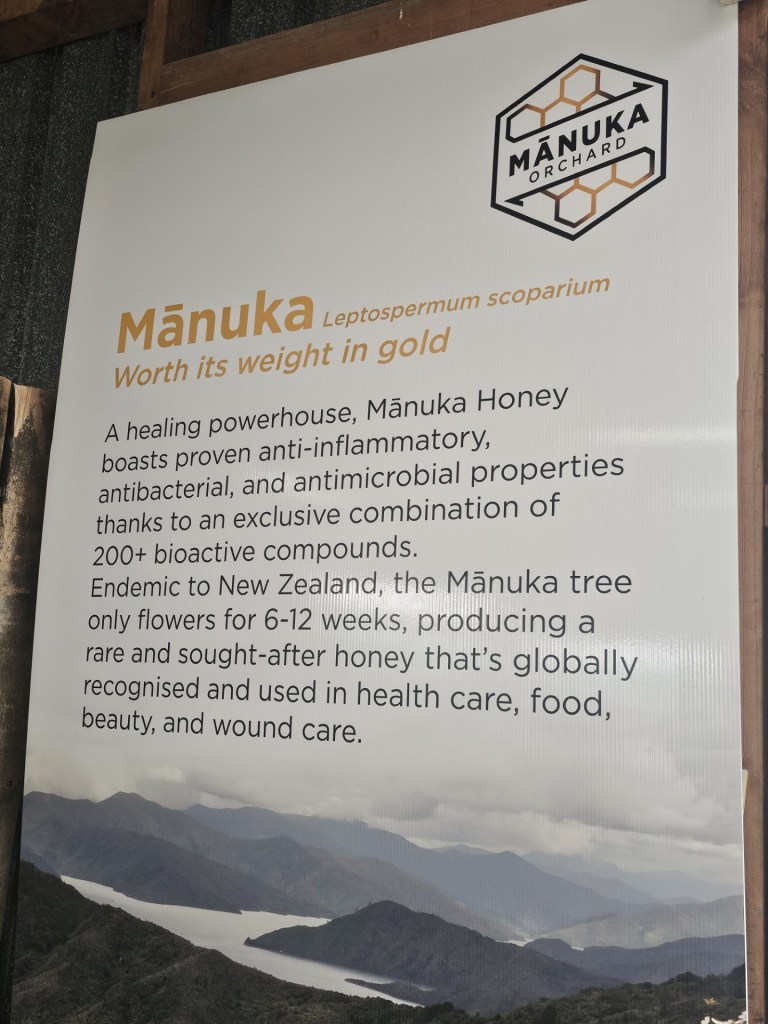
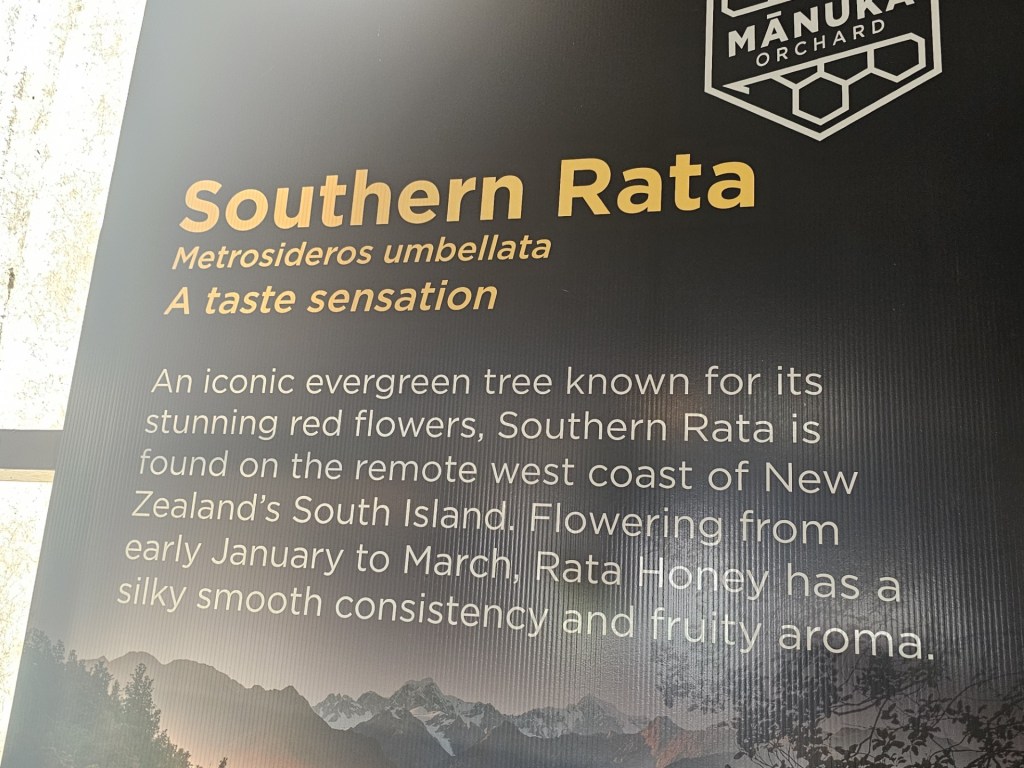
I can’t fail to mention Manuka honey. It was everywhere…all the different flavors of the honey the bees made. I think every tourist leaves with at least one pot of honey. We may have left with two…. Dependent on what the bees are feeding off of, the honey is different in taste and coloring. So good!
Richie was a principal, so we got some low down on education in New Zealand. Kids start school on their 5th birthday. Literally on the day they turn 5. That makes it a hot mess for that level teacher – having kids that have been in school for months with kids who have been there a day. Ideally, they will go to preschool first, to give them some sort of idea of what school is about. They have preschool available for 3 and 4 year olds for 20 hours a week. If you want them to go longer, the extra time will cost you $4/hr. Primary school is age 5 to 11/12 years old. There are no private primary schools, they are all state funded. Secondary schools are about 5 years and you can go to private or public schools. There are no private secondary (high schools) in Tauranga. Private schools are expensive. They average $30,000/yr and $12,000 a year additional for boarding. Going to the other end of the spectrum, when a New Zealander turns 65 years old, they are automatically put on pension. It is not dependent on the money you earned in your lifetime. Everyone gets the same pension. Each person would get approximately $830 every 2 weeks. You can choose to still work and also get your universal pension. Everyone pays into the ACC tax, which will pay out 80% of your medical bills. All in all, a pretty sound system. We had a really good time traveling through the area and walking through the giant redwoods.
 Messina Musings